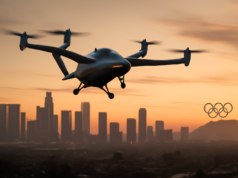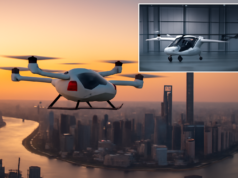

South Korea is making significant strides in the personal air mobility sector with ambitious plans to launch initial eVTOL (electric Vertical Takeoff and Landing) services by 2028. This strategic initiative positions the country as a key player in the rapidly evolving urban air mobility landscape, following successful demonstrations like Joby Aviation’s S4 tiltrotor aircraft. As governments and private companies worldwide race to establish commercial drone taxi services, South Korea’s detailed roadmap offers valuable insights into how nations can systematically integrate advanced air transportation into existing urban infrastructure.
South Korea’s Strategic Vision for eVTOL Services
The South Korean government has unveiled a comprehensive plan to introduce eVTOL services within its territory by 2028, marking a pivotal moment for the nation’s transportation future. This timeline demonstrates South Korea’s commitment to embracing cutting-edge aerospace technology and positioning itself alongside leading innovators in the personal air mobility sector. The announcement comes at a crucial time when multiple countries are developing regulatory frameworks and infrastructure requirements for commercial eVTOL operations.
South Korea’s approach emphasizes careful planning and coordination between governmental agencies, private manufacturers, and infrastructure developers. By establishing a clear target date of 2028, the country provides the aviation industry with definitive milestones and regulatory certainty. This forward-looking strategy enables companies like Joby Aviation to conduct testing and development activities within the South Korean market while helping local enterprises prepare for participation in this emerging industry.
The initiative reflects South Korea’s broader economic strategy to diversify its technology sector beyond semiconductors and automotive manufacturing. By investing in eVTOL infrastructure and regulatory development, the nation aims to create high-value employment opportunities and establish itself as a hub for advanced air mobility research and development. This economic diversification strengthens the country’s competitive position in the global innovation economy.
Joby Aviation’s S4 Tiltrotor Technology and Demonstration Success
Joby Aviation’s S4 tiltrotor eVTOL aircraft represents a significant technological achievement in the personal air mobility sector. The S4’s hybrid tiltrotor design combines the vertical takeoff and landing capabilities essential for urban operations with the forward flight efficiency required for longer-distance routes. This innovative approach addresses one of the primary challenges in eVTOL development: balancing hover capability with cruise performance and range.
The recent demonstration of Joby’s S4 aircraft in South Korea showcases the maturity of current eVTOL technology and validates the feasibility of launching commercial services within the proposed timeframe. Tiltrotor designs like the S4 offer several advantages over other eVTOL configurations, including reduced noise levels compared to traditional helicopters, improved stability during transition between vertical and forward flight modes, and greater payload capacity for passenger and cargo operations. These characteristics make tiltrotors particularly suitable for urban air mobility applications.
Joby’s involvement in South Korea demonstrates the international interest in supporting the country’s eVTOL ambitions. By partnering with manufacturers like Joby, South Korea can accelerate its regulatory development, learn from international best practices, and ensure that local infrastructure requirements align with proven aircraft technology. This collaborative approach reduces development risks and increases the likelihood of successful service launch by 2028.
Key Technological Features of the S4 Tiltrotor
- Vertical takeoff and landing capabilities for urban air mobility operations
- Electric propulsion system reducing emissions and operational noise
- Advanced tiltrotor design enabling transition between hover and cruise flight modes
- Extended range capabilities suitable for metropolitan area operations
- Passenger comfort features consistent with premium transportation standards
- Safety redundancy systems meeting stringent aviation certification requirements
Regulatory Framework and Infrastructure Development
Establishing a robust regulatory framework represents one of the most critical components of South Korea’s eVTOL strategy. The country must develop comprehensive certification standards for aircraft, pilot training requirements, operational procedures, airspace management protocols, and emergency response procedures. By targeting a 2028 launch date, South Korean regulators have approximately two years to finalize these regulatory requirements while conducting extensive safety studies and public consultations.
Infrastructure development extends beyond traditional airport facilities to include vertiport construction in urban areas, charging station networks, maintenance facilities, and air traffic management systems. These infrastructure investments require significant capital allocation and coordination between public and private entities. South Korea’s experience with rapid infrastructure development in other sectors positions the nation well to execute complex vertiport construction projects and establish the necessary supporting systems for commercial eVTOL operations.
The regulatory framework must also address liability issues, insurance requirements, environmental impact assessments, and community noise concerns. By proactively addressing these considerations, South Korea can build public confidence in eVTOL technology and establish a model regulatory approach that other nations might adopt. Clear guidelines regarding passenger safety, aircraft maintenance standards, and emergency procedures will be essential for gaining regulatory approval from international aviation bodies.
Market Opportunities and Economic Impact
The introduction of eVTOL services in South Korea presents substantial economic opportunities for the nation and the broader region. The commercial viability of urban air mobility depends on establishing high-demand routes connecting major urban centers, airports, and business districts where congestion creates demand for faster transportation alternatives. South Korea’s dense urban population centers and advanced infrastructure make the country an ideal market for initial eVTOL service deployments.
Job creation represents a significant economic benefit of the eVTOL sector, with opportunities spanning aircraft manufacturing, maintenance, pilot training, air traffic control operations, and ground support services. South Korea’s skilled workforce and manufacturing expertise position local companies to capture a substantial share of these employment opportunities. Additionally, attracting international eVTOL manufacturers to establish South Korean facilities could generate substantial foreign investment and technology transfer opportunities.
Tourism and business travel demand could drive eVTOL adoption once commercial services launch. Executives, international visitors, and time-sensitive business professionals represent initial target markets for premium air mobility services. As operational costs decrease through economies of scale and technological maturation, eVTOL services could expand to broader market segments, creating a sustainable long-term industry foundation. This market development trajectory mirrors the evolution of commercial aviation in previous decades.
Challenges and Path to 2028 Implementation
Despite the promising trajectory toward 2028 eVTOL services, South Korea faces considerable implementation challenges. Battery technology performance, particularly regarding energy density and charging speed, remains a critical limiting factor for eVTOL range and operational efficiency. Continued advances in battery chemistry and electric motor technology are essential for achieving the performance targets required for commercial viability. South Korea’s leadership in battery manufacturing provides advantages in addressing these technical challenges compared to other nations.
Public acceptance and community support represent equally important challenges as technical development. Noise concerns, safety perceptions, and environmental impacts require transparent communication and community engagement throughout the implementation process. Successful demonstration flights and detailed safety information campaigns will be essential for building public confidence in eVTOL technology. South Korea’s experience managing advanced technology adoption can inform these community engagement strategies.
International coordination regarding airspace standards, pilot certification reciprocity, and aircraft certification represents another significant challenge. By 2028, South Korea must align its regulatory approach with international aviation standards while accommodating the unique characteristics of eVTOL operations. Participation in international aviation organizations and coordination with neighboring countries will ensure that South Korean eVTOL services can eventually operate across borders and integrate with global aviation networks.
South Korea’s commitment to launching eVTOL services by 2028 demonstrates how strategic planning, technological partnership, and regulatory development can accelerate the transition to advanced air mobility systems. This ambitious timeline reflects confidence in current eVTOL technology maturity and South Korea’s capacity to execute large-scale infrastructure and regulatory projects.
South Korea’s eVTOL initiative represents a pivotal moment in the global transition toward sustainable urban air mobility. By establishing clear timelines, partnering with proven technology providers like Joby Aviation, and developing comprehensive regulatory frameworks, the country positions itself as a leader in personal air mobility implementation. The successful launch of commercial eVTOL services by 2028 could serve as a model for other nations seeking to integrate advanced air transportation into existing urban infrastructure. As South Korea progresses toward this ambitious goal, the world will be watching closely to learn from both successes and challenges encountered during this pioneering implementation phase. The convergence of technological maturity, regulatory commitment, and infrastructure investment suggests that South Korea’s 2028 target is not merely aspirational but increasingly achievable through sustained focus and international collaboration.