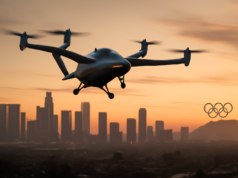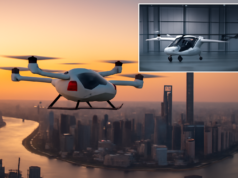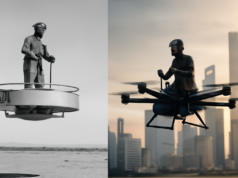

The global market for electric drones and eVTOL vehicles reached $8.1 billion in 2025, according to a new report from aviation market research firm Teal Group — up from $4.3 billion in 2023. The growth is being driven by a combination of commercial delivery drone expansion, urban air mobility investments, and a rapidly growing personal air vehicle segment that barely existed five years ago.
Where the Money Is Going
The largest share of market value — roughly 42% — still comes from commercial delivery drones operated by companies like Wing (Google), Amazon Prime Air, and Zipline. But the fastest-growing segment is urban air mobility, which encompasses passenger eVTOL air taxis and has seen year-over-year investment growth of 67% between 2023 and 2025.
Asia-Pacific is the largest regional market by volume, led by China where EHang has already achieved commercial type certification and is operating autonomous passenger drones in several cities. Europe follows as the second-largest market, driven by Joby’s planned European operations, Lilium’s restructuring under new ownership, and Volocopter’s air taxi trials in Singapore and Dubai.
We are seeing a market inflection point. The personal air mobility segment went from science project to investable asset class in less than 36 months.
The Personal Segment Is the Wild Card
The personal electric air vehicle segment — single and two-seat recreational and commuter vehicles — represents only about 3% of current market value but is projected to grow to 12% by 2030. Vehicles like the Jetson ONE, Pivotal Helix, and Opener BlackFly are creating a new consumer category that has no direct parallel in existing aviation markets.
The comparison that keeps coming up in analyst reports is the early personal watercraft market of the late 1980s — a product category that most industry incumbents initially dismissed as a niche toy, which grew into a multi-billion-dollar global industry within a decade. Whether personal electric drones follow a similar trajectory depends largely on regulatory clarity and battery technology improvements — both of which appear to be moving in the right direction.