HIGHLIGHTS
- Hydrogen fuel-cell propulsion extends eVTOL range and mission duration beyond pure battery-electric limits, enabling multi-hour operations for business aviation and inter-city air mobility.
- EASA and FAA are developing specialized certification frameworks for hydrogen-powered aircraft, accelerating regulatory pathway to commercial deployment.
- Clean hydrogen production delivers genuine zero-emission aviation aligned with industry decarbonization targets, positioning hydrogen as essential alongside battery and sustainable fuel technologies.
Aviation Week’s latest business aviation and advanced air mobility briefing has spotlighted hydrogen fuel-cell propulsion as a pivotal technology reshaping the future of personal air mobility and electric vertical takeoff and landing (eVTOL) aircraft. As the industry faces mounting pressure to decarbonize operations and meet stringent environmental regulations, hydrogen-powered systems are emerging as a compelling alternative to traditional battery-electric architectures, offering extended range, faster refueling times, and comparable zero-emission performance.
Hydrogen Fuel-Cell Technology Gains Momentum in Aviation
The aviation industry is undergoing a fundamental transformation as hydrogen fuel-cell propulsion moves from theoretical concept to practical implementation. Unlike battery-electric systems that rely on increasingly heavy lithium-ion packs, fuel-cell technology converts hydrogen gas into electricity through an electrochemical reaction, producing only water vapor as a byproduct. This approach addresses one of the most persistent challenges in urban air mobility: range anxiety and mission flexibility.
Major aerospace manufacturers and emerging eVTOL startups are now investing heavily in hydrogen infrastructure development and aircraft integration. The technology promises to extend flight endurance significantly, potentially enabling multi-hour missions that pure battery systems cannot achieve within current weight constraints. For business aviation and premium air taxi services, this represents a game-changing opportunity to serve longer-distance routes and reduce operational limitations tied to charging infrastructure availability.
Aviation Week’s coverage underscores that hydrogen fuel-cell systems are no longer merely conceptual—they represent a mature, viable pathway that regulators, operators, and manufacturers are actively pursuing. The convergence of technological advancement, manufacturing scale-up, and regulatory clarity is accelerating hydrogen adoption across the aviation sector, particularly for advanced air mobility operations where mission flexibility and range are critical differentiators.
Regulatory Framework and Industry Standards Development
As hydrogen fuel-cell propulsion gains traction, regulatory bodies worldwide are establishing comprehensive certification pathways and safety standards to ensure safe integration into existing airspace. Aviation authorities, including EASA (European Union Aviation Safety Agency) and the FAA, are developing specialized certification specifications that address the unique aspects of hydrogen-powered aircraft, from tank design and pressure management to emergency protocols and crew training requirements.
The business aviation and AAM sectors are actively collaborating with regulators to shape these emerging standards, ensuring that certification processes neither unnecessarily delay innovation nor compromise safety. Industry stakeholders recognize that harmonized, clear regulatory frameworks are essential for accelerating market adoption and enabling manufacturers to achieve economies of scale. Aviation Week’s briefing highlights ongoing dialogues between manufacturers, operators, and regulators that are progressively refining these technical and safety requirements.
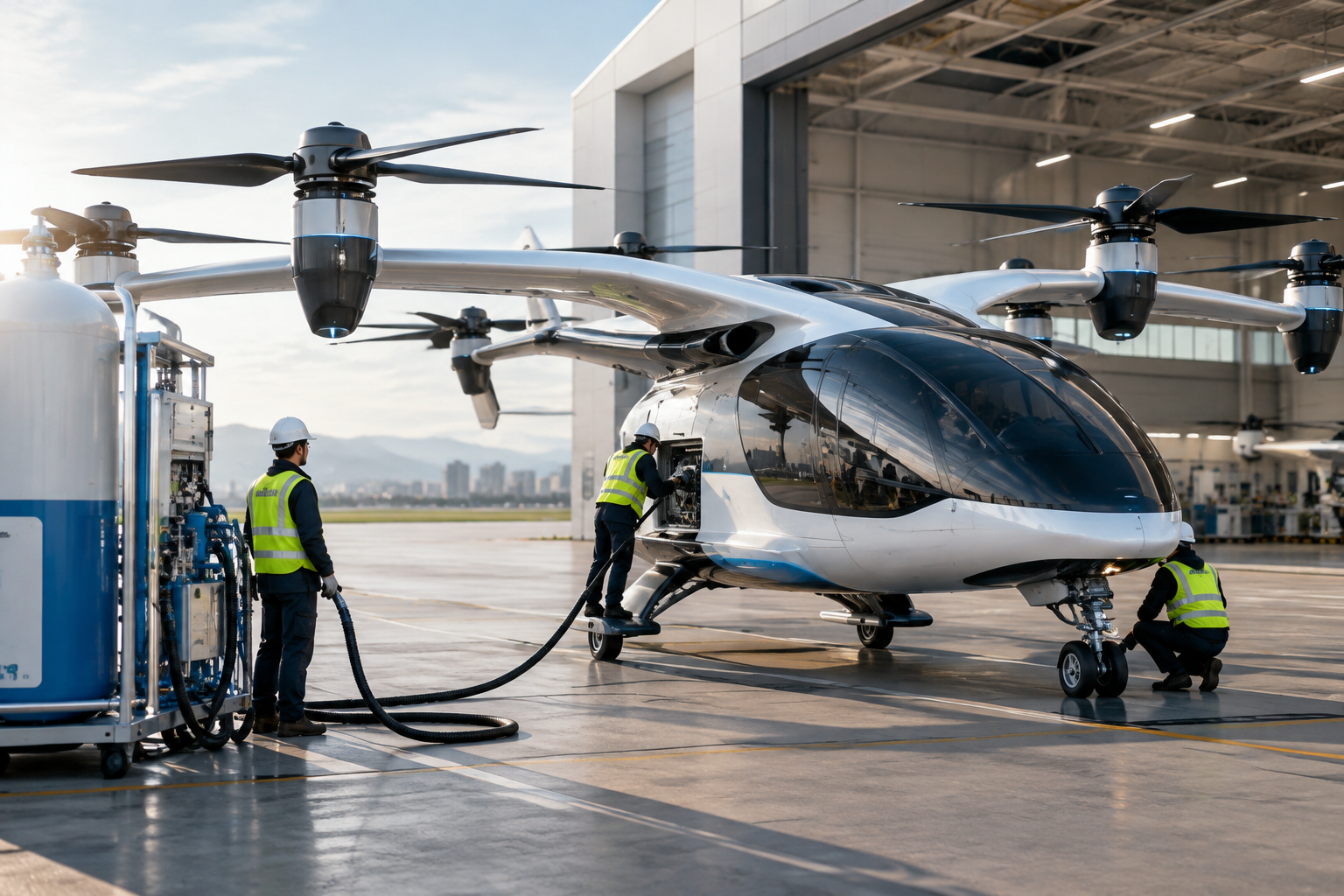
Standardization initiatives also extend to hydrogen production, distribution, storage, and ground support infrastructure. The development of consistent specifications for aircraft fueling systems, hydrogen purity standards, and facility design will be critical for establishing a robust ecosystem that supports widespread deployment of hydrogen-powered aircraft across regional and urban air mobility networks.
Market Opportunities and Commercial Viability
The emergence of hydrogen fuel-cell propulsion opens substantial commercial opportunities for aircraft manufacturers, operators, energy providers, and infrastructure developers. Business aviation operators are particularly interested in hydrogen systems for applications requiring extended range and rapid turnaround times between missions. This market segment is willing to invest in premium propulsion solutions that deliver tangible operational advantages, including reduced downtime for charging and enhanced mission capability.
For advanced air mobility and urban air taxi operators, hydrogen fuel-cells could address critical operational challenges that currently limit eVTOL deployment to short-range, high-frequency missions. Extended range capabilities would enable point-to-point air taxi services over greater distances, potentially opening entirely new market segments and revenue streams. Early adopters who successfully deploy hydrogen-powered eVTOL aircraft could capture significant competitive advantages in regional and inter-city air mobility markets.
Hydrogen production and infrastructure investment represents another significant opportunity, as clean hydrogen production methods—powered by renewable electricity—scale rapidly to support aviation demand. Energy companies, airports, and infrastructure developers are positioning themselves to build hydrogen supply chains, fueling facilities, and storage infrastructure, creating an entirely new ecosystem of supporting services and revenue streams aligned with the aviation industry’s decarbonization objectives.
Sustainability Goals and Decarbonization Impact
Hydrogen fuel-cell propulsion is increasingly recognized as a critical enabling technology for achieving ambitious decarbonization targets across aviation. As operators commit to net-zero emissions goals and regulatory frameworks mandate progressive reductions in carbon intensity, hydrogen offers a pathway to true zero-emission flight operations that aligns with global climate commitments. The technology’s compatibility with renewable energy sources—via green hydrogen production—ensures alignment with broader energy transition objectives.
Aviation’s decarbonization challenge is multifaceted, requiring parallel development of sustainable aviation fuels (SAF), advanced battery systems, and hydrogen propulsion. Each technology addresses different segments of aviation operations and mission profiles. Hydrogen fuel-cells are particularly well-suited for applications requiring extended range and higher payload capacity, while battery systems excel in short-range, high-frequency urban air mobility operations. A diversified propulsion technology portfolio maximizes the industry’s ability to achieve comprehensive emissions reductions across all aviation segments.
Aviation Week’s emphasis on hydrogen fuel-cell propulsion reflects growing industry consensus that this technology will play an essential role in aviation’s decarbonization pathway. Investment in hydrogen infrastructure, manufacturing capabilities, and regulatory frameworks is accelerating globally, signaling that the industry is committed to transitioning from conceptual evaluation to scaled, sustainable operations powered by clean hydrogen fuel-cells.
Key Takeaways: Hydrogen Propulsion in Aviation
- Hydrogen fuel-cell systems address critical limitations of pure battery-electric eVTOL aircraft by enabling extended range, faster refueling, and multi-hour missions essential for business aviation and longer-distance air mobility routes.
- Regulatory bodies including EASA and the FAA are actively developing comprehensive certification standards and safety specifications for hydrogen-powered aircraft, establishing the framework necessary for rapid market adoption and manufacturer scale-up.
- Clean hydrogen production combined with fuel-cell propulsion delivers genuine zero-emission aviation aligned with industry decarbonization commitments, positioning hydrogen as a cornerstone technology alongside battery systems and sustainable aviation fuels.
The integration of hydrogen fuel-cell propulsion into business aviation and advanced air mobility represents a pivotal moment for the industry. As manufacturers, operators, and regulators collaborate to refine technology, establish safety standards, and develop supporting infrastructure, hydrogen is transitioning from emerging concept to practical reality. Aviation Week’s coverage validates that hydrogen fuel-cell systems will play an essential role in the next generation of sustainable, efficient aircraft capable of serving diverse mission profiles across regional, business, and urban air mobility segments. The convergence of technological maturity, regulatory clarity, and market demand positions hydrogen propulsion as a transformative force reshaping the future of aviation.