
HIGHLIGHTS
- TAA compliance is forcing drone battery suppliers to shift from Asian-dominated supply chains to domestic and allied-nation manufacturers, increasing costs but creating new U.S. production opportunities
- Alternative battery chemistries like lithium iron phosphate (LFP) and solid-state batteries are gaining momentum as manufacturers embed TAA compliance into next-generation technology development
- The drone market is segmenting into compliance-premium products for government contracts and flexible commercial options, driving consolidation among battery suppliers and reshaping competitive advantage
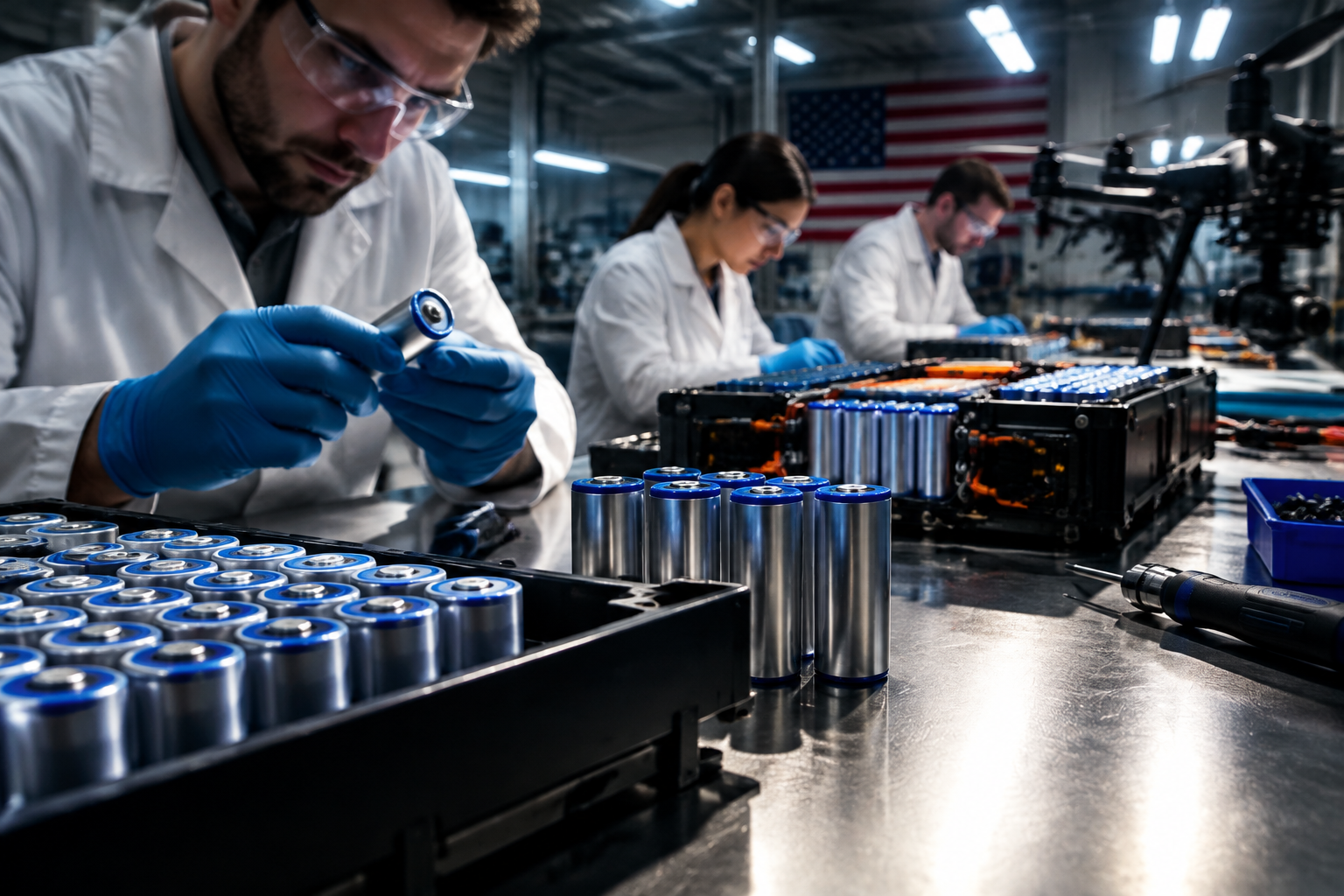
The trade landscape for America’s drone market is undergoing a significant transformation as TAA (Trade Agreements Act) compliance requirements reshape how manufacturers approach battery technology and sourcing. This regulatory shift is forcing companies to reconsider their supply chains, manufacturing locations, and battery sourcing strategies to remain competitive while adhering to federal procurement rules that increasingly influence the commercial drone sector.
Understanding TAA Compliance and Its Impact on Battery Sourcing
The Trade Agreements Act has long been a cornerstone of federal procurement policy, but its application to the drone and EV sector is becoming increasingly stringent. TAA compliance essentially requires that products sold to the U.S. government and many commercial entities contain components manufactured in designated countries, which significantly limits where battery manufacturers can source their raw materials and components.
For drone manufacturers, batteries represent one of the most critical and expensive components—typically accounting for 20-40% of total aircraft cost. This means that sourcing batteries from compliant manufacturers is not just a regulatory checkbox but a fundamental business consideration. Companies that fail to secure TAA-compliant battery suppliers risk losing access to major government contracts and institutional procurement opportunities.
The challenge intensifies when manufacturers consider that lithium-ion battery production requires rare earth elements, cobalt, and nickel—materials whose supply chains have historically been concentrated in Asia. Developing TAA-compliant domestic or allied-nation battery production requires significant capital investment, retraining of workforces, and establishment of new supply chain relationships.
Strategic Shifts in Battery Technology Development
Leading drone manufacturers are now accelerating research into alternative battery chemistries and manufacturing processes that can be fully domesticated or sourced from TAA-approved nations. Lithium iron phosphate (LFP) chemistry, traditionally considered less energy-dense than conventional lithium-ion, is receiving renewed attention because some manufacturers can produce LFP cells with TAA-compliant supply chains more easily than traditional NCA or NMC variants.
This shift also opens opportunities for innovation in solid-state batteries and other next-generation chemistries. Since these technologies are still in development phases, there’s potential to build TAA compliance into their manufacturing processes from the ground up, rather than retrofitting existing supply chains. Several U.S.-based research institutions are now partnering with drone manufacturers to accelerate commercialization of these technologies.
Manufacturing partnerships between American drone companies and domestic battery producers are becoming more prevalent. These strategic alliances allow drone makers to guarantee TAA compliance while supporting the growth of critical domestic battery manufacturing capacity. Government incentives through the CHIPS Act and other industrial policy initiatives are further accelerating this trend.
Supply Chain Restructuring and Market Consolidation
TAA compliance requirements are creating distinct market segments within the drone industry. Manufacturers targeting government contracts and institutions with federal procurement mandates must invest in TAA-compliant supply chains, while those focusing on purely commercial or consumer markets have more flexibility in their sourcing decisions. This divergence is leading to increased market segmentation and potentially higher costs for compliance-focused products.
The regulatory pressure is also driving consolidation within the battery supply industry. Smaller battery manufacturers without the capital to invest in TAA-compliant facilities are facing acquisition or partnerships with larger, better-capitalized competitors. This consolidation could reduce supplier diversity in the long term, even as TAA compliance attempts to support domestic production.
Small and medium-sized drone manufacturers are facing particular pressure. While large companies like DJI’s international competitors have resources to invest in parallel supply chains, smaller U.S. firms must choose between accepting higher battery costs or narrowing their target markets. Some are responding by specializing in specific drone categories or geographic markets where TAA compliance offers distinct competitive advantages.
Innovation and Competitive Positioning in a Compliance-Driven Market
Companies that successfully navigate TAA compliance requirements are positioning themselves as leaders in the government and institutional drone markets. This includes federal agencies, state and local governments, and large enterprises with federal contracts that increasingly demand TAA-compliant equipment. The ability to offer batteries with complete domestic provenance becomes a powerful marketing differentiator.
Innovation in battery management systems is also accelerating. Since TAA-compliant batteries may have slightly different performance characteristics than traditional options, drone manufacturers are investing in sophisticated battery management electronics, thermal management, and monitoring systems to optimize performance. These innovations often have spillover benefits for the broader market.
International competition is shifting as well. European and allied-nation manufacturers who can meet TAA requirements face fewer barriers than they historically did. This is creating new competitive dynamics and potentially shifting market share away from non-compliant Asian manufacturers, even for commercial applications not explicitly requiring TAA compliance.
Key Takeaways: TAA Compliance and Battery Innovation
- TAA compliance is redirecting battery sourcing to domestic and allied manufacturers, increasing costs but opening opportunities for U.S.-based battery production and innovation
- Alternative battery chemistries like LFP and next-generation solid-state batteries are gaining traction as manufacturers build TAA compliance into new technology development
- Market segmentation is accelerating, with premium government-focused drone products commanding higher prices due to compliance-driven supply chain investments
The evolution of TAA compliance in America’s drone market reflects broader trends toward supply chain resilience and domestic manufacturing revitalization. While the immediate effect is increased complexity and cost for manufacturers, the long-term outcome could be a more robust, domestically-supported drone and battery industry capable of meeting national security and commercial demands simultaneously. As regulations continue to evolve and battery technologies mature, companies that embrace compliance-driven innovation will likely emerge as market leaders in this transforming landscape.