HIGHLIGHTS
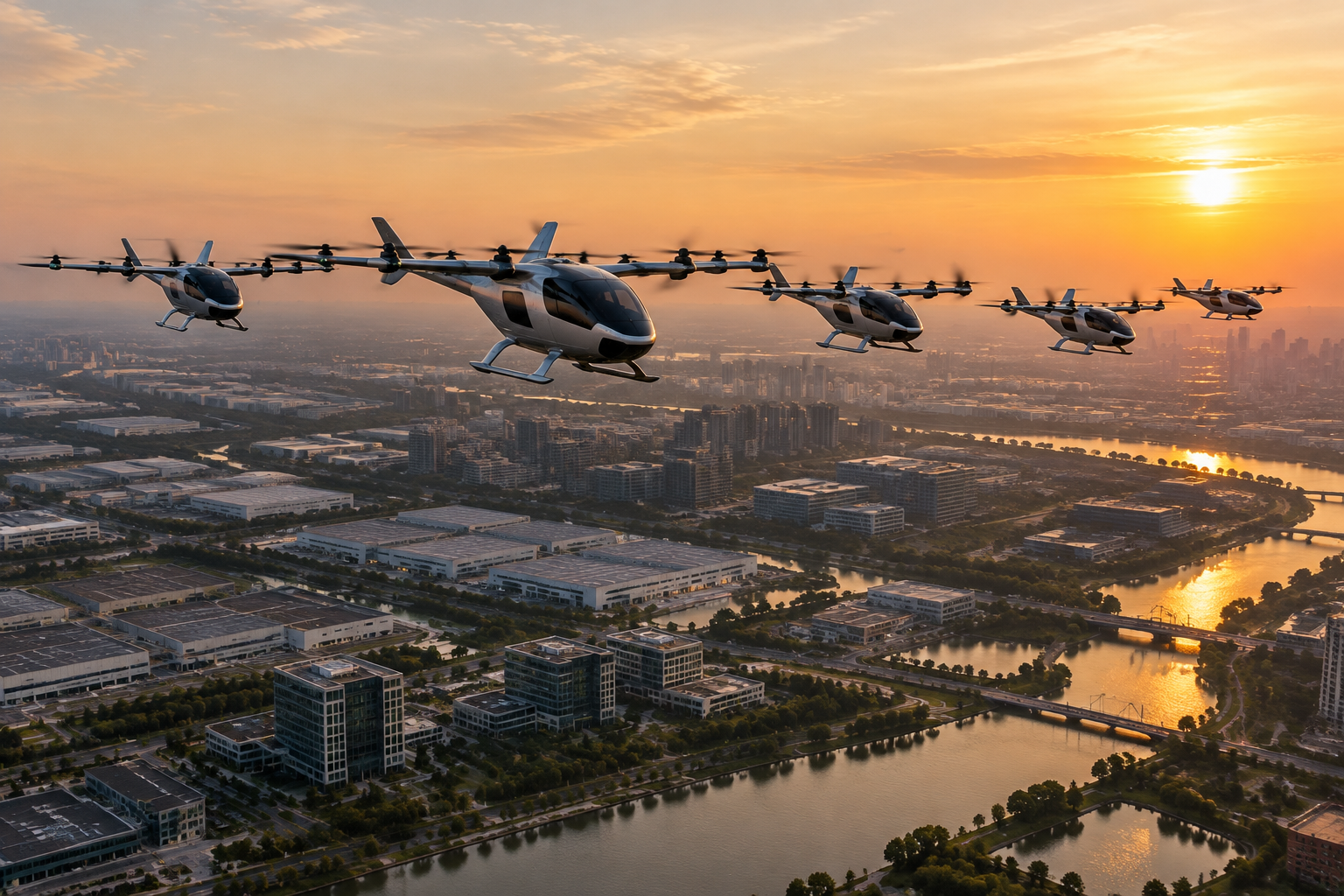
- AutoFlight successfully executed a coordinated formation flight of five aircraft in Kunshan, marking a major milestone in autonomous eVTOL fleet operations and multi-vehicle management.
- The formation flight validates AutoFlight’s autopilot systems, communication protocols, and collision avoidance technology, demonstrating technical readiness for regulatory certification and commercial deployment.
- AutoFlight’s achievement intensifies competition in Asia’s eVTOL sector and signals the company’s progression toward commercial air mobility services and urban airspace integration.
Chinese electric vertical takeoff and landing (eVTOL) manufacturer AutoFlight has successfully completed a significant milestone: a coordinated formation flight involving five aircraft operating simultaneously in Kunshan. This achievement represents a major step forward in demonstrating the operational readiness and scalability of autonomous eVTOL systems for commercial deployment.
AutoFlight’s Formation Flight Achievement
AutoFlight executed the formation flight test in Kunshan, marking one of the largest synchronized aerial operations conducted by a Chinese eVTOL manufacturer to date. The successful coordination of five aircraft demonstrates the company’s advanced flight control systems and multi-vehicle management capabilities. This formation flight test goes beyond simple successive takeoffs—it showcases the ability to maintain coordinated flight paths while managing complex airspace dynamics.
The formation flight represents a crucial validation of AutoFlight’s technology platform and operational procedures. By conducting multiple aircraft operations simultaneously, the company is gathering critical data on air traffic management, collision avoidance, and fleet-wide coordination systems. These insights are essential for scaling operations toward commercial air mobility services that will require managing dozens or hundreds of aircraft across urban and regional airspace.
This achievement aligns with AutoFlight’s broader strategy to position itself as a leading provider of autonomous eVTOL solutions in Asia and beyond. The company has been steadily advancing its technology readiness level through progressive flight tests and regulatory engagement with Chinese aviation authorities.
Technical Implications for eVTOL Operations
The successful coordination of five AutoFlight aircraft simultaneously demonstrates that the company has developed robust flight management systems capable of handling complex operational scenarios. Formation flying requires sophisticated communication protocols between aircraft, real-time telemetry sharing, and synchronized control algorithms that adjust for wind, weather, and dynamic airspace conditions.
AutoFlight’s formation flight capability suggests the company has solved several critical technical challenges in autonomous eVTOL operations. These include precise time synchronization between aircraft, distributed decision-making across the fleet, and redundant communication systems that maintain integrity even if one channel fails. The ability to execute these maneuvers indicates that AutoFlight’s autopilot and autonomous navigation systems meet stringent safety requirements necessary for commercial certification.
The data gathered from multi-aircraft operations will inform AutoFlight’s future development of fleet management software and ground control stations. Real-world formation flight testing generates invaluable insights into how different weather conditions, thermal effects, and atmospheric dynamics affect coordinated flight operations. This information is critical for optimizing flight path planning algorithms and improving efficiency across commercial operations.
Commercial Air Mobility Pathway
AutoFlight’s formation flight milestone represents progress toward demonstrating the operational viability of urban air mobility (UAM) and regional air transport services. Commercial eVTOL operations will require the ability to safely manage multiple aircraft, often operating in the same corridors or airspace zones. The successful coordination of five aircraft in formation suggests AutoFlight is preparing for this operational reality.
The formation flight test also provides regulatory authorities with evidence of AutoFlight’s technical maturity and operational discipline. Chinese aviation regulators, including the Civil Aviation Administration of China (CAAC), have been gradually creating frameworks for eVTOL certification and operations. Demonstrations like AutoFlight’s formation flight help establish industry standards and inform regulatory guidelines for autonomous aircraft operations in shared airspace.
For the broader eVTOL industry, AutoFlight’s achievement raises the bar for operational demonstrations and pushes competitors to demonstrate similar capabilities. As the market moves toward commercial deployment, regulators and customers will expect eVTOL manufacturers to prove they can safely manage complex multi-aircraft scenarios. AutoFlight’s formation flight test positions the company as a serious contender in this emerging market segment.
Regional Competition and Market Implications
AutoFlight’s milestone occurs in an increasingly competitive eVTOL landscape, particularly in Asia where multiple Chinese manufacturers are racing toward commercialization. Companies like EHang Holdings, Joby Aviation (with Asian partnerships), and others are pursuing commercial certifications and conducting operational demonstrations. AutoFlight’s formation flight adds to the momentum of the Chinese eVTOL sector and demonstrates local innovation and technical capability.
Kunshan, located in Jiangsu Province near Shanghai, serves as an ideal testbed for advanced aviation technologies due to its proximity to urban centers and existing aviation infrastructure. The selection of Kunshan for AutoFlight’s formation flight test reflects the city’s emerging role as a hub for eVTOL development and deployment. As Chinese cities begin establishing frameworks for urban air mobility services, companies like AutoFlight are building the operational foundation necessary for commercial launch.
The successful formation flight also signals to investors and potential customers that AutoFlight has moved beyond experimental stages toward demonstrable operational capability. This maturity in technology and operations could accelerate partnerships with logistics companies, ride-hailing platforms, and municipal governments interested in deploying eVTOL services. AutoFlight’s achievements strengthen its competitive positioning within the Asia-Pacific region.
Key Takeaways from AutoFlight’s Formation Flight Milestone
- AutoFlight successfully coordinated a formation flight of five aircraft in Kunshan, demonstrating multi-vehicle fleet management and autonomous coordination capabilities critical for commercial deployment.
- The formation flight test validates AutoFlight’s flight control systems, communication protocols, and collision avoidance algorithms, providing regulators with evidence of operational maturity and safety standards.
- This milestone positions AutoFlight as a leading eVTOL developer in Asia and signals readiness for commercial air mobility operations, intensifying competition within the Chinese and regional aerospace markets.
AutoFlight’s five-aircraft formation flight in Kunshan represents a pivotal achievement in the eVTOL industry’s evolution from concept to operational reality. As the company continues advancing toward commercial certification and deployment, this milestone demonstrates that autonomous electric aircraft can be safely coordinated at scale. For regulators, investors, and potential customers, AutoFlight’s successful demonstration provides confidence that the technical challenges of urban air mobility operations are being systematically addressed by capable innovators in the world’s largest emerging market for electric aviation.