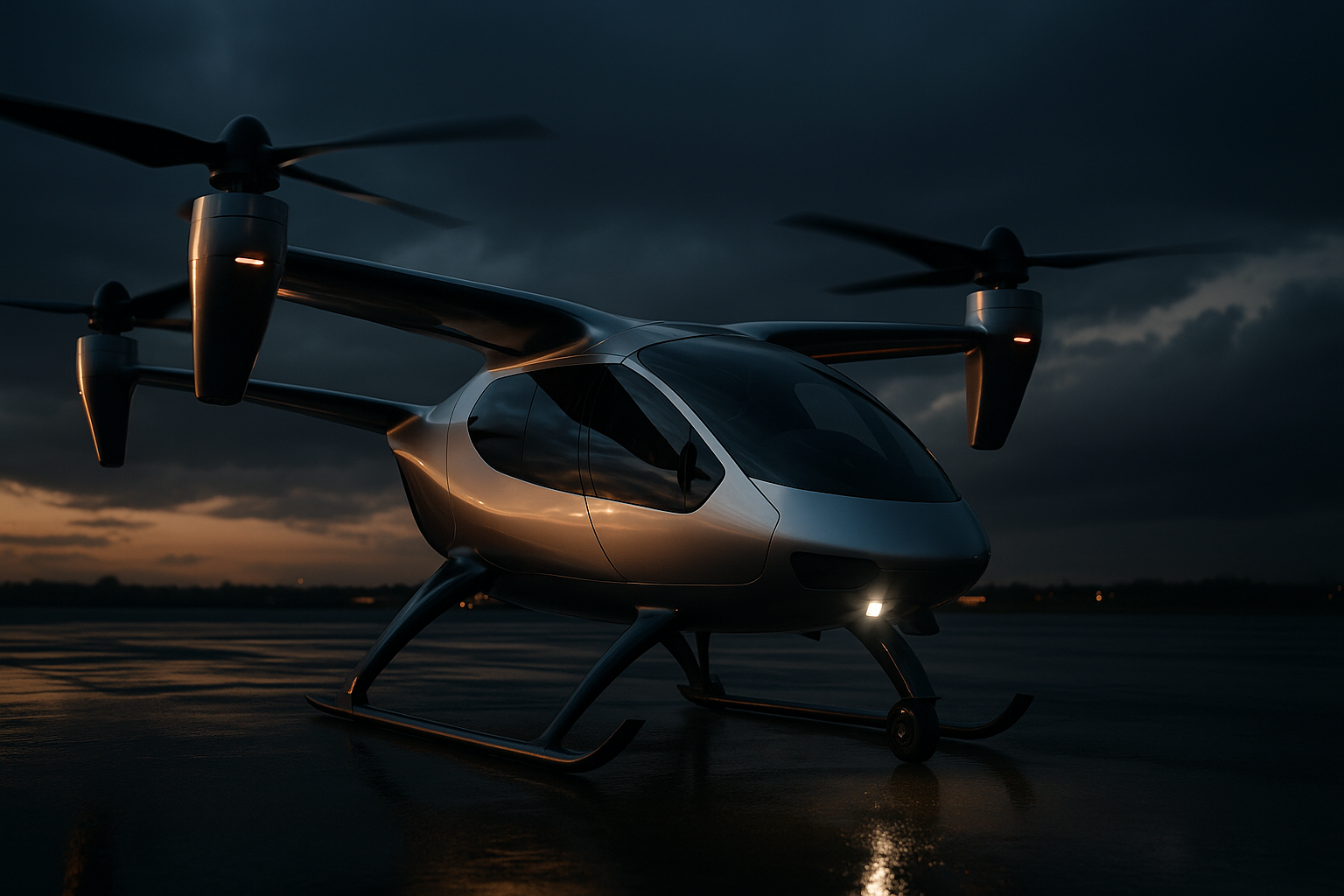
The urban air mobility industry faces one of its most pressing challenges: profitability. While eVTOL aircraft technology continues to advance rapidly, the business models supporting these innovative vehicles remain uncertain. A groundbreaking new study suggests that implementing Uber-style dynamic pricing strategies could be the missing piece that transforms air taxis from a futuristic dream into a sustainable, profitable reality.
The Profitability Problem in Urban Air Mobility
Despite significant investment and technological breakthroughs, air taxi operators struggle with a fundamental economic question: how to price their services competitively while maintaining profitability. Traditional fixed pricing models fail to account for demand fluctuations, operational costs, and market dynamics that characterize urban transportation.
The challenge intensifies when considering the substantial infrastructure requirements, regulatory compliance costs, and aircraft maintenance expenses associated with operating eVTOL services. Early projections suggested that air taxi rides could cost $100 to $300 per journey, making them accessible only to premium market segments. This limitation severely restricts the addressable market and threatens long-term commercial viability.
Researchers and industry analysts have long debated whether air taxis could ever achieve the mass-market appeal necessary for sustainable profitability. The answer may lie not in reducing costs, but in implementing smarter pricing strategies that reflect real-time market conditions.
Understanding Uber-Style Dynamic Pricing
Dynamic pricing, famously employed by Uber and other ride-sharing platforms, adjusts prices based on real-time demand, supply, and other market factors. When demand exceeds available vehicles, prices increase; when supply exceeds demand, prices decrease. This model has proven extraordinarily successful for terrestrial ride-sharing, generating billions in revenue while optimizing resource utilization.
The core advantage of dynamic pricing extends beyond simple profit maximization. By adjusting prices based on demand patterns, the model encourages more efficient use of available aircraft. During peak demand periods, higher prices incentivize some potential passengers to delay travel, reducing congestion. During off-peak hours, lower prices attract price-sensitive customers who wouldn’t otherwise use the service, ensuring better aircraft utilization rates.
For eVTOL operators, this pricing flexibility could address a critical inefficiency: aircraft sit idle during low-demand periods, generating no revenue while accumulating operating costs. Dynamic pricing transforms idle aircraft into potential revenue generators by attracting price-conscious travelers willing to fly when rates are lower.
Application to Air Taxi Operations
Applying Uber-style pricing to air taxis introduces several sophisticated considerations specific to urban air mobility. Weather conditions, flight corridor availability, and battery charging requirements create unique operational constraints not present in terrestrial ride-sharing. These factors can be incorporated into algorithmic pricing models to optimize both safety and profitability.
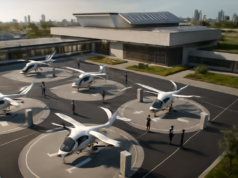
Consider a typical metropolitan air taxi network. During morning rush hours, demand for point-A-to-point-B flights peaks as commuters seek faster alternatives to ground transportation. Dynamic pricing would increase rates during these periods, capturing maximum value from time-conscious business travelers. As demand subsides mid-morning, prices decrease to attract leisure travelers and non-time-sensitive passengers.
The model particularly benefits from eVTOL’s unique characteristics. Unlike ground-based ride-sharing, air taxi networks operate on defined flight corridors with limited routing options. This constraint actually enhances pricing power, as passengers have fewer alternatives. Additionally, the novelty factor and premium positioning of air taxis align naturally with willingness-to-pay variations among different passenger segments.
Key Implementation Considerations
- Real-time demand forecasting using AI and machine learning algorithms
- Integration with battery management and aircraft maintenance schedules
- Regulatory compliance with pricing transparency requirements
- Passenger acceptance and resistance to variable pricing models
- Competitive dynamics as multiple operators enter the market
- Surge pricing caps to maintain public trust and social equity
Market Implications and Industry Impact
The adoption of dynamic pricing for air taxis could reshape the entire industry timeline. If pricing models can reliably generate 20-30% higher profit margins, operators could accelerate their routes-to-profitability timeline by several years. This acceleration would attract additional investment, enabling faster fleet expansion and broader geographic coverage.
Investors currently hesitant about air taxi profitability could gain confidence from demonstrated successful pricing models. Joby Aviation, Lilium, Archer Aviation, and other eVTOL manufacturers competing for market dominance would benefit from clearer paths to revenue sustainability. Venture capital funding, which has already exceeded $10 billion in the urban air mobility sector, could increase further as business model uncertainty decreases.
Beyond direct operators, dynamic pricing benefits the broader ecosystem. Air navigation service providers, vertiport operators, battery charging infrastructure developers, and maintenance service providers all depend on successful, profitable air taxi operations. Widespread adoption of proven pricing strategies strengthens the entire value chain and accelerates commercialization timelines.
Consumer adoption patterns may also shift positively. While wealthy early adopters represent the initial market, dynamic pricing enables occasional-use passengers to access air taxi services at affordable prices during off-peak hours. This gradual market expansion builds the customer base and brand familiarity necessary for long-term sustainability.
Challenges and Future Considerations
Implementing Uber-style pricing for air taxis isn’t without challenges. Regulatory bodies worldwide are still developing frameworks for commercial eVTOL operations, and pricing transparency requirements may differ significantly across jurisdictions. Some regions might impose price caps or require government approval of pricing algorithms, complicating standardized global operations.
Public perception presents another hurdle. Surge pricing during peak demand can generate significant negative publicity, as Uber discovered repeatedly during various crises. Air taxi operators must carefully communicate the operational logic behind dynamic pricing to maintain public trust and regulatory approval. Educational campaigns explaining how pricing efficiency benefits service reliability and accessibility will prove essential.
Technical implementation also demands sophistication. Airlines use complex revenue management systems developed over decades to optimize pricing and occupancy. Air taxi operators must build comparable systems while accounting for the unique constraints of eVTOL aircraft, shorter flight times, and smaller passenger capacities. This technological requirement raises barriers to entry, potentially favoring larger operators with substantial software development resources.
The competitive landscape adds complexity. In mature ride-sharing markets, Uber’s pricing strategies are partially constrained by competitor behavior. Similarly, air taxi pricing dynamics will evolve as multiple operators compete for passengers. Game theory suggests that competitive pressure could eventually compress margins despite initial dynamic pricing advantages, requiring continuous innovation in pricing and service differentiation.
The research suggesting Uber-style pricing could unlock air taxi profitability represents a significant step forward for the urban air mobility industry. By adopting proven business model strategies from the ride-sharing sector and adapting them to the unique constraints of eVTOL operations, operators could achieve the economic sustainability necessary for widespread commercial deployment. This development brings the promise of metropolitan air taxis one step closer to reality, potentially transforming urban transportation within the next decade.