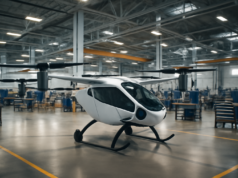

The advanced air mobility (AAM) sector is experiencing unprecedented momentum as major players announce game-changing developments. Recent announcements from Wisk, NASA, Electra, and BETA represent significant milestones that could reshape personal air transportation and drone technology. These breakthroughs signal that electric vertical takeoff and landing (eVTOL) aircraft are moving rapidly from concept to commercial reality, promising safer, cleaner, and more efficient urban transportation solutions.
Wisk Advances Autonomous eVTOL Development
Wisk Aero continues to lead the autonomous air taxi revolution with remarkable progress on its all-electric, self-piloting aircraft. The company’s latest announcements demonstrate their commitment to creating fully autonomous vehicles that require no pilot or copilot. Wisk’s development timeline suggests commercial operations could begin within the coming years, positioning them as a frontrunner in the competitive AAM landscape.
The company’s autonomous systems represent a fundamental shift in how we approach urban air mobility. By eliminating the need for pilots, Wisk reduces operational costs significantly while improving safety through advanced automation. Their aircraft design prioritizes redundancy and reliability, critical factors for gaining public trust and regulatory approval.
Wisk’s partnerships with leading aviation authorities and technology providers strengthen their market position. These collaborations ensure their aircraft meet the highest safety standards while incorporating cutting-edge autonomous technologies. As they progress toward certification, Wisk continues refining their operations and safety protocols.
NASA’s Critical Role in AAM Infrastructure
NASA has emerged as a vital partner in advancing advanced air mobility through research, testing, and infrastructure development. The agency’s involvement ensures that eVTOL operations integrate seamlessly with existing aviation systems while maintaining safety and efficiency standards. NASA’s technical expertise provides the foundation necessary for safe, scalable AAM deployment across American cities.
The space agency conducts essential research on air traffic management systems designed specifically for lower-altitude operations. These systems must handle significantly higher traffic volumes than traditional aviation while maintaining safety margins. NASA’s work on unmanned aircraft systems (UAS) traffic management directly applies to commercial eVTOL operations, accelerating certification timelines.
NASA’s testing facilities and expertise help companies like Wisk validate their technologies in controlled environments. This collaboration reduces development risks and provides independent verification of safety claims. As the AAM ecosystem matures, NASA’s continued involvement will be essential for establishing industry standards and best practices.
Key Areas of NASA’s AAM Focus
- Urban air traffic management system development and testing
- Safety protocols for eVTOL integration with conventional aircraft
- Battery technology research and energy efficiency improvements
- Noise reduction and environmental impact assessments
- Pilot training and human factors research for autonomous systems
Electra’s Innovative eVTOL Design Philosophy
Electra has distinguished itself through innovative aircraft designs that balance range, payload capacity, and efficiency. Their engineering approach focuses on practical solutions that address real-world operational requirements. Recent developments showcase how thoughtful design can overcome traditional limitations of vertical takeoff aircraft.
The company’s aircraft designs incorporate hybrid-electric powertrains that extend range beyond pure battery-electric solutions. This pragmatic approach addresses customer concerns about mission flexibility while maintaining environmental benefits. Electra’s focus on commercial viability ensures their designs meet market demands from day one.
Electra’s development partnerships with established aviation companies provide manufacturing expertise and supply chain access. These relationships accelerate the path from prototype to production while ensuring compliance with aviation standards. Their aircraft promise to deliver the performance characteristics operators need for sustainable profitability.
BETA Technologies’ Vision for Electric Aviation
BETA Technologies is pioneering the commercialization of electric aircraft for regional transportation. The company’s focus on practical applications and sustainable operations positions them at the forefront of the electric aviation revolution. Their recent announcements demonstrate significant progress toward delivering aircraft that meet real-world operational requirements.
BETA’s approach emphasizes battery technology development and charging infrastructure as critical enablers of electric aviation. The company recognizes that aircraft alone cannot succeed without comprehensive ecosystem support. Their investments in charging networks and ground support systems create competitive advantages in the emerging market.
The company’s partnerships with freight operators and regional airlines validate the commercial potential of electric aircraft. Early adopters in cargo and commuter markets provide crucial feedback that informs design refinements and operational protocols. BETA’s strategy of targeting specific market segments enables faster commercialization than attempting broad-market solutions.
BETA’s Strategic Market Focus
- Regional cargo delivery and logistics operations
- Commuter transportation between city pairs under 200 miles
- Emergency medical evacuation and rescue operations
- Sustainable aviation fuel integration roadmap
- Workforce development and pilot training programs
Industry Impact and Future Implications
These coordinated advances by industry leaders and government agencies signal imminent transformation in transportation. The convergence of autonomous technology, regulatory clarity, and infrastructure investment creates optimal conditions for rapid market growth. Cities worldwide are preparing for the arrival of commercial eVTOL services, planning vertiports and traffic management systems.
The announcements demonstrate that eVTOL technology has transitioned from experimental phase to pre-commercial deployment. Regulatory agencies across the globe are developing certification standards based on these developments. The next 12-24 months will likely see the first commercial routes operational in major metropolitan areas.
Investment in AAM continues accelerating as venture capital and established aerospace companies recognize the market opportunity. This capital influx enables rapid technology maturation and manufacturing scale-up. The competitive landscape will intensify as more players enter the market, driving innovation and efficiency improvements.
The environmental implications of widespread eVTOL adoption are substantial. Electric propulsion eliminates local air pollution while reducing noise pollution significantly compared to traditional helicopters. As electrical grids transition to renewable energy sources, the lifecycle carbon emissions of these aircraft will decrease dramatically, making AAM genuinely sustainable transportation.
Transformative Potential of AAM Sector
- Reduced urban congestion through three-dimensional transportation networks
- Faster emergency response times for medical and rescue operations
- Lower operating costs compared to traditional helicopter services
- Zero-emission operations with renewable energy integration
- Job creation across manufacturing, maintenance, and operations sectors
The announcements from Wisk, NASA, Electra, and BETA represent watershed moments in advanced air mobility development. These companies and agencies have demonstrated that electric vertical takeoff and landing aircraft can be engineered, certified, and operated safely and economically. The convergence of autonomous technology, regulatory frameworks, and infrastructure investment suggests that commercial eVTOL services will transform urban transportation within the next few years. As the sector matures, early movers will establish market leadership while cities worldwide prepare for the arrival of flying taxis. The future of personal air mobility is no longer speculative—it’s rapidly becoming operational reality.