
HIGHLIGHTS
- Hybrid-electric aircraft completes historic flight across Utah, proving extended-range capability for commercial regional air mobility operations
- Advanced power management seamlessly switches between electric and conventional engines, reducing emissions during takeoff and landing phases
- Successful demonstration accelerates eVTOL market adoption by reducing regulatory and investor risk for hybrid-electric aircraft deployment
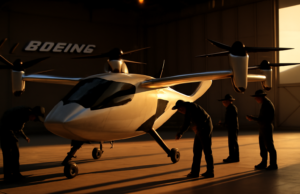
A landmark achievement in sustainable aviation occurred when a hybrid-electric aircraft completed a historic flight across Utah, demonstrating the viability of clean energy solutions for vertical takeoff and landing (eVTOL) technology. This successful mission represents a crucial step forward in the development of practical, environmentally responsible personal air mobility systems that could transform urban transportation in the coming years.
Breaking New Ground in Hybrid-Electric Aviation
The historic flight across Utah showcased advanced hybrid-electric propulsion technology that combines traditional fuel efficiency with electric power. This dual-system approach addresses one of the primary concerns in eVTOL development: the need for extended range while maintaining zero-emission operation during critical phases of flight.
Hybrid-electric systems work by seamlessly transitioning between conventional engines and electric motors, optimizing fuel consumption and reducing emissions throughout the flight envelope. During takeoff and landing—the most energy-intensive phases—electric motors provide clean, silent operation, while cruise phases benefit from efficient hybrid power management.
The successful Utah crossing demonstrates that hybrid-electric aircraft can achieve the endurance necessary for regional air mobility services. This capability opens possibilities for inter-city travel, emergency medical transport, and commercial cargo operations that would be limited by purely electric battery constraints.
Environmental and Sustainability Implications
This achievement aligns perfectly with global renewable energy initiatives and climate action goals. By proving that hybrid-electric aircraft can operate successfully across diverse terrain and weather conditions, the flight validates a pathway toward significantly reducing aviation’s carbon footprint—one of the fastest-growing sources of greenhouse gas emissions.
The integration of renewable energy principles into aviation technology represents a fundamental shift in how the industry approaches sustainability. Rather than waiting for battery technology to achieve impossible energy density targets, hybrid-electric systems provide an immediate solution for cleaner air travel while transitioning toward fully electric alternatives.
Renewable energy advocates highlight that hybrid-electric aircraft can potentially be powered by sustainable fuels derived from biomass, waste products, or synthetic processes, further reducing environmental impact. When combined with electric power for low-altitude operations, this creates a genuinely low-carbon transportation solution.
Technical Achievements and Engineering Milestones
The flight across Utah required solving numerous engineering challenges, including weight optimization, thermal management of hybrid systems, and seamless power transition protocols. The aircraft’s successful completion of this journey indicates that development teams have achieved critical technical milestones in integrating complex hybrid propulsion systems.
Power management during flight represented perhaps the most significant technical hurdle. The aircraft’s control systems had to continuously evaluate battery state of charge, fuel reserves, mission requirements, and energy efficiency to optimize the hybrid power split in real time. This level of autonomous energy management is essential for safe, reliable eVTOL operations.
The flight also demonstrated improvements in battery technology, lightweight materials, and electric motor efficiency that have been advancing throughout the eVTOL industry. Each successful hybrid flight provides data that accelerates development of next-generation aircraft with even greater range, payload capacity, and reliability.
Industry Implications and Market Adoption
This successful flight sends a powerful signal to investors, regulators, and operators that hybrid-electric eVTOL technology is approaching commercial readiness. The demonstration reduces perceived risk for companies considering integration of these aircraft into operational fleets for urban air mobility services, cargo operations, and emergency response.
Regulatory authorities worldwide are watching these developments closely. Successful demonstrations of hybrid-electric aircraft operating across varied terrain provide the evidence needed to establish certification standards and operational guidelines. This progress accelerates the path to regulatory approval for commercial eVTOL services.
The competitive landscape for personal air mobility is intensifying, with multiple manufacturers pursuing different technological approaches. This historic flight positions hybrid-electric systems as a viable alternative to purely electric designs, offering operators flexibility in choosing platforms suited to their specific mission requirements and operating environments.
Future Outlook for Hybrid-Electric eVTOL Development
With this historic flight successfully completed, development focus will shift toward optimizing hybrid-electric systems for specific commercial applications. Regional air mobility networks, emergency medical transport, and tourism operations represent immediate near-term markets where hybrid-electric eVTOL aircraft could operate profitably while reducing environmental impact.
Ongoing research will continue advancing battery technology, power electronics, and lightweight composite materials that benefit hybrid-electric designs. As these enabling technologies mature, future generations of hybrid-electric aircraft will achieve greater range, faster speeds, and larger payload capacities.
The path forward also depends on infrastructure development, including charging networks, fuel supply chains for sustainable aviation fuels, and maintenance facilities. This historic achievement demonstrates that the technological foundation for these systems is solid, making the remaining challenges primarily logistical and regulatory rather than fundamental engineering obstacles.
Key Takeaways from the Utah Flight
- Hybrid-electric aircraft successfully completed a historic cross-state flight, proving extended-range capability and practical viability for regional air mobility operations
- Advanced power management systems seamlessly integrated conventional engines with electric motors to optimize emissions and fuel efficiency throughout the flight envelope
- Successful demonstration accelerates commercial eVTOL adoption by reducing investor and regulatory risk while establishing hybrid-electric technology as a viable pathway to sustainable aviation
The historic hybrid-electric aircraft flight across Utah marks a watershed moment in personal air mobility development. By successfully combining traditional propulsion efficiency with zero-emission electric power, this achievement demonstrates that sustainable aviation is no longer a distant promise but an emerging reality. As the industry continues advancing these technologies, we can expect to see hybrid-electric eVTOL aircraft becoming increasingly common in regional air transportation networks, emergency services, and cargo operations within the next few years. This flight represents not just a technical milestone, but a turning point toward cleaner, more efficient air mobility for everyone.