HIGHLIGHTS
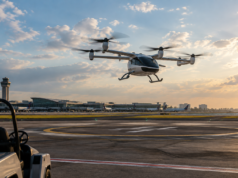
- St. Petersburg achieved a historic first with the inaugural air taxi flight connecting to Tampa, marking a major milestone in commercial urban air mobility deployment.
- The successful route demonstrates the viability of eVTOL services for reducing commute times and traffic congestion in metropolitan areas.
- This Florida corridor sets the foundation for expanded air taxi networks across the U.S. and validates the regulatory framework supporting commercial operations.
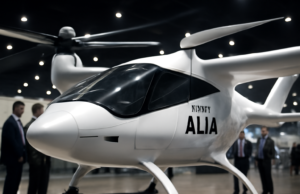
St. Petersburg, Florida, has achieved a landmark moment in the evolution of urban transportation. The historic first flight of an air taxi service connecting St. Petersburg and Tampa represents a significant step forward for personal air mobility in the United States. This groundbreaking service demonstrates that electric vertical takeoff and landing (eVTOL) technology is transitioning from concept to commercial reality, offering commuters and travelers a revolutionary alternative to traditional ground-based transportation.
A Historic First for Florida’s Skyway
The inaugural air taxi flight between St. Petersburg and Tampa marks the first commercial deployment of its kind in the Florida region. This achievement comes after years of regulatory planning, infrastructure development, and technological refinement by industry stakeholders and aviation authorities. The successful launch represents validation that eVTOL services can operate safely and efficiently in busy metropolitan corridors.
St. Petersburg’s selection as a launch point is particularly significant given the city’s strategic location and proximity to Tampa across the bay. The route eliminates the need for ground-based commuting across congested highways, offering passengers a direct aerial pathway that dramatically reduces travel time. This corridor exemplifies how urban air mobility can solve real transportation challenges in densely populated regions.
The achievement was celebrated by city officials and community stakeholders who recognize the transformative potential of air taxi services. Local leaders have positioned St. Petersburg as a forward-thinking municipality embracing innovative transportation solutions that enhance quality of life and economic competitiveness.
Impact on Urban Transportation and Commuting
The St. Petersburg-to-Tampa air taxi service addresses a critical challenge facing metropolitan areas: traffic congestion and lengthy commute times. The bay crossing, which typically requires 30-45 minutes by car on ground routes, can now be completed in a fraction of that time via air taxi. This efficiency gain translates to significant time savings for regular commuters and business travelers.
Beyond time savings, the air taxi service promotes a more sustainable urban transportation ecosystem. eVTOL aircraft operate on electric powertrains, producing zero direct emissions compared to traditional vehicles. As the regional power grid incorporates more renewable energy sources, air taxi services become increasingly clean transportation options that support environmental goals and air quality improvements.
The service also generates economic benefits by improving connectivity between St. Petersburg and Tampa’s business districts. Faster travel times facilitate commerce, professional networking, and tourism opportunities. Workers can access broader job markets without relocating, and businesses can expand their operational reach across the metropolitan area.
Regulatory Framework and Safety Validation
The successful launch of commercial air taxi service reflects years of collaborative work between industry operators, the Federal Aviation Administration (FAA), and local aviation authorities. Rigorous regulatory approvals, safety protocols, and operational procedures were established to ensure passenger safety and airspace integration. This comprehensive framework demonstrates that eVTOL operations can coexist safely with existing aviation infrastructure.
Safety validation extends to aircraft certification, pilot training standards, and emergency procedures. The air taxi operator has undergone extensive testing and compliance verification to meet all federal and state requirements. Continuous monitoring and performance data collection will inform future regulatory refinements and best practices across the emerging urban air mobility industry.
The regulatory success in Florida creates a template for other metropolitan areas seeking to develop air taxi services. As more cities adopt similar frameworks, a standardized approach to certification and operations will emerge, accelerating the deployment of urban air mobility nationwide while maintaining the highest safety standards.
Economic and Industry Implications
The St. Petersburg air taxi service signals growing confidence from investors and operators in the commercial viability of eVTOL transportation. Capital investment in air mobility infrastructure, aircraft development, and operational services continues to accelerate as market-ready solutions demonstrate real-world performance. This economic momentum supports job creation in aviation, manufacturing, technology, and support services.
The Florida corridor launch attracts attention from urban planners, transportation authorities, and business leaders in other metropolitan areas. Cities like Miami, Orlando, and Jacksonville are evaluating air taxi implementation as congestion management and economic development strategies. Regional air mobility hubs may emerge as competitive advantages for attracting talent and investment.
Manufacturers of eVTOL aircraft benefit from real-world operational data and regulatory approvals that validate their designs. As commercial routes expand, production capacity will increase, driving down unit costs and making air taxi services more accessible to broader passenger markets. Supply chain development for battery technology, materials, and components strengthens the overall air mobility ecosystem.
Future Growth and Expansion Opportunities
The success of the St. Petersburg-Tampa route provides a foundation for network expansion throughout Florida and beyond. Additional corridors connecting major business and tourism centers could be developed to serve growing demand for air taxi services. Hub-and-spoke networks centered on major metropolitan areas may emerge as the dominant model for urban air mobility infrastructure.
International interest in Florida’s air taxi initiative reflects the global momentum behind urban air mobility solutions. Other countries and regions are closely monitoring regulatory developments and operational results from U.S. deployments. As successful models emerge, they become templates for international expansion, creating opportunities for global air mobility networks.
Technological advancement continues to improve eVTOL aircraft performance, safety, and passenger comfort. Next-generation aircraft promise increased range, capacity, and reliability, enabling more ambitious route networks and service frequencies. Integration with autonomous flight systems and urban air traffic management technologies will further optimize operations and expand service capabilities.
Key Takeaways for Urban Air Mobility
- Commercial air taxi services are transitioning from development to operational reality with proven safety and regulatory compliance
- Real-world performance data from St. Petersburg-Tampa flights will inform industry standards and accelerate adoption in other metropolitan areas
- Economic benefits of reduced commute times and cleaner transportation create strong incentives for expansion and investment in urban air mobility infrastructure
The historic first flight of the St. Petersburg-to-Tampa air taxi service represents far more than a single route launch—it validates the entire urban air mobility ecosystem. Regulatory frameworks, aircraft technology, operational procedures, and passenger acceptance have converged to create a functioning service that solves real transportation challenges. As this pioneering route proves its value, additional cities will follow Florida’s example, transforming metropolitan transportation networks and reshaping how millions of people commute and travel. The future of urban air mobility has officially arrived in St. Petersburg.