HIGHLIGHTS
- Florida police departments deploy manned eVTOL aircraft for patrol operations, marking a significant shift from traditional helicopter-based law enforcement aviation.
- The distinctive high-frequency motor sound (nicknamed “angry wasps”) serves as a transparent acoustic signature differentiating police eVTOL operations while building public awareness.
- Electric propulsion provides cost savings, rapid distributed deployment, and extended operational flexibility compared to conventional helicopter aviation infrastructure.
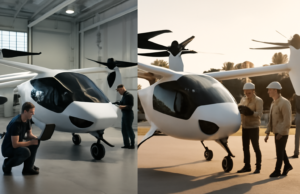
Florida law enforcement agencies are taking to the skies with a new piece of technology that sounds unmistakably distinctive—a manned eVTOL craft that has earned the nickname “angry wasps” for its distinctive auditory signature. This latest development represents a significant milestone in the adoption of electric vertical takeoff and landing aircraft by police departments, expanding the potential applications of personal air mobility beyond commercial and recreational uses into the public safety sector.
Florida Police Adopt Manned eVTOL Technology
The deployment of manned eVTOL aircraft by Florida police marks a watershed moment for law enforcement modernization. Rather than relying solely on traditional helicopters or drones, police departments in Florida are now utilizing electric vertical takeoff and landing technology to enhance their operational capabilities. This shift reflects a broader industry recognition that eVTOL vehicles offer distinct advantages over conventional aerial platforms, particularly in urban and suburban environments where noise and airspace congestion are significant concerns.
The adoption process has been deliberate and strategic, with police agencies evaluating how manned eVTOL craft can supplement their existing aerial surveillance and patrol capabilities. The aircraft in question is described as a “manned drone”—a terminology that reflects the hybrid nature of modern eVTOL designs that combine autonomous flight systems with human pilot control. This flexibility allows law enforcement to adapt operational approaches based on specific mission requirements, whether those involve active pursuit, reconnaissance, or rapid response scenarios.
Florida’s selection as a testing ground for this technology is particularly noteworthy given the state’s challenging geography and dense population centers. The diverse terrain, ranging from urban Miami to swampy rural regions, provides an ideal real-world testing environment for eVTOL performance characteristics. Police departments can evaluate aircraft reliability, pilot training requirements, and operational integration challenges in actual patrol scenarios rather than controlled laboratory conditions.
The “Angry Wasps” Sound and Public Perception
One of the most distinctive aspects of this deployment is the aircraft’s distinctive sound profile, which has been humorously characterized as resembling “angry wasps.” This acoustic signature is not incidental to the design—it’s an inherent consequence of the high-frequency motor sounds produced by electric propulsion systems operating at patrol altitudes. Unlike traditional helicopter rotors or fixed-wing aircraft engines, eVTOL motors generate a distinctive whining or buzzing sound that carries differently through the atmosphere, creating a unique acoustic footprint.
The auditory characteristics of manned eVTOL aircraft present both challenges and opportunities for law enforcement adoption. While the distinctive sound may initially alarm residents unfamiliar with the technology, it actually provides clear sonic notification of police operations in progress. This transparency can enhance public confidence in law enforcement activities, as the distinctive sound signal differentiates police eVTOL operations from other aircraft or surveillance systems. The acoustic profile essentially serves as an aerial announcement of police presence in a given area.
Public perception will likely evolve as communities become more familiar with the sound and operational patterns of police eVTOL craft. Early adoption in Florida provides valuable data on community response, noise complaints, and operational effectiveness. This feedback loop is crucial for refining deployment strategies, establishing flight patterns that minimize disruption, and building public understanding of the technology’s role in modern policing. Social media and local news coverage, while sometimes humorous, helps normalize eVTOL operations in the public consciousness.
Operational Advantages for Law Enforcement
Manned eVTOL aircraft offer several distinct operational advantages over traditional helicopter platforms for police work. Electric propulsion systems provide superior efficiency, lower operating costs per flight hour, and reduced maintenance requirements compared to conventional internal combustion engines. For police departments operating on constrained budgets, these economic benefits translate to extended patrol capabilities and more frequent deployment opportunities. The lower noise profile compared to traditional helicopters also reduces community disruption during operations, though the distinctive eVTOL sound remains noticeable.
The vertical takeoff and landing capability provides tactical advantages in densely populated areas where traditional helicopter operations are limited by airfield requirements and noise restrictions. Police eVTOL craft can operate from parking lots, parks, or municipal facilities, enabling rapid response deployment without extensive infrastructure investment. This proximity to operational areas means reduced response times for urgent situations and the ability to maintain active surveillance over specific neighborhoods or incident zones with minimal repositioning requirements.
Battery technology and flight endurance represent ongoing areas of focus for police eVTOL operations. Modern manned eVTOL aircraft can typically sustain flight for 30-60 minutes on a single charge, sufficient for many patrol and surveillance missions. As battery technology continues evolving, flight duration will extend further, enabling longer endurance patrols and expanded operational flexibility. The ability to rapidly recharge and redeploy aircraft from multiple locations means police departments can maintain continuous aerial coverage without the massive infrastructure requirements associated with traditional helicopter operations.
Regulatory Framework and Certification Challenges
The deployment of manned eVTOL aircraft by Florida police departments operates within an evolving regulatory landscape that continues to develop at both federal and state levels. The Federal Aviation Administration (FAA) has established certification pathways for eVTOL aircraft, but police operations introduce additional complexity regarding airspace integration, pilot certification, and safety protocols. Law enforcement agencies must navigate not only traditional aviation regulations but also emerging standards specific to eVTOL technology and urban air mobility operations.
Pilot training and certification requirements represent a significant component of the regulatory framework. Police pilots operating eVTOL craft must demonstrate proficiency in electric propulsion system operation, novel flight characteristics, and emergency procedures specific to eVTOL platforms. This training requirement ensures operational safety while introducing new competency standards for law enforcement aviation personnel. The distinctive handling characteristics of eVTOL aircraft, particularly rapid acceleration and braking capabilities, require specialized training distinct from traditional helicopter pilot preparation programs.
Airspace coordination and integration with existing air traffic control systems present ongoing regulatory challenges. As manned eVTOL operations expand beyond experimental deployments, regulatory agencies must establish clear protocols for integrating police eVTOL craft into controlled and uncontrolled airspace. This coordination is essential for preventing conflicts with general aviation, commercial flights, and other police operations. Florida’s status as a leading eVTOL testing ground means that operational experience from police deployments will directly inform broader regulatory development affecting the entire industry.
Key Operational and Strategic Takeaways
- Florida police departments are pioneering the use of manned eVTOL aircraft for patrol operations, positioning the state as a leader in law enforcement aviation modernization and establishing operational precedents for other agencies nationwide.
- The distinctive “angry wasps” sound signature of eVTOL motors creates a unique acoustic footprint that differentiates police operations while serving as transparent notification of law enforcement aerial activity to the public.
- Electric propulsion systems deliver operational cost savings, rapid deployment capability from distributed locations, and extended patrol flexibility compared to traditional helicopter-based law enforcement aviation.
The deployment of manned eVTOL aircraft by Florida police departments represents a pivotal moment in the evolution of both law enforcement and personal air mobility technologies. As these agencies gain operational experience with eVTOL platforms, the insights and data they generate will shape industry standards, regulatory frameworks, and adoption patterns across the broader aerospace sector. The distinctive sound of “angry wasps” patrolling Florida’s skies signals not just a police innovation, but a fundamental shift in how communities and law enforcement agencies think about aerial operations in an increasingly congested and complex airspace environment. This pilot program provides valuable real-world validation that manned eVTOL technology is transitioning from experimental concept to practical operational tool, with implications extending far beyond law enforcement into emergency medical services, disaster response, and other time-critical applications requiring rapid aerial deployment.