
HIGHLIGHTS
- Sarla Aviation’s seven-motor electric propulsion system delivers redundancy and reliability essential for passenger-safe eVTOL certification and commercial operations
- Bengaluru’s aerospace talent ecosystem and India’s evolving DGCA regulatory framework position the headquarters as a competitive hub for eVTOL development competing globally
- India’s investment in indigenous eVTOL capabilities signals emerging markets are building next-generation urban air mobility ecosystems, not just adopting foreign technology
Sarla Aviation has officially unveiled its new headquarters in Bengaluru, marking a significant milestone in India’s emerging electric vertical takeoff and landing (eVTOL) sector. The establishment of this dedicated facility underscores the company’s commitment to advancing sustainable urban air mobility solutions and positions Bengaluru as a growing hub for aerospace innovation in South Asia.
Sarla Aviation’s Strategic Expansion
Sarla Aviation’s decision to establish a dedicated headquarters in Bengaluru reflects the company’s confidence in India’s potential as a center for eVTOL innovation and manufacturing. The new facility will serve as the primary development and operational base for the company’s electric vertical takeoff aircraft programs. This expansion demonstrates how private aerospace companies are increasingly investing in India’s tech ecosystem and infrastructure capabilities.
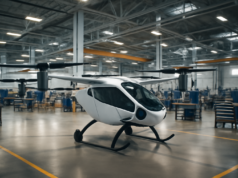
The Bengaluru headquarters consolidates Sarla Aviation’s engineering, design, and operational teams under one roof, enabling faster iteration cycles and more efficient collaboration. The facility is equipped with state-of-the-art equipment for aircraft development, testing, and validation. By centralizing operations in Bengaluru—India’s technology capital—Sarla Aviation gains access to a vast pool of skilled engineers and technical talent.
This expansion also signals India’s growing importance in the global eVTOL race. While companies like Joby Aviation, Archer Aviation, and others have dominated headlines in North America and Europe, Sarla Aviation’s investment in homegrown infrastructure demonstrates that emerging markets are establishing genuine capabilities in this transformative technology sector.
Seven-Motor Electric Architecture
At the heart of Sarla Aviation’s development efforts is a seven-motor electric propulsion system designed to deliver efficient, reliable vertical takeoff and landing capabilities. The multi-motor architecture distributes power across multiple independent electric units, enhancing safety through redundancy and improving overall system reliability. This approach is increasingly favored in the eVTOL industry as a path to certifiable, passenger-safe aircraft.
The seven-motor configuration allows Sarla Aviation to optimize power distribution and manage thrust vectoring for precise flight control. Electric motors offer significant advantages over traditional combustion engines: instant torque response, lower operating costs, reduced maintenance requirements, and zero direct emissions. The combination of multiple electric motors with advanced battery systems enables the company to achieve the performance targets necessary for urban air mobility applications.
Sarla Aviation’s engineering team has focused on developing lightweight composite structures and efficient power management systems to maximize range and payload capacity. The seven-motor design also provides architectural flexibility for future scaling and adaptation to different mission profiles, whether for passenger transport, cargo delivery, or emergency medical services applications.
India’s eVTOL Ecosystem Development
India’s aviation regulatory landscape has evolved considerably to accommodate emerging eVTOL manufacturers. The Directorate General of Civil Aviation (DGCA) has signaled openness to certifying electric aircraft and has engaged with industry stakeholders to develop appropriate regulations. Sarla Aviation’s headquarters establishment demonstrates confidence that India’s regulatory framework will continue to mature and support commercial eVTOL operations within the coming years.
Bengaluru specifically has emerged as an attractive location for aerospace innovation due to its existing aerospace industrial base, proximity to major technology companies, and strong engineering talent pool. The city is home to numerous aerospace suppliers, defense contractors, and space technology companies, creating a supportive industrial ecosystem for new entrants like Sarla Aviation. This concentration of expertise and resources accelerates development timelines and reduces supply chain friction.
The success of companies like Sarla Aviation could catalyze a broader eVTOL cluster in India, attracting component suppliers, battery manufacturers, avionics providers, and service providers to establish local operations. This vertical integration of the eVTOL supply chain would create thousands of high-skilled jobs and position India as a global competitor in the advanced mobility sector.
Path to Commercial Operations
Establishing a dedicated headquarters represents a critical step toward bringing Sarla Aviation’s eVTOL aircraft to commercial service. The facility will support prototype development, ground testing, and eventually flight testing programs necessary for regulatory certification. Moving from concept and initial prototype phases to certification-ready aircraft requires sustained engineering effort, significant capital investment, and access to specialized testing infrastructure—all now concentrated at the Bengaluru headquarters.
The company’s timeline for commercial operations will depend on successful completion of design validation, prototype development, and achieving regulatory approval from the DGCA. International precedent suggests this process typically spans 5-7 years from intensive development to first commercial flights, though timelines vary based on aircraft complexity, regulatory requirements, and funding availability. Sarla Aviation’s dedicated facility accelerates progress by providing permanent engineering capacity and institutional focus.
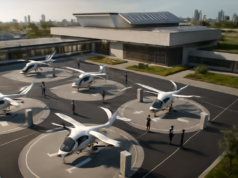
Commercial eVTOL services in India could address critical transportation challenges in congested metropolitan areas like Bengaluru, Mumbai, and Delhi. Urban air mobility could reduce ground congestion, provide rapid transit for business professionals, support emergency medical transport, and create new revenue streams for aviation operators. Sarla Aviation’s work positions India to potentially leapfrog traditional aviation infrastructure and establish next-generation mobility networks.
Key Takeaways on Sarla Aviation’s Bengaluru Headquarters
- Sarla Aviation’s new Bengaluru headquarters consolidates eVTOL aircraft development and positions India as a serious contender in the global electric aviation market
- The company’s seven-motor electric propulsion architecture provides redundancy, safety, and efficiency advantages critical for passenger-carrying eVTOL certification
- India’s emerging regulatory framework and Bengaluru’s aerospace talent ecosystem create favorable conditions for rapid eVTOL development and eventual commercial deployment
Sarla Aviation’s unveiling of its Bengaluru headquarters marks an inflection point for India’s participation in the eVTOL revolution. By establishing dedicated facilities and committing significant engineering resources to electric vertical takeoff aircraft development, the company demonstrates that emerging economies are not merely adopting eVTOL technology but building indigenous capabilities. As Sarla Aviation progresses toward certifiable aircraft and commercial operations, India’s urban air mobility sector will generate global attention and potentially reshape how mobility evolves across Asia’s growing metropolitan centers.