HIGHLIGHTS
- Joby Aviation’s Dallas flights mark the shift from experimental testing to commercial-ready operations, validating their six-passenger eVTOL aircraft for real-world urban air mobility missions.
- Texas is becoming the nation’s eVTOL hub, with supportive regulations, existing aerospace infrastructure, and cities like Dallas actively hosting vertiport development and air taxi operations.
- Joby’s operational success establishes regulatory precedents that will accelerate certifications for competing manufacturers, potentially triggering multiple commercial air taxi launches across U.S. cities within 2-3 years.
Joby Aviation’s recent electric vertical takeoff and landing (eVTOL) flights in Dallas represent a watershed moment for personal air mobility in Texas. The successful operations signal that commercial air taxi services are no longer a distant future concept—they’re becoming operational reality in one of America’s most dynamic tech hubs. With these flights now underway, Texas is positioning itself as a leading hub for urban air mobility innovation, drawing attention from both established aerospace players and startup developers.
Joby’s Dallas Operations: From Concept to Takeoff
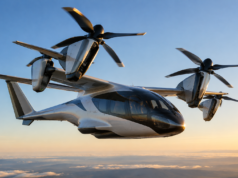
Joby Aviation has been pursuing regulatory approval for commercial eVTOL operations for years, and Dallas represents a major validation of their aircraft design and operational protocols. The flights conducted in Dallas demonstrate that Joby’s six-passenger electric aircraft can safely perform the complex maneuvers required for urban air mobility—including vertical takeoffs, transitions to forward flight, and precision landings in constrained environments.
These operations build on Joby’s extensive flight testing program, which has logged thousands of test flights across multiple locations. The Dallas flights, however, mark a critical transition from purely developmental testing to operations that more closely mirror intended commercial service patterns. This represents Joby’s confidence that their regulatory pathway is on track and that their aircraft meets or exceeds safety standards established by the Federal Aviation Administration (FAA).
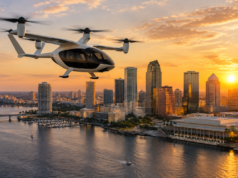
The successful execution of Dallas flights also validates Joby’s business model, which targets premium urban transportation for passengers willing to pay premium prices to avoid ground traffic congestion. With Dallas’s sprawling geography and notorious traffic congestion, the city represents an ideal market for point-to-point air taxi service between downtown, airports, and suburban business centers.
Texas’s Emerging Air Mobility Ecosystem
Texas as a state has aggressively positioned itself to become a hub for advanced air mobility development. Beyond Joby, multiple eVTOL manufacturers and drone operators are establishing operations throughout Texas, from Houston to Austin to San Antonio. The state’s regulatory environment, substantial venture capital ecosystem, and existing aerospace infrastructure have created ideal conditions for this emerging industry.
The Texas eVTOL ecosystem is being supported by partnerships between private companies, municipal governments, and state-level policy initiatives. Cities like Dallas recognize that hosting these operations can generate economic development opportunities, create new jobs in aircraft maintenance and operations, and position their metropolitan areas as innovation leaders. This creates a virtuous cycle where successful early operations attract additional investment and talent.
Infrastructure development is also accelerating across Texas. Skyports and vertiports—specialized facilities designed for eVTOL operations—are being planned or developed in major metropolitan areas. These facilities require different infrastructure than traditional airports, with smaller footprints, noise mitigation, and integration into urban environments. Texas cities are learning these operational requirements through early partnerships with companies like Joby.
Regulatory Pathways and Safety Validation
The FAA has established a careful regulatory framework for integrating eVTOL operations into the National Airspace System. This framework requires extensive testing, pilot certification, operational procedures development, and public safety validation. Joby’s Dallas flights occur within this regulatory structure, with FAA oversight ensuring that operational standards are met before commercial service expands.
Safety remains the paramount concern for regulatory agencies and the public. eVTOL aircraft must demonstrate redundancy across critical systems, reliable emergency procedures, and compatibility with existing air traffic control infrastructure. Joby’s aircraft design includes multiple redundant systems for propulsion, control, and battery management—safety features that are being validated through real-world operational testing like the Dallas flights.
The regulatory validation happening through operations like Joby’s Dallas flights will establish precedents for how other eVTOL manufacturers can pursue certification and commercial operations. Each successful operation builds confidence that the regulatory framework is workable and that eVTOL technology can be safely integrated into urban airspace. This creates a pathway for other manufacturers, including companies developing electric drone platforms and next-generation aircraft designs.
Commercial Viability and Market Expansion
The economic viability of commercial eVTOL services depends on demonstrating operational efficiency and customer demand at launch markets. Dallas’s Dallas Fort Worth International Airport serves as a natural vertiport location for Joby services, creating point-to-point routes that avoid ground transportation bottlenecks. Early pricing will likely target premium passengers, with costs potentially ranging from $150-$300 per flight depending on distance and demand patterns.
Joby’s successful Dallas operations demonstrate that demand exists for premium air taxi services. Business travelers, time-sensitive visitors, and high-value customers represent the initial market segment. As volume increases and operational efficiencies improve, unit costs should decrease, potentially expanding addressable markets over time. This price-volume trajectory has been achieved by other transportation innovations, from commercial aviation to ride-sharing services.
Beyond Dallas, Joby and competitors are eyeing other major metropolitan areas with similar characteristics: geographic sprawl, severe ground traffic congestion, concentrations of high-income potential passengers, and supportive regulatory environments. Texas cities like Houston and Austin represent logical expansion targets, as do cities nationwide with similar traffic challenges and economic profiles.
The Broader eVTOL Industry Landscape
Joby’s Dallas flights occur within a broader competitive landscape of eVTOL developers pursuing commercial operations. Companies including Lilium, Archer Aviation, Beta Technologies, and others are pursuing similar regulatory certifications and operational launch plans. Each company brings different technical approaches—some emphasizing battery-electric propulsion, others exploring hybrid-electric systems, and some pursuing specialized cargo or emergency services applications.
The diversity of approaches strengthens the overall ecosystem by creating multiple pathways for technological advancement and market development. Different aircraft designs excel in different operating environments, and multiple manufacturers can serve different market segments and geographic regions. This competitive dynamic mirrors the trajectory of early aviation, where multiple manufacturers competed until industry consolidation occurred after proven commercial viability.
Investment in eVTOL development continues to accelerate, with both traditional aerospace companies and specialized venture-backed startups pursuing certifications. Aircraft manufacturers like Boeing and Airbus have acquired or invested in eVTOL developers, recognizing the potential market size. This capital influx validates the industry’s potential while creating resources for the rapid iteration and refinement required for commercial success.
Key Takeaways: Joby’s Dallas Achievement and Industry Implications
- Joby’s Dallas eVTOL flights transition the technology from purely experimental testing to operations that validate commercial readiness, demonstrating safe and reliable performance in real-world urban environments.
- Texas has emerged as a premier eVTOL hub due to its supportive regulatory environment, aerospace infrastructure, venture capital ecosystem, and urban markets with severe traffic congestion creating ideal conditions for air taxi adoption.
- Early commercial operations in Dallas establish regulatory precedents and safety validations that will accelerate certifications for other manufacturers, potentially triggering multiple eVTOL launches across American cities within the next 2-3 years.
Joby Aviation’s successful electric air taxi flights in Dallas represent far more than a single company milestone—they signal that the era of commercial urban air mobility is beginning. The transition from decades of development and testing to actual operational flights demonstrates technological maturity, regulatory progress, and market readiness. Texas’s emergence as a leading eVTOL hub will likely drive additional investment, talent recruitment, and infrastructure development throughout the state. As other manufacturers achieve similar operational milestones, the combination of multiple competitive platforms, proven regulatory frameworks, and demonstrated customer demand could trigger rapid scaling of air taxi services across major American metropolitan areas. The Dallas flights are the beginning of an aviation revolution that will reshape urban transportation fundamentally.