HIGHLIGHTS
- Skyfly secures $10 million funding to advance the Axe eVTOL aircraft toward commercial certification and market launch
- The Axe balances vertical takeoff capability with forward flight efficiency and simplified operations designed for practical consumer adoption
- Strong investor confidence signals sustained momentum in personal air mobility sector despite ongoing regulatory and technical challenges
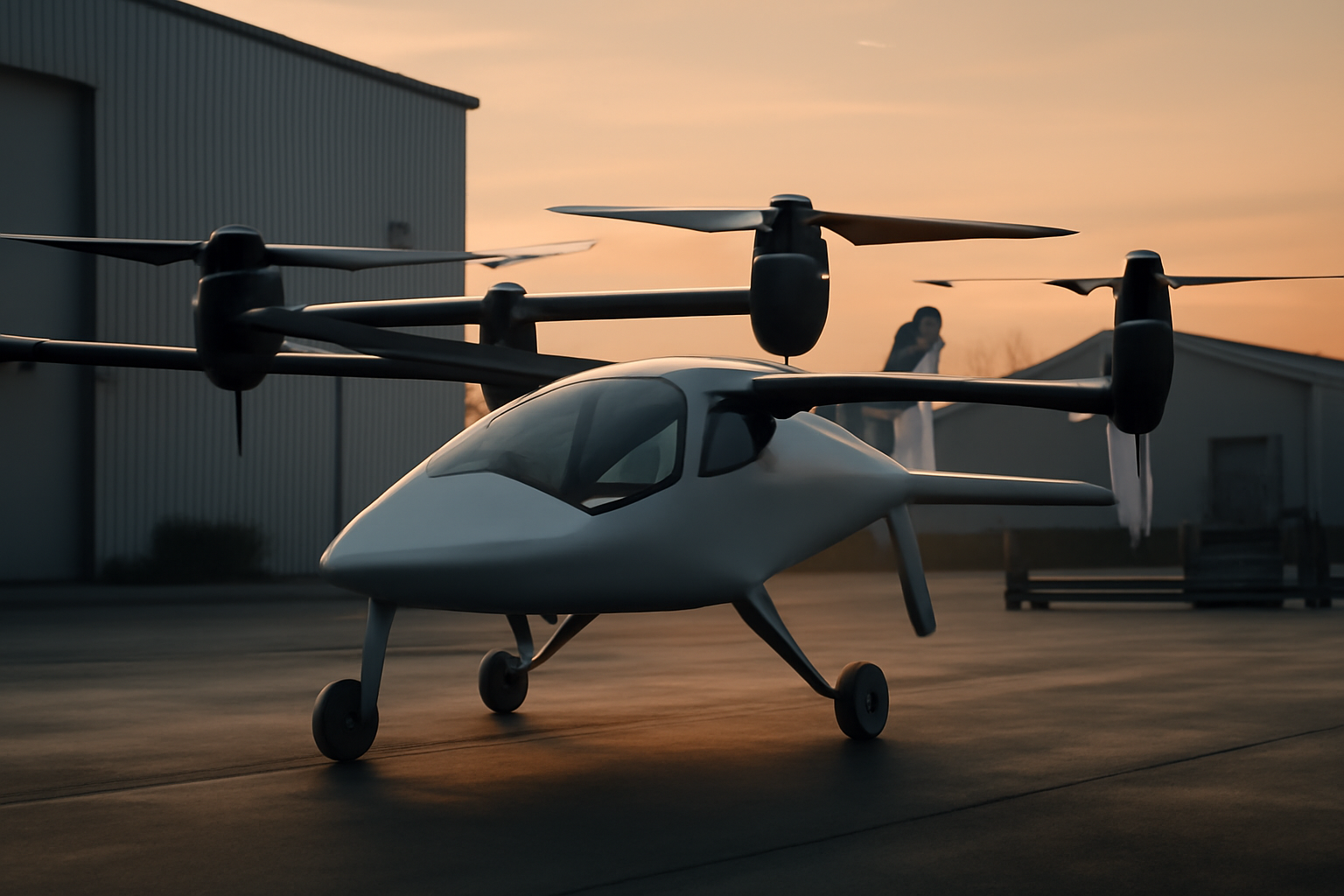
Skyfly has announced a significant $10 million funding round to accelerate the development and market launch of the Axe, an innovative personal electric vertical takeoff and landing (eVTOL) aircraft. This investment milestone marks a critical step toward making urban air mobility accessible to consumers and represents growing confidence in the commercial viability of personal eVTOL vehicles. The Axe represents a new generation of aircraft designed to democratize aviation, moving beyond traditional rotorcraft to offer a sleek, efficient alternative for personal and regional transportation.
Skyfly’s Vision for Personal Air Mobility
Skyfly has positioned itself at the forefront of the personal eVTOL revolution, focusing on engineering solutions that balance performance, affordability, and accessibility. The company’s mission extends beyond creating cutting-edge aircraft; it aims to fundamentally transform how people think about personal transportation. By investing in electric propulsion technology and advanced flight control systems, Skyfly is working to eliminate many of the barriers that have historically kept aviation exclusive to commercial operators and wealthy individuals.
The company’s approach emphasizes practical design choices that prioritize user experience and operational efficiency. Rather than pursuing maximum altitude or speed specifications that exceed practical needs, Skyfly has engineered the Axe to excel in real-world scenarios that matter to commuters and regional travelers. This philosophy has resonated with investors and industry observers who recognize that sustainable adoption of eVTOL technology depends on delivering genuine value to end-users.
With the fresh capital injection, Skyfly is poised to expand its engineering team, accelerate prototype testing, and establish the manufacturing partnerships necessary for commercial production. The $10 million funding round validates the company’s technical roadmap and strengthens its competitive position in an increasingly crowded market of eVTOL startups vying for regulatory approval and customer adoption.
The Axe Aircraft: Engineering Innovation Meets Market Demand
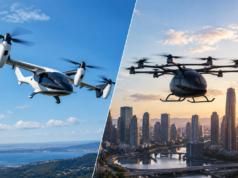
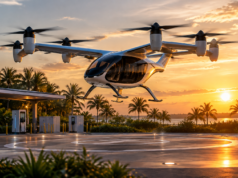
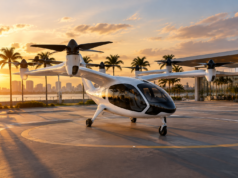
The Axe represents a departure from conventional eVTOL designs by incorporating advanced aerodynamic principles and efficient electric propulsion architecture. The aircraft’s configuration balances vertical takeoff and landing capability with forward flight performance, enabling operators to access constrained urban environments while maintaining reasonable cruise speeds for practical distance coverage. This hybrid approach addresses a fundamental challenge in eVTOL development: delivering sufficient performance without sacrificing safety or requiring excessive energy consumption.
One of the Axe’s distinguishing features is its emphasis on operational simplicity and reliability. The aircraft’s avionics and flight management systems are designed to support both piloted and autonomous operations, providing flexibility as regulatory frameworks and market conditions evolve. Early reports suggest the Axe achieves impressive energy efficiency metrics compared to competing designs, which directly translates to extended range and reduced operating costs—critical factors for commercial viability in personal aviation markets.
The aircraft’s cabin design prioritizes passenger comfort and safety, with redundant systems protecting occupants during all phases of flight. Skyfly has incorporated lessons learned from decades of helicopter operations while applying cutting-edge innovations in battery management, motor control, and structural materials. This synthesis of established aviation principles and emergent technologies positions the Axe as a credible alternative to traditional helicopters and other personal aircraft platforms.
Funding Landscape and Industry Momentum
The $10 million funding round reflects the accelerating investment momentum in the eVTOL sector. Over the past several years, venture capital firms, corporate investors, and strategic partners have committed billions of dollars to advance personal air mobility technologies. Skyfly’s successful capital raise demonstrates that investors continue to view the sector as a compelling long-term opportunity despite regulatory uncertainties and technical challenges that persist across the industry.
This funding environment has been driven by several converging factors: maturing battery technology that now enables meaningful electric aircraft range, proven autonomous flight capabilities across drone platforms, growing urban congestion that increases the relative value of air transportation, and regulatory agencies worldwide developing operational frameworks for eVTOL vehicles. Skyfly’s funding success suggests that experienced investors believe the company has assembled the technical expertise, business strategy, and market positioning necessary to convert opportunity into commercial reality.
Beyond capital injection, successful funding rounds in the eVTOL space often unlock strategic partnerships with aerospace suppliers, certification consultants, and potential airline or operator partners. Skyfly’s $10 million milestone likely opens doors to collaborations that will accelerate development timelines and de-risk the pathway to regulatory certification and customer delivery. The company’s ability to attract investor confidence may also influence talent recruitment, as top engineering talent increasingly seeks opportunities in transformational aerospace ventures.
Path to Market and Regulatory Considerations
Bringing a novel aircraft design from prototype to certified commercial service involves navigating complex regulatory requirements established by aviation authorities including the FAA in the United States and EASA in Europe. Skyfly must demonstrate that the Axe meets rigorous safety standards, environmental compliance requirements, and operational performance criteria before certifying pilots and offering commercial services. The company’s funding allows it to engage experienced certification consultants and conduct the extensive testing campaigns necessary to satisfy regulatory scrutiny.
The regulatory landscape for eVTOL aircraft remains in active development, with certification frameworks continuing to evolve as authorities gain experience with electric propulsion systems and autonomous flight capabilities. Skyfly’s investment in robust engineering practices and transparent communication with regulators positions the company to influence favorable certification pathways while ensuring the Axe meets or exceeds established safety standards. Early regulatory engagement has proven essential for other eVTOL companies pursuing certification, and Skyfly’s resources now support a proactive regulatory strategy.
Timeline expectations for eVTOL certification and market entry have gradually extended as the industry has gained realistic understanding of development complexity. Most observers now anticipate that first-generation commercial eVTOL services will become available in select markets between 2027 and 2029. Skyfly’s $10 million funding positions the company competitively within this window, enabling the engineering, certification, and manufacturing preparation necessary for timely market entry. The company’s ability to execute efficiently on this timeline while maintaining safety and performance standards will ultimately determine commercial success.
Competitive Landscape and Market Differentiation
The personal eVTOL market encompasses numerous competitors with varying approaches to aircraft design, target markets, and operational models. Established aerospace companies like Airbus, Boeing, and Bell have invested substantially in eVTOL programs, while venture-backed startups including Joby Aviation, Lilium, Archer Aviation, and others pursue alternative designs and market strategies. Skyfly must differentiate the Axe through superior performance characteristics, lower acquisition or operating costs, unique regulatory advantages, or compelling customer value propositions that justify selection over competing platforms.
The company’s ability to deliver on promises of affordability and practical usability will prove decisive in establishing market share. If Skyfly can produce the Axe at price points significantly lower than competitive alternatives while maintaining performance and reliability standards, the aircraft could capture substantial market demand from commercial operators, regional air taxi services, and eventually personal owners. Conversely, if development timelines slip or costs escalate beyond projections, competitive pressure from well-funded rivals could limit Skyfly’s market opportunity.
Strategic partnerships and ecosystem positioning also influence competitive success. Airlines, regional carriers, air taxi operators, and charter services represent potential anchor customers that could accelerate production volumes and drive profitability. Skyfly’s $10 million funding enables the company to pursue partnerships that position the Axe as the preferred platform within specific market segments, whether regional commuting, emergency medical transport, or emerging air taxi networks in congested urban corridors.
Key Takeaways from Skyfly’s $10 Million Milestone
- Skyfly’s $10 million funding secures resources for accelerated Axe development, regulatory certification, and manufacturing preparation toward near-term market entry.
- The Axe aircraft balances vertical takeoff capability with efficient forward flight performance and simplified operations, addressing practical requirements for commercial eVTOL adoption.
- Skyfly’s successful funding round validates investor confidence in personal air mobility markets and positions the company competitively within an increasingly crowded eVTOL sector landscape.
Skyfly’s $10 million funding announcement marks an important milestone in the evolution of personal air mobility. As the company accelerates development of the Axe aircraft, successful execution on engineering, regulatory, and manufacturing fronts will determine whether Skyfly captures meaningful market share in the emerging eVTOL industry. The coming years will reveal whether the Axe delivers on the promise of accessible, practical personal aviation or whether competitive pressures and technical challenges redirect market leadership to other players. Industry observers and potential customers should closely monitor Skyfly’s progress toward prototype maturation, regulatory certification achievements, and commercial partnership announcements as indicators of the company’s trajectory toward successful market entry.