HIGHLIGHTS
- Florida officially enters federal eVTOL pilot program with test flights aimed at evaluating safety, performance, and operational integration
- Data from Florida’s flights directly informs FAA rulemaking and certification standards for future commercial air taxi services
- Successful testing positions Miami, Orlando, and Tampa as early markets for commercial eVTOL services with infrastructure and economic opportunities
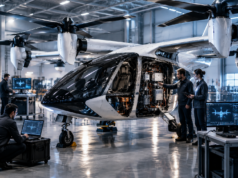
Florida has officially entered the emerging era of electric vertical takeoff and landing (eVTOL) aircraft with the initiation of test flights under a federal pilot program. These flights represent a pivotal moment for the state’s participation in the development and certification of advanced air mobility solutions, positioning Florida as a key testing ground for the future of urban aviation.
Florida’s Entry into Federal eVTOL Testing
The state of Florida has taken a significant step forward by participating in a federally-coordinated pilot program dedicated to exploring the viability of electric vertical takeoff and landing aircraft. This initiative marks the beginning of systematic testing and evaluation efforts that will help regulators understand the operational, safety, and infrastructure requirements for eVTOL systems in real-world environments.
These early test flights are conducted under strict oversight and are designed to gather critical data on vehicle performance, pilot operations, air traffic integration, and safety protocols. The flights represent months of preparation involving collaboration between state aviation authorities, federal regulators, and industry partners committed to advancing electric air mobility.
By participating in this federal program, Florida demonstrates its commitment to being at the forefront of aviation innovation and technology adoption. The state’s geographic location, diverse airspace, and established aerospace infrastructure make it an ideal location for testing the next generation of air transportation systems.
Federal Pilot Program Objectives and Scope
The federal eVTOL pilot program is designed with clear objectives: to evaluate the safety, efficiency, and feasibility of electric vertical takeoff and landing operations within the National Airspace System. These pilot initiatives aim to develop best practices, identify regulatory gaps, and create a framework for scaled commercial operations in the coming years.
Participating states and regions conduct controlled test flights that measure aircraft performance metrics, assess ground infrastructure needs, and evaluate integration with existing air traffic control systems. The data collected from these flights directly informs federal rulemaking and certification processes being developed by the Federal Aviation Administration.
The program also evaluates the operational aspects of eVTOL services, including vertiport requirements, charging infrastructure, maintenance protocols, and training standards for pilots and support personnel. This comprehensive approach ensures that when commercial services launch, they will be built on a solid foundation of tested procedures and proven safety measures.
Implications for Urban Air Mobility in Florida
Florida’s participation in federal eVTOL testing accelerates the timeline for potential commercial air taxi services in major metropolitan areas. Major cities including Miami, Orlando, and Tampa could become early adopters of electric air mobility systems, transforming how residents and visitors move through congested urban corridors.
The successful execution of these test flights validates Florida’s readiness to support the infrastructure and regulatory environment necessary for eVTOL operations. This positions the state competitively for economic benefits including manufacturing facilities, maintenance centers, pilot training programs, and technology development hubs focused on advanced air mobility.
Beyond commercial applications, these flights demonstrate Florida’s commitment to exploring sustainable aviation solutions that reduce emissions and congestion. Electric aircraft offer significant environmental advantages over traditional combustion-powered helicopters and fixed-wing aircraft, aligning with broader climate and air quality goals.
Next Steps and Timeline for Expansion
The initial test flights represent an early phase in a longer development timeline. As data accumulates and safety records improve, the scope of testing is expected to expand, potentially including longer flight distances, increased traffic density scenarios, and more complex urban environments.
Regulators and industry partners are working toward establishing a predictable regulatory pathway for commercial eVTOL services. This includes developing type certification standards, airworthiness criteria, and operational approval processes that balance innovation with safety and public acceptance.
Florida’s ongoing participation in federal pilot programs will likely influence the state’s own regulatory framework for advanced air mobility. State legislators and aviation authorities are actively monitoring these developments to ensure that local regulations align with federal guidelines while supporting economic growth and technological advancement.
Key Takeaways from Florida’s eVTOL Pilot Program Participation
- Florida’s test flights mark the state’s official participation in federal eVTOL pilot programs, advancing evaluation of electric aircraft safety and operational feasibility
- Data from these controlled flights directly supports FAA rulemaking and certification standards for commercial electric air mobility services
- Successful testing positions Florida cities like Miami and Orlando as early commercial eVTOL markets, with potential economic benefits from infrastructure and manufacturing development
Florida’s entry into federal eVTOL testing represents a watershed moment for advanced air mobility in the state. As test flights continue and data accumulates, the foundation is being laid for a transformation in how people move through Florida’s major urban centers. The flights conducted today are stepping stones toward a future where electric air taxis become an integrated part of the transportation network, offering sustainable, efficient, and convenient mobility solutions for millions of residents and visitors.