HIGHLIGHTS
- Cellegant secures ₹2.61 crore funding to accelerate hydrogen fuel cell drone development and manufacturing scale-up
- Hydrogen-powered drones deliver 2-3x longer flight endurance and higher payloads than battery-powered alternatives
- IIT Gandhinagar spinoff positions India as emerging hub for sustainable drone innovation in competitive global market
IIT Gandhinagar’s ambitious startup Cellegant has achieved a significant milestone by securing ₹2.61 crore (approximately $310,000 USD) in funding to accelerate the development of hydrogen-powered drone technology. This investment marks a pivotal moment for the company as it works to establish hydrogen fuel cells as a viable, sustainable power source for commercial and industrial drone applications. The breakthrough funding demonstrates growing investor confidence in clean energy solutions for the aviation sector.
The Rise of Hydrogen-Powered Aviation
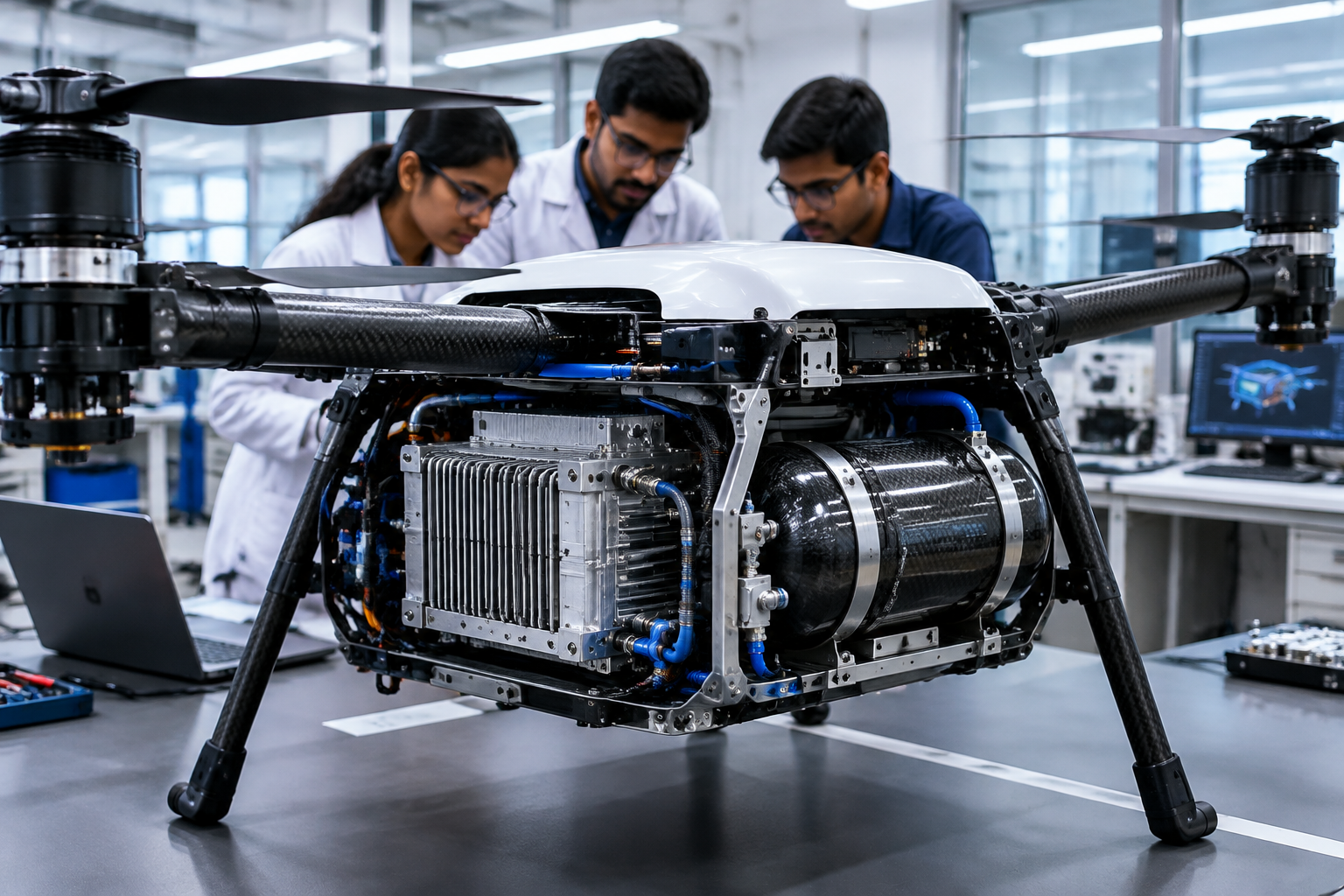
Hydrogen fuel cell technology has emerged as one of the most promising alternatives to battery-powered systems in the drone industry. While lithium-ion batteries dominate today’s market, they face inherent limitations including weight constraints, extended charging times, and environmental concerns around production and disposal. Hydrogen-powered systems offer significantly higher energy density, enabling drones to fly longer distances, carry heavier payloads, and operate in demanding industrial environments without the weight penalty of traditional batteries.
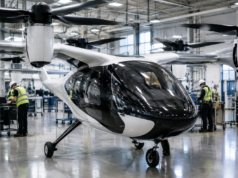
Cellegant’s hydrogen drone technology represents a transformative approach to aerial mobility that addresses critical pain points in logistics, agriculture, emergency response, and infrastructure inspection. By leveraging hydrogen fuel cells, the platform can deliver extended flight times—potentially doubling or tripling the operational range of comparable battery-powered drones. This capability opens new possibilities for long-distance cargo delivery, large-scale agricultural monitoring, and remote area connectivity where charging infrastructure remains limited.
The shift toward hydrogen-powered systems aligns with global decarbonization targets and regulatory pressures to reduce emissions in the aviation sector. As governments worldwide implement stricter environmental standards and carbon pricing mechanisms, clean energy alternatives like hydrogen become not just environmentally responsible but economically imperative for businesses seeking long-term viability.
IIT Gandhinagar’s Innovation Ecosystem
IIT Gandhinagar has established itself as a breeding ground for cutting-edge technology startups, with a particular focus on sustainable engineering solutions. The institute’s commitment to research and development in clean energy, materials science, and advanced systems has created an ideal environment for entrepreneurs like Cellegant to incubate breakthrough innovations. Cellegant’s emergence as an IIT spinoff reflects the institution’s success in translating academic research into commercially viable products.
The collaboration between academic institutions and startup ecosystems has proven invaluable for accelerating technology maturation. IIT Gandhinagar’s research facilities, mentorship networks, and industry connections provide Cellegant with access to expertise and resources that would otherwise take years to develop independently. This symbiotic relationship between academia and entrepreneurship creates a multiplier effect, enabling startups to move faster from prototype to market-ready solutions.
Beyond Cellegant, IIT Gandhinagar’s broader commitment to sustainable aviation technology positions India as an emerging hub for clean drone innovation. As international drone manufacturers and investors increasingly recognize India’s technical talent and cost advantages, the institute’s startups are well-positioned to capture significant market share in the global hydrogen aviation space.
Funding Milestone and Strategic Implications
The ₹2.61 crore funding round represents a crucial validation of Cellegant’s technology and business model. This capital injection will be deployed across multiple fronts: scaling prototype development, establishing manufacturing capabilities, conducting rigorous flight testing, and building strategic partnerships with logistics operators and industrial clients. For an emerging startup in the deep-tech space, securing this level of funding signals strong investor conviction in the hydrogen drone market.
The timing of this investment is particularly strategic, as the global drone market experiences rapid expansion and increased competition for differentiation. Companies that can demonstrate superior flight endurance, payload capacity, and environmental credentials will capture premium market segments in enterprise and industrial applications. Cellegant’s hydrogen technology addresses exactly these differentiators, positioning the startup to compete effectively against better-funded battery-based competitors.
Beyond Cellegant’s individual success, this funding round sends a broader market signal. It demonstrates that venture investors, corporates, and government agencies are actively seeking alternatives to lithium-ion battery technology in aviation. As capital continues to flow toward hydrogen solutions, we can expect acceleration in technology maturation, cost reduction, and commercialization timelines across the entire hydrogen drone ecosystem.
Challenges and the Path Forward
Despite hydrogen’s immense promise, significant technical and infrastructural challenges remain. Hydrogen storage, particularly in compact drone form factors, requires sophisticated fuel cell integration and pressure management systems. Safety protocols must be rigorously validated to ensure regulatory approval, especially as commercial drone operations expand into populated areas and sensitive environments. Cellegant will need to navigate complex aviation regulatory frameworks in India and internationally to bring hydrogen drones to market.
The broader hydrogen economy remains nascent, with limited refueling infrastructure outside industrial and aerospace sectors. For hydrogen drones to achieve mainstream adoption, complementary ecosystems must develop—including portable hydrogen refueling stations, standardized safety certifications, and trained operator protocols. Cellegant’s success will partially depend on its ability to influence and shape these emerging standards, positioning hydrogen as the preferred solution for enterprise drone applications.
Competitive pressures will intensify as larger drone manufacturers and aerospace companies invest in hydrogen technology. Companies like Hyundai, Toyota, and specialized hydrogen aviation startups worldwide are pursuing similar technologies. Cellegant must leverage its IIT heritage, Indian cost advantages, and first-mover status in specific verticals to establish defensible market positions before larger competitors scale their hydrogen programs.
Key Takeaways from Cellegant’s Funding Achievement
- Hydrogen fuel cells enable drones to achieve 2-3x longer flight times and higher payload capacity compared to lithium-ion batteries
- Cellegant’s ₹2.61 crore funding validates market demand for sustainable drone technology and reflects growing investor interest in hydrogen aviation
- IIT Gandhinagar’s startup ecosystem demonstrates India’s emerging strength in deep-tech innovation for clean energy and aerial mobility
Cellegant’s funding milestone represents more than a single startup victory—it signals the accelerating transition of the drone industry toward hydrogen-powered systems. As environmental regulations tighten, enterprise customers demand longer flight times and higher payloads, and investor capital flows toward climate solutions, hydrogen drones are transitioning from speculative technology to market-ready alternatives. Cellegant’s trajectory will be closely watched as an indicator of hydrogen aviation’s commercial viability and India’s ability to compete in next-generation aerospace innovation. The coming years will determine whether hydrogen becomes the dominant power source for industrial drones, but Cellegant’s investment suggests the market has already made its bet.