HIGHLIGHTS
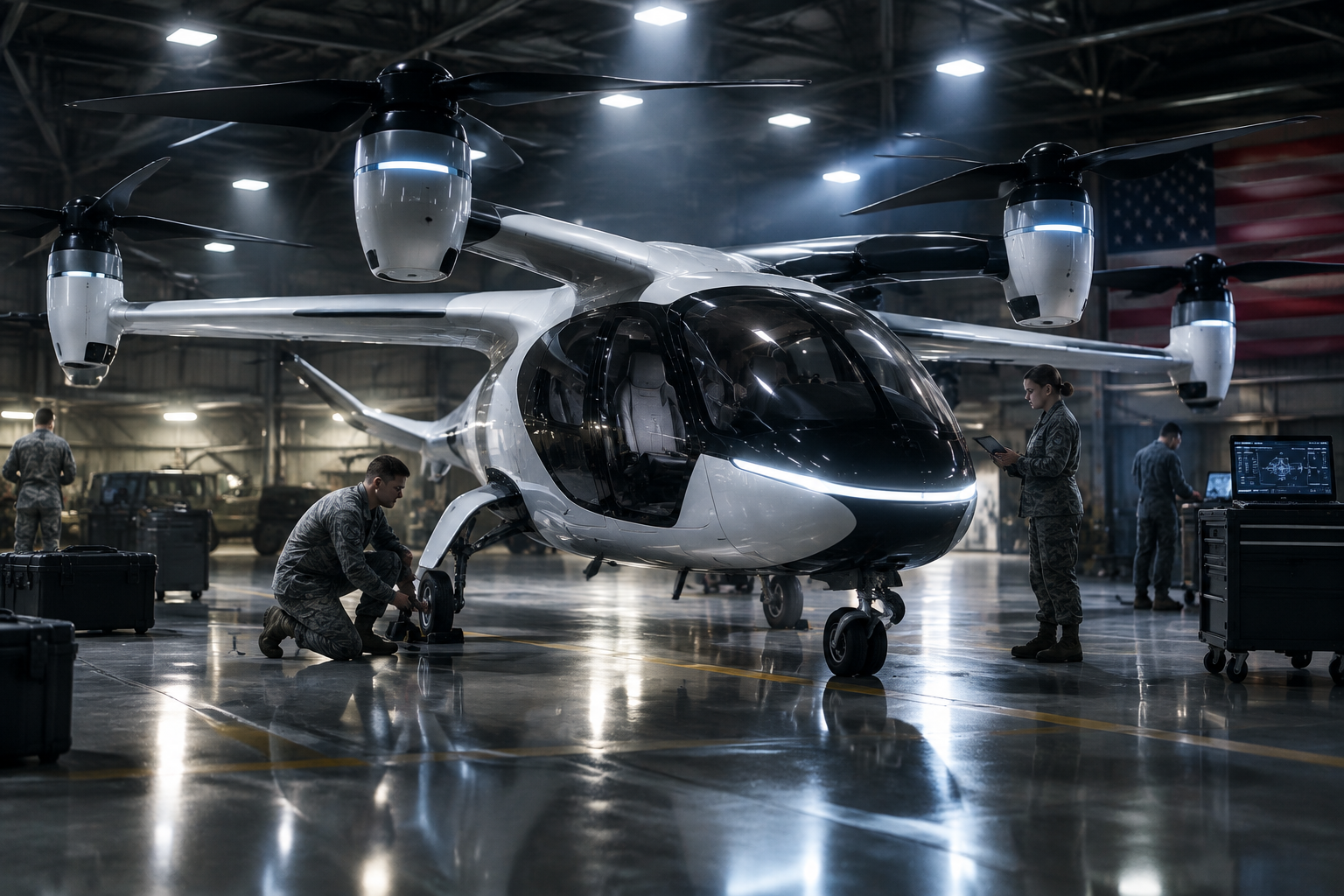
- Joby Aviation expands US Air Force contracts to nearly $37 million for autonomous eVTOL development and testing.
- Military investment generates critical performance data that accelerates FAA certification pathways for civilian eVTOL operations.
- Successful Air Force partnerships validate Joby’s autonomous technology and strengthen its competitive position in the emerging personal air mobility market.
Joby Aviation, a leading developer of electric vertical takeoff and landing (eVTOL) aircraft, has significantly expanded its partnership with the US Air Force, securing contracts now totaling nearly $37 million. This substantial increase represents a major vote of confidence in Joby’s autonomous flight technology and underscores the growing interest from military branches in next-generation air mobility solutions for both tactical and logistical operations.
Joby’s Milestone Achievement in Military Aviation
The expansion of Joby’s contract portfolio with the US Air Force reflects the accelerating pace of military adoption for autonomous eVTOL systems. With nearly $37 million in total contracts, Joby has positioned itself as a key player in the emerging intersection of defense technology and sustainable aviation innovation. This level of government investment signals that military planners view autonomous electric aircraft as operationally viable solutions for near-term deployment.
The Air Force’s continued confidence in Joby’s platform stems from successful demonstrations and technical progress across multiple program phases. These contracts fund ongoing development, testing, and validation activities that de-risk the technology for eventual operational deployment at military installations across the United States.
Military interest in eVTOL technology extends beyond novelty—the Air Force is actively evaluating how autonomous aircraft can enhance mission efficiency, reduce logistics costs, and provide rapid response capabilities in contested environments. Joby’s expanded contracts represent tangible progress toward these operational objectives.
Autonomous Flight Technology and Military Applications
At the core of Joby’s Air Force partnerships is autonomous flight technology—software systems capable of executing complex missions with minimal human intervention. This autonomous capability is particularly valuable for military applications, where it can reduce pilot workload, enable swarming operations, and provide persistent capabilities in high-risk scenarios.
Joby’s autonomous systems integrate advanced sensor fusion, real-time decision-making algorithms, and fail-safe protocols designed to meet stringent military standards. The company’s iterative testing with the Air Force has helped validate these systems across diverse operational scenarios, from point-to-point cargo transport to advanced reconnaissance missions.
The military’s interest in autonomous aircraft also reflects broader technological trends. As AI and autonomous systems mature, defense planners recognize that early investment in proven platforms positions the United States advantageously in potential future conflicts where autonomous air capabilities may prove decisive.
Economic and Strategic Implications for the eVTOL Industry
Joby’s $37 million contract expansion carries significance beyond the company itself. Military contracts serve as crucial validation mechanisms that accelerate technology maturation and establish operational precedents for civilian adoption. When the US Armed Forces invest in a particular technology, it signals both technical viability and strategic importance—two factors that influence investor confidence and market development timelines.
The financial commitment also strengthens Joby’s competitive position within the crowded eVTOL market. While numerous companies pursue autonomous aircraft development, securing and expanding government contracts demonstrates tangible progress and revenue certainty. This is particularly important for capital-intensive aerospace companies working toward certification and commercialization.
For the broader air mobility ecosystem, military programs serve as an innovation pipeline. Technologies developed for defense applications—including battery efficiency improvements, autonomous software, and structural innovations—often transition to civilian use cases. Joby’s military work thus contributes to the technological foundation upon which commercial urban air mobility will eventually rely.
Regulatory Pathway and Certification Momentum
Military contracts like those with the Air Force also play an indirect role in accelerating regulatory development. The Federal Aviation Administration closely monitors military aviation programs to understand real-world performance data, failure modes, and operational best practices. This information helps inform civilian certification standards and operational guidelines.
Joby’s expanded Air Force relationship provides the company with extensive testing opportunities under controlled conditions, generating technical data that supports FAA certification efforts. The iterative feedback loop between military operations and regulatory development creates a more efficient pathway to civil airworthiness certification.
Furthermore, successful military operations demonstrate feasibility in ways that bench testing cannot. When the Air Force validates Joby’s autonomous systems across multiple flight profiles and environmental conditions, the company gains both technical insights and credible evidence of maturity—both essential for moving toward commercial passenger operations or certified logistics applications.
Key Takeaways: Joby’s Military Expansion
- Joby Aviation has secured nearly $37 million in expanded US Air Force contracts for autonomous eVTOL development, reflecting military confidence in the technology’s operational viability.
- Military investment accelerates autonomous flight technology maturation and generates real-world performance data that supports civilian certification and regulatory development.
- Successful Air Force partnerships strengthen Joby’s competitive position in the crowded eVTOL market and create a validation pathway for future commercial air mobility applications.
Joby Aviation’s expanding partnership with the US Air Force represents a critical inflection point in the commercialization of autonomous electric aircraft. At nearly $37 million in total contracts, the company has secured not just financial resources but also institutional credibility within the defense establishment. As military programs advance toward operational deployment, Joby’s technology and organizational capabilities will face real-world stress tests that civilian development timelines cannot replicate. The outcome of these military programs will likely shape the trajectory of commercial eVTOL adoption for years to come, making Joby’s Air Force success a bellwether for the entire industry.