HIGHLIGHTS
- ARK Invest analysts project Joby’s autonomous eVTOLs could achieve price parity with traditional taxi fares through operational efficiency and scale
- Autonomous flight technology is key to Joby’s economic model, potentially reducing operational costs by eliminating pilot salaries and optimizing routes
- Joby’s path to taxi-fare pricing validates the business case for urban air mobility and could accelerate mainstream adoption of eVTOL services
In a significant vote of confidence for the electric vertical takeoff and landing (eVTOL) industry, analysts at ARK Invest have released projections suggesting that Joby Aviation’s autonomous air taxi services could eventually achieve price parity with traditional ground-based taxi services. This analysis marks a critical inflection point in the debate over whether personal air mobility can transition from a luxury service to a mass-market transportation solution. The economic model relies heavily on autonomy, efficiency gains, and scaling production to reduce per-trip operating costs to competitive levels.
The ARK Invest Analysis: A Pivotal Market Assessment
ARK Invest, a renowned investment research firm known for forward-looking analysis of disruptive technologies, has positioned Joby’s autonomous eVTOL platform as a potential transformer of urban transportation. The analysts’ core thesis centers on the idea that as Joby’s aircraft mature, operational costs will decline dramatically compared to traditional helicopter services or even ride-sharing platforms. This projection challenges the conventional wisdom that air mobility will remain an ultra-premium service accessible only to the wealthy.
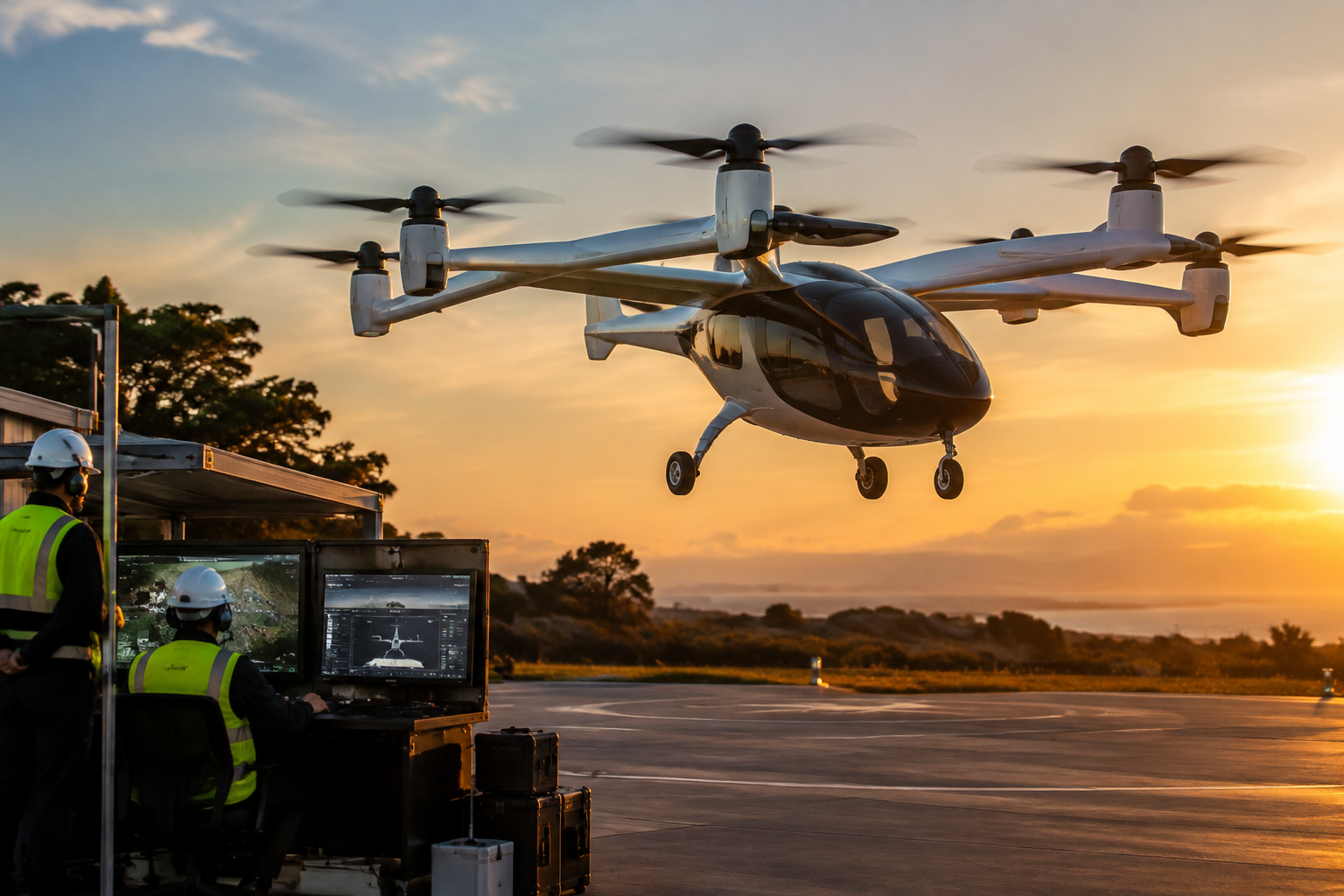
The timing of this analysis is noteworthy, coming as Joby advances its S4 aircraft toward certification with the Federal Aviation Administration (FAA). The S4, a five-seat electric aircraft, represents the company’s primary commercial platform and embodies years of development focused on safety, efficiency, and scalability. ARK’s analysts have likely examined Joby’s path to certification, production roadmaps, and technological architecture to reach their conclusions about long-term unit economics.
Such endorsements from heavyweight investment analysts carry substantial weight in the aerospace and mobility sectors. ARK Invest’s research attracts institutional investors, venture capital firms, and strategic partners who rely on their technology theses to guide capital allocation. A bullish assessment on Joby’s economic viability could enhance investor confidence and potentially accelerate funding rounds or partnership announcements in the eVTOL ecosystem.
Autonomy: The Economic Linchpin
At the heart of Joby’s path to taxi-fare parity lies autonomous flight technology. Unlike current helicopter air taxi services, which require highly skilled—and expensive—pilots, Joby’s vision includes remote or fully autonomous operations. Removing pilot salary and benefits from the operational cost structure represents one of the largest expense reductions possible for an air transport service. Over thousands of flights annually, this savings compounds significantly and can be passed to consumers through lower fares.
The autonomous systems in question are not simple autopilot features; they represent sophisticated AI-driven flight management, obstacle detection, weather adaptation, and emergency response capabilities. Joby has invested heavily in these systems and has partnered with technology leaders to ensure reliability and regulatory compliance. The FAA’s certification process will likely include extensive validation of autonomous systems, which could take years to fully develop and approve.
Beyond pilot elimination, autonomous technology enables optimized routing, reduced flight times between pickup and dropoff points, and the ability to operate services across broader geographic areas with fewer human controllers. These efficiency gains aggregate to create a cost structure that, according to ARK’s models, could undercut traditional taxi services on price while still maintaining healthy profit margins for operators like Joby.
Production Scale and Unit Economics
Another critical factor in achieving taxi-fare parity is production volume. Aircraft are inherently capital-intensive to manufacture, and per-unit costs decrease significantly as production scales. Joby’s manufacturing strategy involves both internal production capabilities and partnerships with suppliers to achieve the scale necessary for mass-market deployment. Industry observers expect that once Joby enters commercial service, production will need to ramp from dozens of aircraft annually to thousands within a five-to-ten-year window.
Achieving this scale requires substantial capital investment, supply chain development, and workforce expansion. However, if Joby can execute on these operational milestones, the per-aircraft manufacturing cost should decline through economies of scale, economies of scope in production processes, and learning curve effects. These reductions flow directly into lower operating costs per flight, bringing the target fare level ever closer.
ARK’s analysis likely incorporates realistic assumptions about production timelines, capital requirements, and supply chain maturation. The fact that their analysts see a path to taxi-fare equivalence suggests they believe Joby’s business plan is operationally feasible, not merely theoretical. This distinction is important: it implies that the required investments and production milestones are achievable within a reasonable commercial timeframe.
Market Implications and Competitive Dynamics
If Joby can deliver on taxi-fare pricing, the market implications are transformative. Urban air mobility would shift from a boutique luxury service to a genuine alternative for mass-market transportation, similar to how Uber transformed ground-based ride-sharing. Cities with significant taxi populations, traffic congestion, and wealth concentration—like New York, Los Angeles, and San Francisco—would become early adopters, but mid-tier cities could follow once networks and infrastructure mature.
The competitive landscape would also shift dramatically. Other eVTOL developers, from established aerospace firms like Airbus and Boeing to emerging startups, would face pressure to achieve comparable economics. This competition could accelerate innovation in battery technology, aerodynamic efficiency, and autonomous systems. Additionally, traditional taxi operators and ride-sharing companies might face existential pressure, creating incentives for partnerships, service integration, or pivoting to niche markets where air mobility cannot compete.
Regulatory frameworks would also adapt. Current FAA operations for air taxi services are framed around specialized operations with limited flight corridors. Mass-market demand could spur regulatory evolution toward more streamlined certification for autonomous urban air mobility, creating pathways for faster scaling. Similarly, city governments and urban planners would need to address vertiport infrastructure, noise mitigation, and airspace management to accommodate high-volume eVTOL operations.
Key Takeaways: What This Means for Air Mobility
Implications for Investors and the Industry
- ARK Invest’s endorsement of Joby’s economic model provides third-party validation that taxi-fare pricing is theoretically achievable and economically rational, potentially attracting mainstream institutional capital to the eVTOL sector.
- Autonomous flight technology is no longer a luxury but a fundamental requirement for market competitiveness, placing R&D and certification timelines for autonomous systems at the forefront of every eVTOL developer’s strategy.
- Production scaling and supply chain development are as critical as aircraft design and performance, with companies that can efficiently manufacture thousands of aircraft annually positioned to dominate the emerging urban air mobility market.
The ARK Invest analysis represents a watershed moment for Joby and the broader eVTOL industry. By projecting that autonomous air taxis could achieve price parity with traditional taxis, analysts have quantified a vision that many in the industry have championed but few have rigorously modeled. This projection does not guarantee success; Joby must still navigate FAA certification, produce aircraft reliably and affordably, and build the operational infrastructure to support commercial services. However, the analysis provides a credible roadmap and demonstrates that the business case for urban air mobility is grounded in economic reality, not pure speculation. If Joby executes on its technical and operational plans, the transformation of urban transportation could be far more profound than many skeptics have acknowledged.