HIGHLIGHTS
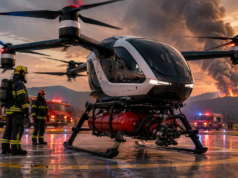
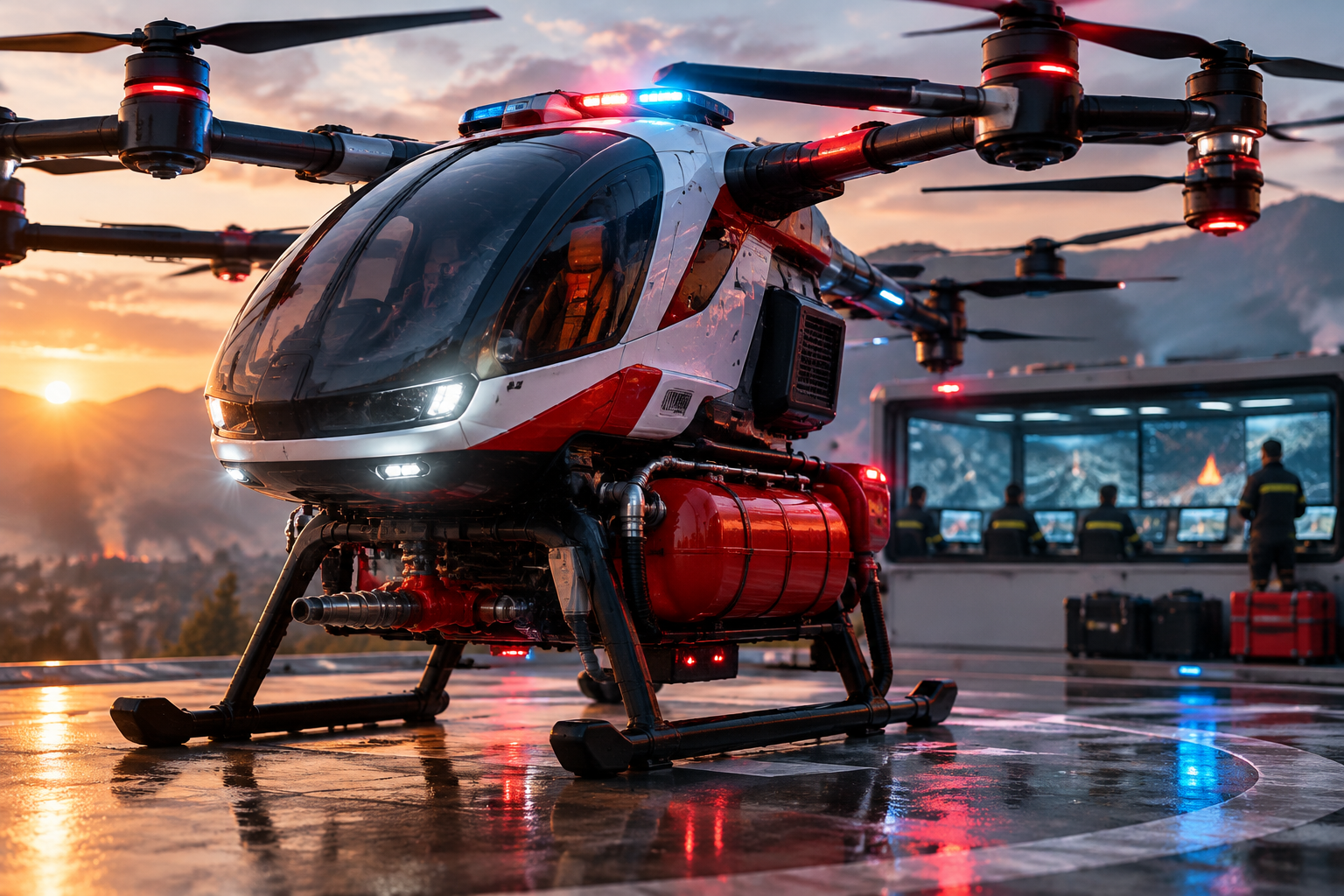
- EHang’s EH216-EK introduces purpose-built firefighting capabilities to autonomous aviation, extending emergency response reach beyond traditional helicopters.
- The high-payload design enables rapid deployment of specialized equipment and personnel to disaster zones, reducing response times in critical situations.
- Multi-scenario capabilities position the EH216-EK beyond firefighting, opening doors for search-and-rescue, medical transport, and disaster relief operations.
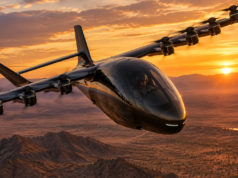
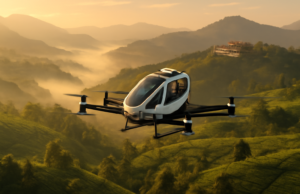
On November 4, 2026, EHang unveiled the EH216-EK, a high-payload firefighting eVTOL that marks a significant milestone in the evolution of autonomous urban air mobility. This specialized aircraft represents a pivotal shift beyond passenger transportation, demonstrating how electric vertical takeoff and landing technology can address critical emergency response needs. The EH216-EK combines advanced autonomous flight capabilities with purpose-built firefighting systems, opening new possibilities for disaster management and multi-scenario applications in both urban and remote environments.
The Evolution of EHang’s EH216 Platform
EHang’s EH216 has established itself as one of the most successful eVTOL platforms in commercial operation, having completed thousands of autonomous flights across multiple countries. The platform’s proven safety record and operational reliability provided the foundation for developing specialized variants tailored to different industries. The introduction of the EH216-EK represents the company’s commitment to expanding beyond the original passenger-focused design, demonstrating the platform’s versatility and adaptability to emerging market demands.
The original EH216 earned regulatory approvals in China and Southeast Asia through rigorous testing and validation processes. This regulatory momentum has enabled EHang to accelerate development of derivative models designed for specific use cases. The EH216-EK builds on this regulatory foundation while introducing enhanced structural capabilities, specialized payload systems, and optimized avionics configurations that differ significantly from the passenger variant.
By leveraging existing platform technology and proven autonomous flight systems, EHang has shortened development timelines and reduced technical risk. The company’s modular design philosophy allows rapid integration of mission-specific equipment without compromising core safety systems or flight performance. This approach enables faster market entry and provides customers with confidence in both the aircraft’s baseline performance and its specialized capabilities.
Firefighting Capabilities and High-Payload Design
The EH216-EK’s primary differentiation lies in its significantly enhanced payload capacity, engineered specifically to carry firefighting equipment, water or flame-retardant materials, and specialized sensors. Traditional helicopter-based firefighting services are limited by operational costs, crew safety exposure, and geographic accessibility to difficult terrain. The EH216-EK addresses these constraints through autonomous operation, eliminating pilot risk in hazardous conditions and enabling deployment to locations where manned helicopters face operational challenges.
The aircraft’s payload architecture supports various configurations for different firefighting scenarios. Wildfire suppression missions utilize tank systems for carrying water or fire retardant compounds, with precision distribution capabilities that exceed traditional fixed-wing air tankers. Urban fire response scenarios leverage the eVTOL’s vertical takeoff ability to position equipment near tall buildings or dense neighborhoods where ground access is limited. The high-payload design also accommodates thermal imaging systems, gas sensors, and other diagnostic equipment that enhance situational awareness during emergency operations.
Autonomous operation provides critical advantages in firefighting applications where human operators face extreme heat, toxic fumes, and unpredictable environmental conditions. The EH216-EK’s advanced avionics can maintain stable flight through challenging atmospheric conditions while operators maintain safe distance from danger zones. Real-time data transmission from the aircraft’s payload sensors enables ground teams to make informed decisions about equipment deployment and personnel positioning, dramatically improving emergency response coordination.
Multi-Scenario Applications Beyond Firefighting
While designed primarily for firefighting, the EH216-EK’s high-payload capacity and autonomous capabilities unlock applications across emergency services and humanitarian operations. Search-and-rescue missions benefit significantly from the aircraft’s ability to reach remote or disaster-affected areas rapidly, carrying personnel, medical equipment, or specialized rescue gear. The long flight endurance and autonomous navigation reduce pilot fatigue during extended operations while enabling simultaneous multi-aircraft coordination that would be logistically complex with traditional manned helicopters.
Medical transport represents another critical use case, particularly for time-sensitive emergency response in regions with limited ground infrastructure. The EH216-EK can transport organ transplant teams, emergency medical supplies, or mobile defibrillation equipment to locations inaccessible by conventional ambulances. The high-payload capability allows carrying comprehensive medical equipment packages rather than limiting transport to lightweight items, expanding the scope of services that autonomous aviation can provide to healthcare systems.
Disaster relief operations, humanitarian missions, and infrastructure inspection all benefit from the EH216-EK’s multi-scenario capability. Following earthquakes, floods, or other natural disasters, the aircraft can deliver supplies, assess damage, or transport survivors from isolated areas without waiting for infrastructure repair. The autonomous operation model reduces operational costs compared to traditional helicopter services, making regular deployment economically feasible for preventative inspection and maintenance of critical infrastructure like power lines, pipelines, and communication towers.
Regulatory and Market Implications
The introduction of the EH216-EK signals regulatory authorities’ growing confidence in eVTOL safety and reliability for high-stakes applications. Firefighting operations represent some of aviation’s most demanding use cases, requiring aircraft to operate in challenging conditions while carrying hazardous materials and specialized equipment. EHang’s willingness to pursue firefighting certification demonstrates the company’s confidence in the EH216 platform’s robustness and hints at regulatory bodies’ openness to autonomous aircraft for emergency services.
Market adoption of firefighting eVTOLs could establish new standards for emergency response infrastructure planning. Fire departments and disaster management agencies may begin incorporating autonomous aircraft into standard operational procedures, just as police departments now routinely deploy drones for surveillance and reconnaissance. Initial deployment in developed markets with mature regulatory frameworks will generate operational data and best practices that accelerate global adoption, potentially creating a new category within the emergency services market.
The commercial implications extend beyond immediate emergency response applications. Successful EH216-EK deployments will provide compelling case studies for other government agencies considering autonomous aviation for critical services. Military organizations, coast guards, and civil protection agencies worldwide are monitoring developments in commercial eVTOL technology for potential adaptation to their operational requirements. EHang’s evolution from passenger transport to specialized emergency services positions the company as a key player in this emerging segment.
Key Takeaways for the Industry
- The EH216-EK represents eVTOL technology’s expansion beyond passenger transport into high-stakes emergency services applications
- High-payload firefighting design demonstrates the versatility of autonomous aircraft platforms for diverse operational scenarios
- Successful deployment could reshape emergency response infrastructure, reducing operational costs and expanding service reach to underserved regions
- Regulatory approval for specialized firefighting operations signals growing institutional confidence in eVTOL safety and reliability
- Multi-scenario capabilities unlock applications in search-and-rescue, medical transport, disaster relief, and infrastructure management
EHang’s EH216-EK firefighting eVTOL represents a watershed moment for personal air mobility, demonstrating that autonomous aircraft can address critical real-world challenges beyond passenger convenience. As this specialized variant moves from announcement to operational deployment, the aviation and emergency services industries will gain invaluable insights into autonomous aircraft performance under extreme conditions. The EH216-EK’s success could accelerate broader adoption of eVTOL technology across government agencies and critical infrastructure operators, fundamentally transforming how societies respond to emergencies and manage disasters. The journey from concept to certified operations will provide the data and operational experience needed to unlock the next generation of autonomous aviation applications that directly serve public safety and human welfare.