HIGHLIGHTS
- Merlin successfully demonstrated autonomous flight operations in a Texas pilot program, a critical milestone for commercial eVTOL deployment.
- The autonomous system demonstration advances regulatory certification pathways and proves real-world operational feasibility for unmanned air taxi services.
- This achievement positions Merlin as a competitive player in the emerging personal air mobility market ahead of projected 2027-2030 commercial launch timelines.
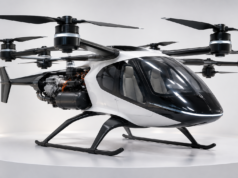
Merlin, a rapidly emerging player in the electric vertical takeoff and landing (eVTOL) space, has achieved a significant breakthrough by successfully demonstrating autonomous flight capabilities during a pilot program in Texas. This milestone represents a crucial step forward in validating the technological readiness of advanced air mobility systems and brings the commercial deployment of autonomous air taxis closer to reality. The demonstration marks a turning point in the industry, showing that the complex challenges of autonomous flight in the eVTOL domain are yielding to engineering innovation.
Merlin’s Autonomous Flight Achievement in Texas
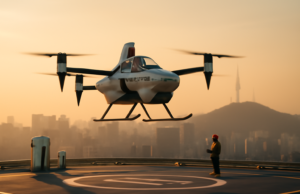
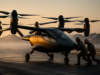
The Texas pilot program represents Merlin’s most ambitious operational demonstration to date. The autonomous flight system successfully completed controlled flights without human pilot intervention, showcasing the maturity of the aircraft’s onboard systems and decision-making algorithms. This demonstration was conducted under controlled conditions that simulated real-world operational scenarios, providing valuable data on system performance and reliability.
The autonomous system integrates multiple layers of redundancy and fail-safes designed to meet the highest aviation safety standards. Merlin’s engineering team implemented sophisticated sensor fusion, artificial intelligence, and real-time decision-making capabilities that allow the aircraft to safely navigate, maintain altitude, and respond to environmental variables. The successful Texas flights prove these systems can operate reliably outside of laboratory settings.
Texas was selected as the pilot program location due to favorable regulatory conditions and airspace availability for testing advanced aviation systems. The state has positioned itself as a hub for aerospace innovation, offering space and infrastructure conducive to large-scale eVTOL trials. Merlin’s choice of Texas underscores the importance of finding jurisdictions that balance safety oversight with innovation acceleration.
Regulatory Implications and Certification Progress
Autonomous flight demonstrations like Merlin’s are essential prerequisites for obtaining certification from aviation authorities such as the FAA. Regulators need evidence that autonomous systems can safely operate without continuous human oversight, handle edge cases appropriately, and maintain safety margins across diverse conditions. Merlin’s successful demonstration provides critical data that strengthens its certification case.
The FAA’s approach to eVTOL certification has evolved to accommodate autonomous operations, recognizing that many air taxi business models depend on reducing pilot costs. Regulatory frameworks are being developed in parallel with industry demonstrations, creating a dynamic feedback loop. Merlin’s pilot program results will likely inform ongoing discussions between the company and certification authorities about operational approval pathways.
Beyond the FAA, Merlin must also navigate international certification requirements if it plans to offer operations globally. The International Civil Aviation Organization (ICAO) is developing standards for autonomous aircraft operations, and demonstrations like Merlin’s contribute to the global conversation about what constitutes acceptable autonomous flight capability. Early data from successful programs helps establish industry best practices.
Technology Behind Merlin’s Autonomous System
The autonomous flight system is built on advanced sensor technology including LIDAR, radar, and optical cameras that provide redundant environmental awareness. These sensors feed into machine learning models trained on thousands of flight scenarios, enabling the aircraft to make real-time decisions about navigation, obstacle avoidance, and emergency response. The system architecture prioritizes safety through voting algorithms and predetermined fallback behaviors.
Merlin’s flight management software incorporates artificial intelligence that learns from each flight, continuously improving decision-making algorithms without requiring code updates. The system can predict weather changes, adapt to wind variations, and optimize energy efficiency while maintaining safety margins. This adaptive learning capability is crucial for handling the infinite variety of real-world conditions that autonomous aircraft will encounter.
The computing power required for autonomous eVTOL operations is substantial, but advances in embedded systems and edge computing have made it feasible to run sophisticated AI models on compact, lightweight hardware. Merlin’s approach balances computational capability with weight constraints—a critical consideration for electric aircraft where every kilogram impacts range and payload capacity. The successful Texas flights demonstrated that this balance can be achieved without compromising autonomous capability.
Commercial Timeline and Market Implications
Merlin’s autonomous demonstration accelerates the timeline toward commercial air taxi services. While regulatory approval remains the gating factor, proving technical feasibility removes uncertainty about whether autonomous eVTOL operations are achievable. Industry analysts now see viable pathways to initial commercial services in major metropolitan areas by 2027-2028, with scaled operations following by 2030.
The autonomous flight capability transforms the economics of eVTOL operations by eliminating pilot costs, one of the largest recurring expenses in the business model. A single pilot currently required for each flight adds $100,000+ annually in salary, benefits, and training per pilot. Autonomous operations reduce this to software maintenance and system monitoring, dramatically improving unit economics and enabling lower fares that drive market adoption.
Merlin’s stock price reflects market confidence in this trajectory. The successful demonstration provides tangible proof-of-concept that justifies investor optimism about near-term commercialization. Competitive pressure is intensifying as other eVTOL developers race to demonstrate autonomous capabilities—companies like Joby Aviation, Archer Aviation, and Lilium are all pursuing autonomous flight as part of their longer-term roadmaps.
Safety Considerations and Public Trust
Public acceptance of autonomous air taxis depends critically on demonstrated safety records. Merlin’s Texas program was designed not just to prove technical capability but to gather safety data that regulators and the public can evaluate. The controlled environment and instrumentation ensure that every decision point and system response is documented, creating an audit trail of autonomous flight behavior.
Safety is non-negotiable in aviation—the industry has established that autonomous systems must meet or exceed the safety record of human pilots. Current aircraft with professional pilots experience accidents at rates measured in fractions per million hours of flight. Autonomous systems will be held to at least this standard, and likely higher given the public’s cautious stance toward automation in safety-critical domains.
Merlin’s approach to transparent communication about test results builds public confidence. By openly demonstrating autonomous capabilities rather than overstating claims, the company manages expectations and demonstrates responsible development practices. This transparency extends to sharing operational data with regulators and research institutions, creating scientific validation for autonomy systems.
Key Takeaways for the eVTOL Industry
- Autonomous flight demonstration in real-world pilot programs validates technical feasibility and accelerates regulatory certification pathways
- Eliminating pilot costs through autonomous operations transforms eVTOL economics and enables competitive air taxi fares
- Merlin’s transparent safety-focused approach to autonomous development strengthens industry credibility and public acceptance
Merlin’s successful autonomous flight demonstration in Texas represents a watershed moment for the eVTOL industry. The achievement moves autonomous air mobility from theoretical possibility to demonstrated reality, providing critical evidence that the technology can operate safely and reliably in real-world conditions. As regulatory approval processes unfold and other manufacturers develop competing autonomous systems, the industry is entering a phase where commercial deployment timelines become measurable in years rather than decades. The path to autonomous air taxis is no longer blocked by technological uncertainty—it’s now a race of execution and certification that will reshape urban mobility within the next three to five years.