HIGHLIGHTS
- Winter conditions could slash eVTOL range by up to 22% due to battery degradation and increased aerodynamic drag in cold air
- Battery thermal management systems consume onboard energy to maintain optimal operating temperatures, directly reducing available range
- Urban air mobility operators must design vertiport networks and seasonal service plans accounting for predictable winter performance penalties
A new technical analysis has brought a sobering reality into focus for the burgeoning electric vertical takeoff and landing (eVTOL) industry: winter weather could significantly degrade the performance of electric air taxis, with simulations indicating range losses of up to 22%. This finding raises important questions about the operational reliability and commercial viability of personal air mobility systems across different seasons and climates.
The Winter Range Challenge
Simulation data reveals that cold weather conditions directly impact battery performance and aerodynamic efficiency in electric aircraft. As temperatures drop, lithium-ion batteries experience reduced chemical reaction rates, leading to lower energy output and faster depletion. This thermodynamic reality is well-understood in automotive electric vehicles, but its application to eVTOL systems introduces unique operational constraints for urban air mobility networks.
The 22% range reduction figure emerged from comprehensive modeling that accounts for multiple winter-related factors. Beyond battery degradation, cold air increases aircraft drag due to changes in atmospheric density and aerodynamic properties. Additionally, many eVTOL designs incorporate thermal management systems that consume electrical energy to maintain optimal battery temperatures—a drain that doesn’t occur during warmer months.
For urban air taxi operators planning year-round service, this range penalty translates directly into operational limitations. A vehicle designed for 30-mile routes in summer might be restricted to roughly 23 miles in winter conditions, necessitating more frequent charging or smaller service areas during colder months. This seasonal variability complicates network planning and commercial route optimization.
Battery Performance Under Cold Stress
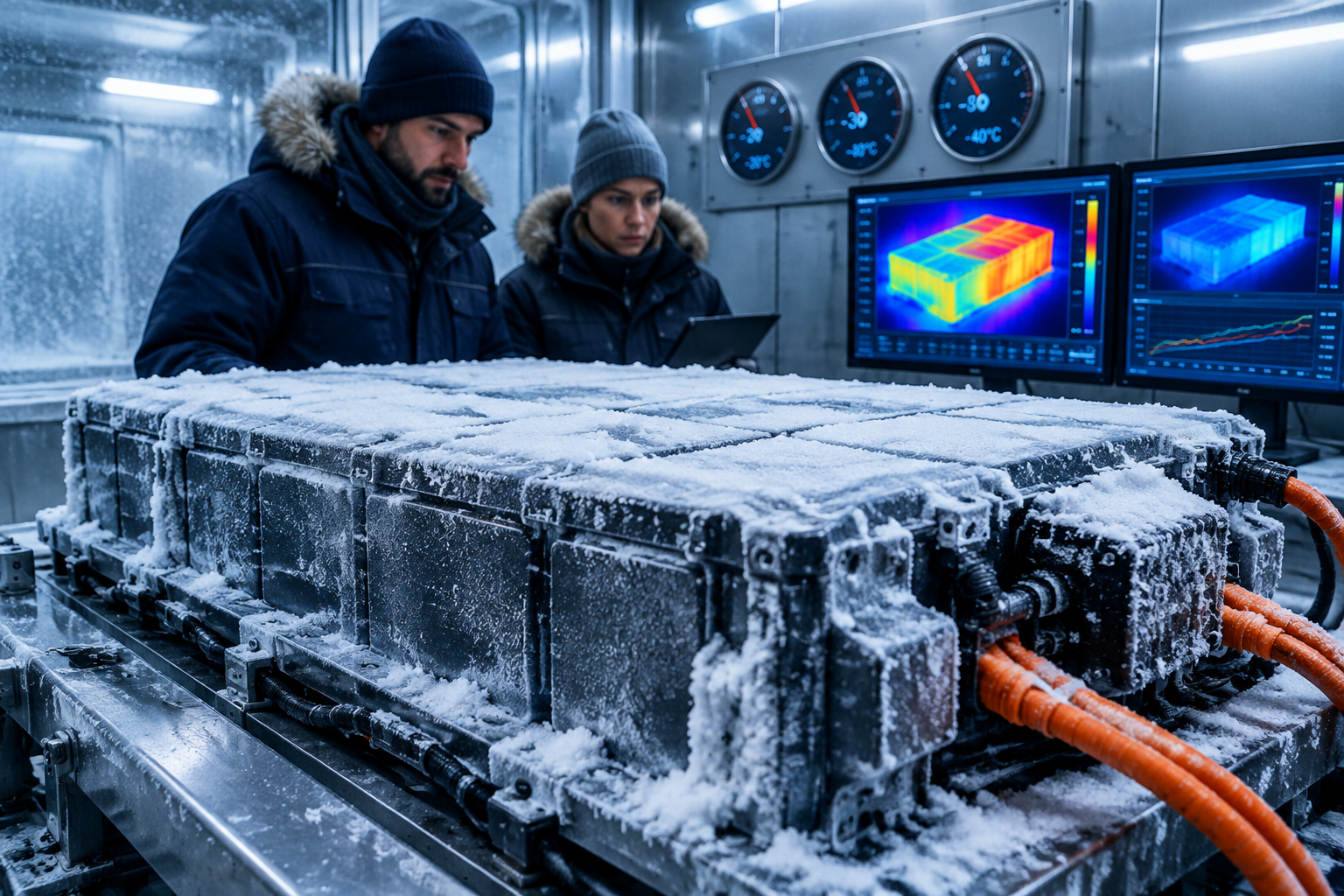
Battery chemistry becomes the critical limiting factor when temperatures plummet. Lithium-ion cells, the standard for current eVTOL platforms, rely on ion movement through electrolyte solutions. When cold, molecular motion slows dramatically, increasing internal resistance and reducing the rate at which the battery can deliver power. For an air taxi attempting to climb to altitude and maintain cruise speed, this performance hit could prove operationally significant.
Advanced battery management systems (BMS) can mitigate some cold-weather losses through active heating, but this approach consumes onboard energy reserves. Heating a battery pack from winter ambient temperatures to optimal operating range (typically 20-40°C) diverts electricity that could otherwise power the propulsion system. Manufacturers must balance thermal conditioning with range preservation—a trade-off that becomes especially acute for high-energy-density eVTOL applications.
Research into next-generation battery chemistries, such as solid-state designs, promises improved cold-weather performance by reducing internal resistance and improving ion conductivity at lower temperatures. However, these technologies remain largely in development phases and won’t be widely deployed in commercial air taxi fleets in the near term. Current operators must design operations around lithium-ion limitations.
Aerodynamic and Atmospheric Factors
Beyond battery behavior, the winter atmosphere itself creates challenges for eVTOL performance. Cold air has higher density than warm air, which increases drag on aircraft surfaces. While this density increase also enhances lift generation, the drag penalty typically outweighs the lift benefit for efficient cruise operations. Engineers designing eVTOL trajectories must factor in this aerodynamic reality when planning winter route structures.
Wind patterns also shift with seasonal changes. Winter storms bring stronger gusts and more variable wind conditions, which could impose additional energy demands on eVTOL systems working to maintain stable flight paths. Headwinds become more severe obstacles, and crosswinds require greater control input and energy expenditure. For network operators, this means that published range figures might need seasonal adjustments, and real-time weather monitoring becomes even more critical.
Icing conditions present an additional winter hazard not fully captured in static range simulations. Although most eVTOL designs are not certified for flight in icing conditions, the modeling of range losses provides a foundation for understanding how various environmental stressors accumulate. Future certified operations may require anti-icing systems that further consume onboard electrical power.
Implications for Urban Air Mobility Networks
Commercial air taxi operators planning service launches in regions with genuine winter seasons face a strategic choice: either accept seasonal service limitations, invest heavily in infrastructure and battery redundancy, or operate with more conservative range margins. Cities like Denver, Chicago, or northern European hubs will need to account for these constraints when designing vertiport networks and service areas.
Infrastructure investments become more complex when range varies seasonally. A charging network sized for summer operations might prove inadequate in winter, requiring additional vertiports or longer charging intervals. Operators might need to position spare batteries or implement battery swapping protocols to maintain service frequency during colder months—adding operational complexity and cost.
The competitive landscape may also be shaped by these findings. eVTOL manufacturers offering vehicles with better thermal management systems, enhanced aerodynamic efficiency, or larger battery packs relative to weight could gain advantages in colder climates. Conversely, regions with mild winters might see earlier, more aggressive service launches as seasonal range penalties remain minimal.
Research and Development Pathways Forward
The industry response to these simulations will likely focus on three parallel development tracks. First, battery chemistry research continues to prioritize improved cold-weather performance through solid-state designs and alternative electrolyte formulations. Second, thermal management systems are being refined to minimize parasitic energy losses while maintaining battery health. Third, aerodynamic optimization efforts aim to reduce drag coefficients, providing efficiency gains that offset some environmental penalties.
Aircraft manufacturers are also exploring hybrid-electric architectures that could provide supplemental power during demanding winter conditions. While full hybrid-electric eVTOL systems remain rare, the theoretical capability to use chemical fuel for emergency power or winter boost operations offers a potential hedge against range limitations. However, such systems introduce complexity and reduce the “zero-emission” advantage that defines modern eVTOL marketing.
Regulators and standards organizations will need to establish clear protocols for range certification and operational limitations. Should aircraft be certified with winter de-rating built into the specifications? Should operators provide seasonal timetables indicating reduced service during winter? These standardization questions remain largely unresolved and will shape how the industry operationalizes these performance findings.
Key Considerations for eVTOL Operators
- Plan network infrastructure with seasonal de-rating in mind—assume up to 22% range reduction during winter months and size vertiport density accordingly
- Invest in battery heating and thermal management systems, understanding the energy trade-off between battery conditioning and available range
- Develop weather-responsive operational protocols that adjust route planning and charging intervals based on real-time winter conditions
As the eVTOL industry progresses toward commercial maturity, weather-dependent performance variations represent a fundamental operational reality rather than an engineering oversight. The 22% winter range penalty identified in these simulations should drive strategic decisions about aircraft specifications, vertiport placement, and operational procedures. Forward-thinking operators who design their networks with seasonal constraints in mind will likely outperform competitors who treat winter as an exception rather than a planned operating scenario. The path to reliable, year-round urban air mobility runs through understanding and mitigating these environmental challenges.