HIGHLIGHTS
- The Roadster eVTOL operates fundamentally differently from traditional aircraft by utilizing electric vertical takeoff capabilities instead of runway-dependent flight for urban air mobility
- Electric propulsion systems enable The Roadster to hover, maneuver precisely in confined spaces, and land on urban vertiports—capabilities conventional fixed-wing aircraft cannot deliver
- The Roadster represents a revolutionary shift from airplane-centric aviation design toward purpose-built eVTOL engineering optimized specifically for metropolitan transportation networks
The emergence of electric vertical takeoff and landing (eVTOL) aircraft marks a fundamental shift in how we think about personal air mobility. Among the most intriguing newcomers is The Roadster, an innovative aircraft that deliberately diverges from traditional airplane design principles. Unlike conventional fixed-wing aircraft that rely on sustained forward motion and aerodynamic lift generation, The Roadster represents a new paradigm in urban aviation technology that prioritizes vertical mobility and precision maneuvering in congested airspace.
Understanding eVTOL Flight Dynamics
The Roadster does not fly like an airplane, and this distinction is crucial to understanding its revolutionary approach to aerial transportation. Traditional aircraft depend on forward propulsion to generate lift across fixed wings, requiring lengthy runways and significant airspace to operate safely. In contrast, The Roadster utilizes electric vertical takeoff and landing technology, which enables it to operate in confined urban environments where conventional aircraft cannot venture.
eVTOL aircraft employ distributed electric propellers or tilting rotor systems that allow for vertical ascent and descent without requiring forward momentum. This design philosophy fundamentally changes how pilots approach flight operations, transition procedures, and landing constraints. The Roadster’s architecture reflects years of research into optimizing vertical lift generation while maintaining forward flight efficiency for point-to-point urban transportation missions.
The mechanical separation between vertical thrust and forward propulsion systems gives The Roadster advantages that traditional fixed-wing designs simply cannot match. Pilots must think differently about aircraft control, energy management, and flight planning when operating vehicles designed for vertical mobility rather than conventional runway-dependent flight.
Urban Air Mobility Applications
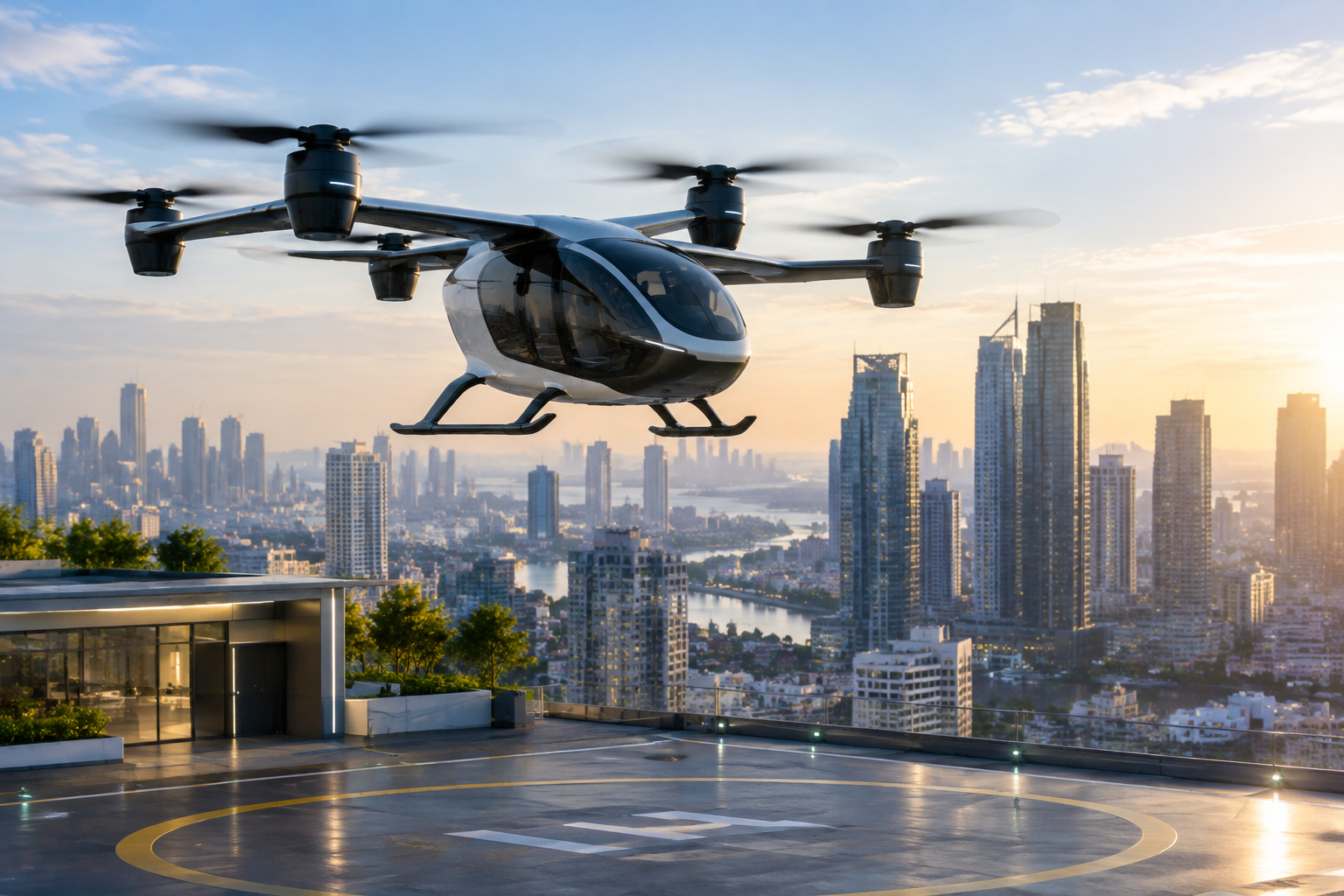
The Roadster exemplifies how next-generation eVTOL designs are purpose-built for metropolitan environments where airspace is limited, congestion is a daily reality, and rapid point-to-point travel is in high demand. Unlike traditional aircraft that require dedicated airport infrastructure miles outside city centers, The Roadster can theoretically operate from vertiports, rooftops, and specially designated urban air mobility hubs integrated directly into city landscapes.
This reimagining of urban aviation accessibility addresses a critical pain point in modern transportation networks. Commuters currently waste hours navigating surface-level traffic, while existing helicopter operations remain prohibitively expensive for mass-market adoption. The Roadster positions itself as a bridge between ground transportation limitations and the impracticality of current aerial alternatives, offering speed, safety, and efficiency improvements that could revolutionize how people navigate major metropolitan areas.
The shift from airplane-like flight characteristics to eVTOL operations also enables new operational flexibility. The Roadster can hover in place, perform precision landings in tight spaces, and adjust its flight path with agility that fixed-wing aircraft cannot achieve. This operational versatility opens possibilities for emergency medical transport, rapid logistics delivery, and personalized commuting services that were previously confined to science fiction.
Technical Differentiation from Conventional Aircraft
The Roadster’s departure from traditional airplane design reflects sophisticated engineering innovations in electric propulsion, battery technology, and flight control systems. Where conventional aircraft optimize for cruise efficiency at high altitudes, The Roadster prioritizes vertical acceleration, low-altitude stability, and precision hover capabilities. This fundamental difference in design objectives cascades through every system, from motor selection to structural engineering.
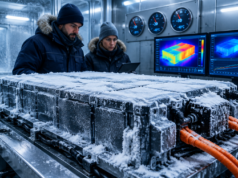
Electric propulsion systems offer The Roadster distinct advantages over jet or piston engines used in traditional aircraft. Electric motors provide instantaneous torque, exceptional energy efficiency in urban environments, and zero direct emissions that align with modern sustainability expectations. Battery technology advances have enabled eVTOL designs to achieve practical mission ranges for city-scale transportation while remaining significantly lighter and simpler than comparable conventional aircraft.
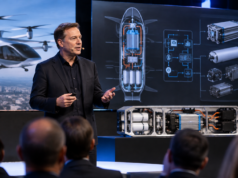
The Roadster’s flight control systems must manage the complexities of vertical takeoff dynamics that traditional autopilots were never designed to handle. Advanced autonomous flight management systems, sophisticated sensor arrays, and redundant safety systems work in concert to ensure stable vertical operations in varied environmental conditions. These technological differentiators represent the next frontier in aviation engineering, building capabilities that traditional airplane systems never required.
Market Implications and Future Development
The Roadster’s unique flight characteristics position it at the intersection of several emerging mobility trends, from autonomous vehicle technology to drone delivery systems to premium urban transportation services. As regulatory frameworks evolve to accommodate eVTOL operations, vehicles like The Roadster will likely become increasingly common in metropolitan skies throughout the 2030s and beyond.
Investment in eVTOL technology continues accelerating globally, with major aerospace companies, automotive manufacturers, and venture-backed startups all pursuing variations of vertical takeoff and landing designs. The Roadster represents one interpretation of how this technology can be optimized for specific mission requirements, competitive differentiation, and market positioning. As the industry matures, we can expect continued evolution in design philosophy, performance characteristics, and operational capabilities.
The transition from airplane-centric aviation thinking to eVTOL-first design principles will require adaptation from pilots, infrastructure developers, and regulatory agencies alike. The Roadster serves as a tangible example of how radically different aircraft can be when engineered specifically for urban environments rather than adapted from century-old fixed-wing aviation traditions. This represents not just an incremental improvement, but a genuine paradigm shift in how humanity approaches personal air mobility.
Redefining What Aircraft Can Be
The Roadster’s distinction—that it does not fly like an airplane—becomes a strength rather than a limitation when positioned within urban air mobility context. Traditional aircraft excel at long-distance high-altitude flight between distant destinations. The Roadster optimizes for something entirely different: seamless integration into metropolitan transportation networks, rapid urban point-to-point travel, and operational flexibility that conventional designs cannot match.
This philosophical divergence signals maturation in aviation technology. Rather than attempting to make eVTOL aircraft behave like airplanes with added rotor capabilities, designers like The Roadster’s team are building from first principles, asking what aircraft should be if their primary mission is urban mobility rather than traditional aviation missions. The result is technology that challenges fundamental assumptions about how aircraft should look, fly, and operate.
As eVTOL aircraft mature and regulatory approval pathways clarify, The Roadster and similar designs will increasingly define what aviation looks like in urban environments. The distinction between how they fly versus how traditional aircraft operate will become not a point of curiosity but an obvious characteristic of modern air mobility infrastructure. The future of personal aviation appears not to be an evolution of airplane technology, but a revolutionary departure toward purpose-built urban air systems.
Key Takeaways: The Roadster’s Flight Revolution
- The Roadster deliberately operates differently from traditional aircraft, utilizing electric vertical takeoff capabilities rather than runway-dependent fixed-wing flight to enable urban air mobility applications
- Advanced electric propulsion systems and precision flight control technology allow The Roadster to hover, maneuver in confined spaces, and operate from urban vertiports—capabilities conventional aircraft cannot match
- The shift from airplane-centric design to eVTOL-first engineering represents a fundamental reimagining of how aircraft should be optimized for metropolitan transportation networks rather than traditional long-distance aviation missions
The Roadster exemplifies the next era of aviation, where aircraft design reflects the actual needs of 21st-century urban transportation rather than assumptions inherited from 20th-century flying traditions. As eVTOL technology continues advancing and regulatory frameworks evolve, vehicles that fly completely differently from traditional airplanes will increasingly define what aviation means in our cities.