HIGHLIGHTS
- Joby Aviation is testing autonomous eVTOL technology across 10 U.S. states, one of the largest multi-state autonomous flight testing programs in the industry.
- Autonomous operations promise to reduce pilot-dependent costs, enable 24/7 service availability, and unlock the economic viability of commercial air mobility.
- Joby’s successful autonomous demonstrations could establish regulatory precedent for the entire eVTOL industry and accelerate competitive deployment of autonomous aircraft.
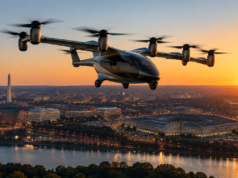
Joby Aviation has announced an ambitious expansion of its autonomous flight technology testing across 10 U.S. states, signaling the company’s commitment to achieving fully autonomous eVTOL operations. This significant milestone represents one of the most extensive autonomous flight testing programs in the personal air mobility industry and reflects Joby’s confidence in the maturity of its technology platform.
Joby’s Autonomous Flight Vision Takes Flight
Joby Aviation, one of the leading manufacturers of electric vertical takeoff and landing aircraft, has moved beyond traditional piloted flight demonstrations to showcase autonomous flight capabilities at a scale previously unseen in the eVTOL sector. The multi-state testing initiative underscores the company’s technical readiness and regulatory alignment as it works toward commercial operations expected to launch in major U.S. metropolitan areas.
The expansion across 10 states demonstrates Joby’s ability to conduct complex autonomous flight operations in diverse regulatory environments and geographic conditions. Each state presents unique airspace challenges, weather patterns, and regulatory frameworks, requiring the company’s autonomous systems to prove their robustness and adaptability. This distributed testing approach is essential for demonstrating to federal regulators that the technology can safely operate in real-world conditions across the nation.
By showcasing autonomous capabilities rather than relying solely on human pilots, Joby is addressing one of the critical pain points for commercial eVTOL operations: operational efficiency and scalability. Autonomous flight systems promise to reduce operational costs, increase flight frequency, and enable 24/7 operations without pilot fatigue constraints—key factors in making air mobility economically viable for passengers and operators alike.
Technical Advances in Autonomous Navigation and Safety Systems
Joby’s autonomous eVTOL platform integrates sophisticated sensor fusion, artificial intelligence, and redundant safety systems designed to exceed traditional aviation safety standards. The aircraft employs multiple layers of autonomous decision-making, from takeoff and climb-out through cruise and landing phases, all coordinated with existing air traffic management systems and future digital sky initiatives.
The autonomous flight technology relies on a combination of LiDAR, radar, electro-optical sensors, and advanced computational systems that continuously monitor the aircraft’s environment and make real-time flight decisions. These systems have been refined through thousands of hours of simulation and controlled flight testing, creating a highly responsive platform capable of detecting and responding to unexpected conditions faster than traditional pilot reaction times.
Safety redundancy is paramount in Joby’s autonomous design philosophy. The company has implemented multiple independent systems for critical flight functions, ensuring that no single point of failure can compromise flight safety. This architecture exceeds the standards of traditional manned aircraft and aligns with the Federal Aviation Administration’s requirements for autonomous operations in controlled airspace.
Multi-State Testing and Regulatory Strategy
Testing across 10 states allows Joby to gather data in varied airspace classifications, from urban to rural environments, and to build relationships with regional air traffic control facilities. This geographically distributed approach strengthens Joby’s regulatory dossier and demonstrates operational flexibility to the FAA, which will evaluate autonomous eVTOL operations through a rigorous certification process.
Each testing location provides unique operational scenarios and regulatory considerations. Urban testing environments present challenges related to noise constraints and high air traffic density, while rural locations offer opportunities to test long-distance autonomous missions and emergency response operations. By successfully conducting operations across this spectrum, Joby builds evidence of system reliability and adaptability.
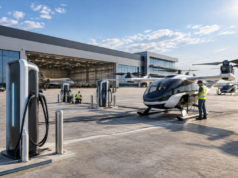
The multi-state expansion also positions Joby to understand local infrastructure needs, community concerns, and operational requirements in different regions. This intelligence will be invaluable as the company moves toward commercial launch and needs to demonstrate that autonomous eVTOL operations can be integrated safely and efficiently into existing air traffic systems and communities.
Commercial Implications and Market Timeline
Joby Aviation’s autonomous flight demonstration program directly supports its path to commercial operations. The company has committed to launching air taxi services in major metropolitan markets, with initial operations expected to be partially autonomous or pilot-monitored. The expanded testing program accelerates the transition from pilot-in-the-loop demonstrations to fully autonomous operations, which could significantly reduce operational costs and increase service frequency.
The ability to operate autonomous eVTOLs on high-frequency, high-volume routes would transform the economics of personal air mobility. Removing the pilot from each flight reduces the largest variable operating cost and enables continuous operations that maximize aircraft utilization. This economic advantage is critical for the commercial viability of eVTOL services targeting airport transfers, corporate shuttles, and emergency medical transport.
Joby’s timeline and technical progress position it as a front-runner in the race to deploy commercial autonomous eVTOL services. The company’s focus on autonomous capability development, combined with its strong regulatory relationships and substantial capital base, suggests that fully autonomous Joby eVTOL operations could commence within the next 2-3 years, pending continued successful testing and FAA certification milestones.
Industry Impact and Competitive Landscape
Joby’s autonomous flight testing initiative raises the bar for the entire eVTOL industry and signals that the transition from piloted to autonomous operations is no longer theoretical but practically imminent. Other eVTOL manufacturers, including Lilium, Archer Aviation, and international competitors, are also developing autonomous capabilities, but few have announced such extensive multi-state testing programs.
The successful demonstration of autonomous eVTOL operations in 10 states could accelerate industry-wide acceptance and regulatory approval for autonomous aircraft. If Joby’s testing data convinces the FAA that autonomous eVTOLs are safe and reliable, it will establish a regulatory pathway that other manufacturers can follow, effectively creating an industry standard for autonomous aerial vehicle certification and operation.
This competitive dynamic underscores the strategic importance of Joby’s autonomous testing program. By establishing technical leadership and regulatory precedent in autonomous operations, Joby can potentially secure first-mover advantages in commercial markets, build brand trust with passengers and partners, and influence the regulatory framework that will govern the emerging air mobility industry for years to come.
Key Takeaways: Autonomous eVTOL Advances
- Joby Aviation is conducting autonomous flight testing across 10 U.S. states, demonstrating the scalability and reliability of its autonomous eVTOL platform in diverse regulatory and geographic conditions.
- The multi-state testing program accelerates Joby’s path to commercial autonomous operations, potentially reducing pilot-dependent costs and enabling high-frequency, continuous service delivery in major metropolitan markets.
- Successful autonomous eVTOL demonstrations could establish regulatory precedent for the entire air mobility industry, influencing how other manufacturers certify autonomous aircraft and compete in emerging markets.
Joby Aviation’s expanded autonomous flight testing across 10 states represents a watershed moment for personal air mobility. By moving beyond single-location demonstrations to a distributed, multi-state testing program, Joby is building the technical evidence, operational experience, and regulatory foundation necessary for commercial autonomous eVTOL services. As these tests progress and data accumulates, the company’s path to becoming a leading operator of autonomous air taxi services becomes increasingly clear, potentially transforming urban transportation within the coming years.