HIGHLIGHTS
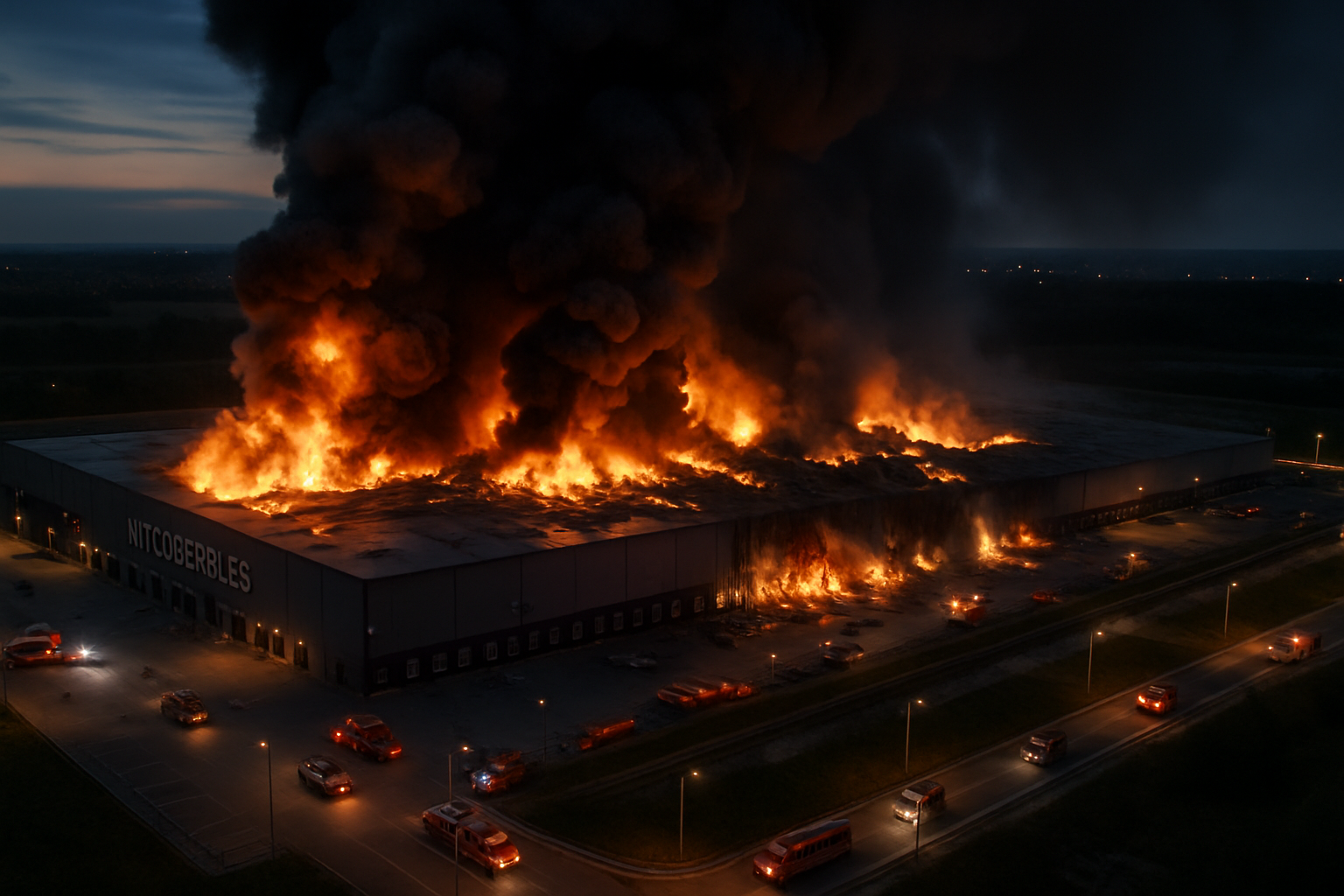
- Ukrainian drone strike on Russian territory killed 5 and ignited a major fire at the Wildberries warehouse facility.
- The attack demonstrates the escalating use of autonomous drone technology in the Russia-Ukraine conflict.
- Wildberries warehouse destruction impacts major Russian e-commerce operations and supply chain infrastructure.
On August 3, 2026, Ukrainian forces conducted a significant drone attack on Russian territory, resulting in five casualties and igniting a major fire at a Wildberries warehouse facility. This latest strike marks another milestone in the increasingly sophisticated use of unmanned aerial vehicles (UAVs) in the ongoing conflict, showcasing how drone technology has become central to modern warfare operations across both military and civilian infrastructure targets.
Escalation of Drone Warfare in Eastern Europe
The Ukraine-Russia conflict has fundamentally transformed the role of drone technology in modern military operations. What began as reconnaissance and surveillance missions has evolved into a comprehensive aerial warfare strategy involving coordinated attacks on both military installations and economic infrastructure. The August 3 strike on Russian territory represents another chapter in this escalating campaign, where precision targeting capabilities have become critical to operational success.
Ukrainian forces have systematically developed drone capabilities over the past several years, moving from consumer-grade quadcopters to specialized autonomous systems designed for long-range strikes. These advances reflect the adaptation of commercial drone technology into weaponized platforms, raising important questions about the future of autonomous systems in conflict zones. The consistent targeting of strategic economic facilities demonstrates a shift toward broader strategic objectives beyond traditional military engagement.
International military analysts have noted the psychological and economic impact of these drone campaigns extends far beyond immediate casualty counts. By targeting major commercial facilities like the Wildberries warehouse, Ukrainian operations demonstrate an ability to disrupt Russia’s internal supply chains and economic operations. This approach creates cascading effects throughout the economy and civilian population, illustrating how modern drone technology has blurred the lines between military and economic warfare.
The Wildberries Warehouse Strike and Supply Chain Impact
The Wildberries warehouse facility represents one of Russia’s largest e-commerce distribution centers, serving millions of customers across the country. The facility’s destruction through drone strike creates immediate logistical challenges for Russia’s retail sector and impacts the broader supply chain infrastructure. Wildberries, as Russia’s leading e-commerce platform, plays a crucial role in domestic commerce, making any disruption to its operations significant beyond the immediate facility damage.
The fire that erupted following the drone attack consumed substantial portions of the warehouse complex, destroying inventory and threatening surrounding structures. Emergency response teams faced significant challenges in containing the blaze, which spread rapidly through the facility’s multiple levels. The scope of the destruction suggests the strike employed precision targeting to maximize impact on critical infrastructure while simultaneously creating secondary effects through fire propagation across the warehouse’s interconnected sections.
Economic analysts project that the Wildberries warehouse destruction will have ripple effects throughout Russia’s e-commerce sector and consumer economy. Extended supply chain delays will impact product availability and pricing for millions of customers who rely on Wildberries for everyday goods. The attack underscores how drone technology now enables non-state and smaller military forces to inflict economically significant damage on civilian infrastructure, fundamentally altering the cost-benefit calculations of modern conflict.
Autonomous Systems and Targeting Precision
Modern drone technology employed in the conflict demonstrates increasingly sophisticated autonomous capabilities, including GPS guidance systems, obstacle avoidance, and real-time targeting adjustments. The successful strike on the Wildberries facility indicates Ukrainian operators possess advanced drone variants with extended range, payload capacity, and navigational accuracy. These technical achievements reflect years of development, operational experience, and international support for Ukrainian military modernization.
The precision required to strike a specific facility while minimizing collateral damage reveals the sophistication of targeting systems now deployed in the conflict. Drone operators must navigate complex airspace, account for air defense systems, and execute complex flight patterns to reach distant targets. The successful completion of such missions suggests access to advanced surveillance intelligence, real-time situational awareness, and autonomous flight systems capable of executing pre-programmed routes with minimal operator intervention.
As drone technology continues advancing, questions emerge about the long-term implications for international security and civilian protection. Autonomous systems with increasing capability and decreasing cost create proliferation risks, potentially enabling non-state actors and smaller nations to conduct sophisticated strikes previously requiring significant military resources. The Ukraine conflict serves as a laboratory for understanding how autonomous drone technology transforms modern warfare and economic conflict.
Humanitarian and Civilian Considerations
While military operations and infrastructure destruction dominate headlines, the human cost of drone attacks requires serious consideration. The five casualties reported in the August 3 strike represent real individuals impacted by the conflict, whether military personnel, civilian workers, or bystanders. The attack’s proximity to civilian infrastructure raises important questions about proportionality, distinction between military and civilian targets, and compliance with international humanitarian law.
The Wildberries warehouse strike creates secondary humanitarian impacts through supply chain disruption, affecting civilian access to essential goods and services. Consumer goods, medical supplies, and everyday necessities distributed through Wildberries reach millions of Russian civilians, many dependent on the platform for affordable access to products. Economic disruption translates into real hardship for vulnerable populations, including elderly citizens, low-income families, and those living in remote areas with limited alternative supply options.
International humanitarian organizations and conflict monitoring groups continue documenting drone attacks and their civilian impacts across the broader Ukraine-Russia conflict. This documentation supports potential future accountability processes while highlighting the need for stronger protections for civilian populations and infrastructure. As drone technology becomes more prevalent in conflicts worldwide, establishing clear international norms for autonomous systems deployment becomes increasingly urgent to prevent civilian casualties and preserve humanitarian principles.
Key Takeaways from the Attack
- Ukrainian drone strike achieved high-impact results against strategic Russian economic infrastructure with precision targeting capabilities
- Supply chain disruption to Russia’s major e-commerce platform creates cascading economic effects across civilian markets
- Sophisticated autonomous drone systems now enable smaller military forces to conduct long-range strikes with significant economic and strategic consequences
The August 3, 2026 drone strike on Russian territory and the Wildberries warehouse represents a significant escalation in the technological sophistication of modern conflict. As unmanned aerial systems continue advancing, their role in contemporary warfare expands beyond traditional military applications into economic infrastructure and civilian supply chains. The international community faces mounting pressure to develop comprehensive frameworks governing autonomous drone deployment, humanitarian protections, and accountability mechanisms. Understanding the implications of this attack extends beyond immediate conflict dynamics to broader questions about the future of warfare, autonomous systems governance, and civilian protection in an increasingly drone-dependent military landscape.