HIGHLIGHTS
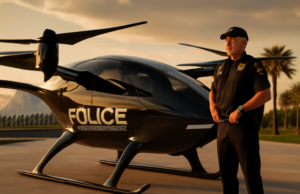
- Florida launches pioneering air taxi corridor with two eVTOL aircraft retracing historic aviation routes, symbolizing the evolution from aviation’s past to electric future.
- Comprehensive testing framework establishes safety protocols, regulatory standards, and operational guidelines that will inform FAA policies for nationwide air mobility commercialization.
- Florida’s successful corridor model positions the state as America’s air mobility innovation hub and provides a replicable template for urban eVTOL integration across major metro areas.
Florida is making headlines as a pioneer in the emerging urban air mobility sector. The state has launched an ambitious testing program for a future air taxi corridor, positioning itself at the forefront of personal air mobility innovation. This groundbreaking initiative represents a critical step toward integrating eVTOL (electric vertical takeoff and landing) aircraft into everyday transportation networks, with the potential to transform how residents and visitors move throughout metropolitan areas.
The Florida Air Taxi Corridor Initiative
The state of Florida has unveiled plans for a dedicated air taxi corridor that will connect key metropolitan regions, particularly focusing on the Orlando area. This corridor is designed to serve as a testbed for advanced eVTOL operations, establishing standardized flight paths and safety protocols that could become the blueprint for similar systems nationwide. The initiative demonstrates Florida’s commitment to emerging transportation technologies and positions the state as a leader in the race to commercialize urban air mobility.
The air taxi corridor project involves collaboration between government agencies, private aviation companies, and eVTOL manufacturers. This multi-stakeholder approach ensures that the testing framework incorporates diverse expertise and addresses regulatory, safety, and operational considerations from multiple perspectives. By bringing together industry players and public entities, Florida is creating a comprehensive ecosystem for sustainable urban aviation development.
The corridor’s design emphasizes safety, efficiency, and environmental sustainability. Rather than allowing random flight paths across urban airspace, the dedicated corridor approach concentrates eVTOL traffic into defined routes, reducing airspace congestion and minimizing environmental impact on surrounding communities. This structured methodology serves as a model for how future metropolitan areas can safely accommodate aerial transportation without compromising quality of life.
Two Historic eVTOL Aircraft Retrace Pioneering Routes
A highlight of Florida’s testing initiative involves two eVTOL aircraft retracing historic aviation routes, symbolically connecting the past of aviation with its future. This meaningful gesture honors aviation’s legacy while demonstrating the technological advances that have made electric vertical flight possible. The symbolic flight routes underscore how rapidly aviation technology is evolving and the significant role Florida plays in this transformation.
The specific eVTOL aircraft chosen for these flights represent the state-of-the-art in electric aviation technology. These vehicles showcase advanced battery systems, noise-reduction technologies, and safety features that distinguish modern eVTOL designs from conventional helicopters. By flying established historic routes, the aircraft demonstrate that modern urban air mobility solutions can coexist with and respect aviation heritage while pushing boundaries of what’s technologically possible.
The symbolic nature of these test flights carries significant weight in the context of public perception and regulatory acceptance. When eVTOL aircraft successfully operate along recognized aviation pathways, it helps the broader public understand that these vehicles are not radical departures from aviation norms but rather the logical next chapter in aviation’s evolution. This psychological and symbolic dimension is crucial for building community support for air mobility initiatives.
Regulatory Framework and Safety Considerations
Florida’s air taxi corridor testing must navigate a complex regulatory landscape overseen by the Federal Aviation Administration (FAA) and other government bodies. The corridor project serves as a proving ground for regulatory frameworks that will eventually govern eVTOL operations across the nation. By systematically testing operations within a defined corridor, Florida provides regulators with real-world data to inform policy development and safety standards.
Safety protocols are paramount in the corridor testing program. Each eVTOL operation is monitored with sophisticated tracking systems, communication protocols, and emergency procedures designed to exceed conventional aviation safety standards. The testing environment allows regulators to identify potential challenges and address them before widespread commercial operations begin. This proactive approach to safety helps build public confidence in emerging air mobility technologies.
The corridor framework also establishes standards for pilot training, aircraft certification, maintenance procedures, and emergency response protocols. These comprehensive standards ensure that when air taxi services eventually launch commercially, they operate under well-established safety and quality assurance guidelines. Florida’s methodical approach to regulation serves as a template for other states and nations developing their own air mobility programs.
Economic and Transportation Implications
The air taxi corridor represents significant economic opportunity for Florida. Beyond the direct economic benefits of eVTOL manufacturing, operation, and maintenance, the initiative positions Florida as an attractive hub for air mobility companies seeking to establish U.S. operations. Attracting these high-value businesses strengthens Florida’s economy and creates skilled job opportunities in engineering, aviation operations, and related fields.
From a transportation perspective, the air taxi corridor addresses critical mobility challenges in rapidly growing metropolitan areas. Traditional ground-based transportation networks face congestion issues that limit economic efficiency and quality of life. Air taxis operating in dedicated corridors can provide rapid, point-to-point connectivity that bypasses ground traffic, potentially reducing commute times and congestion. This transportation advantage could be particularly valuable for business travelers, emergency response situations, and tourism-related travel.
The corridor also offers an environmentally sustainable transportation alternative. Modern eVTOL aircraft produce zero direct emissions, utilizing renewable or grid electricity for power. When charged with electricity from renewable sources, these aircraft provide significantly lower carbon footprints compared to conventional helicopters or ground vehicles. As Florida and the nation prioritize environmental sustainability, electric air mobility solutions align with long-term climate and energy objectives.
Future Expansion and National Implications
The Florida air taxi corridor serves as a precursor to broader urban air mobility networks. Successful testing in Florida establishes operational, regulatory, and safety precedents that other states and cities can adopt and adapt. The initiative creates a national template for how metropolitan areas can integrate eVTOL operations while managing airspace, protecting communities, and advancing transportation innovation.
If Florida’s corridor proves successful, expansion to additional routes and regions is anticipated. The tested protocols and validated safety procedures would accelerate the commercial rollout of air taxi services in other major metropolitan areas including Los Angeles, New York, Chicago, and beyond. Florida’s pioneering efforts thus have ripple effects throughout the nation’s transportation future.
The timing of Florida’s air taxi initiative aligns with global momentum toward electric aviation commercialization. Major eVTOL manufacturers are progressing toward certification and early commercial operations, making this an opportune moment for cities and states to establish infrastructure and regulatory frameworks. Florida’s proactive stance positions the state to capture early adopter advantages and establish itself as America’s center for air mobility innovation.
Key Takeaways from Florida’s Air Taxi Corridor Testing
- Florida has launched a pioneering air taxi corridor testing program with two eVTOL aircraft retracing historic aviation routes, symbolically bridging aviation’s past with its electric future.
- The corridor framework establishes comprehensive regulatory standards for safety, operations, pilot training, and aircraft certification that will inform FAA policies and national air mobility guidelines.
- Successful Florida implementation creates an economic growth engine for eVTOL manufacturing and operations while providing a replicable model for air mobility expansion to other major U.S. metropolitan areas.
Florida’s air taxi corridor testing represents a transformative moment for personal air mobility in the United States. By combining symbolic gesture with practical innovation, Florida demonstrates that the future of urban transportation is taking flight. As the state continues its testing program and gathers operational data, the entire nation watches to see how this pioneering initiative reshapes transportation, commerce, and community development. The corridor’s success or challenges will directly influence how quickly and effectively cities across America can integrate eVTOL aircraft into their transportation ecosystems, making Florida’s current efforts crucial to understanding our aerial future.