HIGHLIGHTS
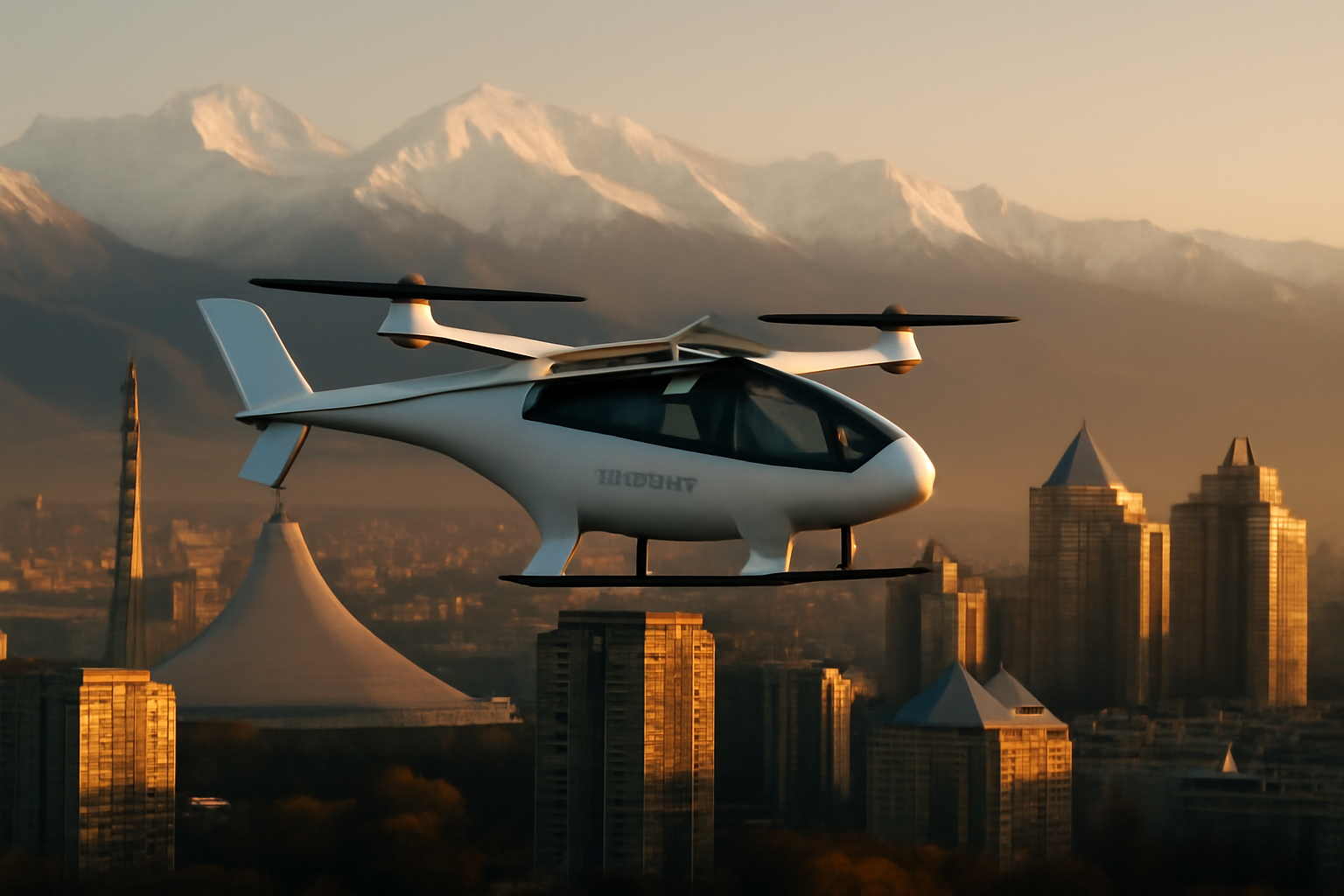
- Kazakhstan made history on August 7, 2026, with its first-ever passenger eVTOL flight, overseen by the Committee of Civil Aviation and powered by ePlaneAI technology.
- ePlaneAI’s electric aircraft successfully demonstrated commercial viability, featuring advanced battery systems, zero direct emissions, and ability to operate from smaller vertiports.
- Kazakhstan’s safety-first regulatory framework establishes a model for Central Asian eVTOL adoption and positions the nation as a leader in electric aviation commercialization.
Kazakhstan achieved a historic aviation milestone on August 7, 2026, by conducting its first-ever passenger eVTOL (electric vertical takeoff and landing) flight. This groundbreaking event, overseen by the Committee of Civil Aviation (CCA), represents a significant step forward for electric air mobility adoption in Central Asia and demonstrates the region’s commitment to embracing next-generation aviation technology. The successful flight marks a turning point for Kazakhstan’s aviation sector and opens new possibilities for sustainable urban air transportation.
Kazakhstan’s eVTOL Journey Begins
The first passenger eVTOL flight in Kazakhstan represents years of regulatory preparation and technological advancement. The Committee of Civil Aviation worked diligently to establish the necessary safety frameworks and certification standards required for commercial eVTOL operations. This proactive approach ensured that Kazakhstan could safely integrate electric aircraft into its airspace while maintaining the highest safety protocols.
The flight was conducted using ePlaneAI technology, a cutting-edge electric aircraft platform designed specifically for commercial passenger transportation. ePlaneAI’s involvement in this historic flight demonstrates the capabilities of modern eVTOL systems and their readiness for real-world operational deployment. The aircraft successfully demonstrated the reliability and efficiency required for regular passenger service.
Kazakhstan’s achievement places it among the early adopters of eVTOL technology globally. While other nations have conducted experimental flights, Kazakhstan’s approach emphasizes regulatory oversight and safety certification from the outset. This methodical strategy builds confidence in the technology and establishes a solid foundation for future expansion of electric air mobility services across the nation.
Regulatory Framework and CCA Leadership
The Committee of Civil Aviation’s role in facilitating this milestone cannot be overstated. As the primary aviation authority in Kazakhstan, the CCA established comprehensive regulations governing eVTOL operations, including airspace management, pilot certification, and aircraft maintenance standards. These regulations ensure that commercial eVTOL services operate safely and reliably within Kazakhstan’s airspace.
Developing an eVTOL regulatory framework requires balancing innovation with safety. The CCA consulted with international aviation authorities and eVTOL manufacturers to create standards that are both modern and practical. This collaborative approach accelerated the certification process while maintaining rigorous safety standards that protect passengers and the public below.
The successful first passenger flight validates the regulatory framework established by the CCA. This achievement positions Kazakhstan as a leader in eVTOL regulation within Central Asia and demonstrates that thoughtful regulatory planning can enable rapid technology adoption. Other countries in the region may look to Kazakhstan’s framework as a model for their own eVTOL integration efforts.
ePlaneAI Technology and Aircraft Capabilities
ePlaneAI’s eVTOL aircraft represents state-of-the-art electric aviation technology. The aircraft features advanced battery systems, electric motors, and autonomous flight management systems designed to optimize efficiency and safety. These technological innovations make ePlaneAI’s platform particularly suitable for urban air mobility applications and point-to-point transportation routes.
The electric propulsion system offers significant advantages over traditional aircraft, including lower noise emissions, reduced operational costs, and zero direct carbon emissions. These benefits are particularly valuable in urban environments where noise pollution is a concern. ePlaneAI’s aircraft can operate from smaller vertiports and landing zones, increasing accessibility compared to conventional airports.
The successful passenger flight demonstrates ePlaneAI’s aircraft reliability in real-world operational conditions. The smooth execution of the flight builds confidence in the technology’s maturity and readiness for commercial deployment. As ePlaneAI continues to refine its platform, we can expect improved performance metrics and expanded operational capabilities.
Central Asian Aviation and Future Growth
Kazakhstan’s pioneering eVTOL flight opens exciting possibilities for air mobility expansion throughout Central Asia. Urban congestion is a growing challenge in major cities across the region, and eVTOL services offer a viable solution for rapid, point-to-point transportation. Cities like Almaty and Nur-Sultan could benefit significantly from integrated eVTOL networks.
The success of Kazakhstan’s first passenger flight will likely inspire neighboring countries to accelerate their own eVTOL integration efforts. Regional governments may establish similar regulatory frameworks and partner with eVTOL manufacturers to develop commercial services. This collaborative approach could establish Central Asia as a hub for electric aviation innovation and adoption.
Economic opportunities abound for Kazakhstan as the eVTOL sector develops. Local companies can establish vertiport infrastructure, develop maintenance and training facilities, and provide support services for eVTOL operations. These economic benefits will extend beyond aviation, creating jobs and spurring innovation across multiple sectors.
Global Implications and Industry Momentum
Kazakhstan’s achievement contributes to growing global momentum for eVTOL commercialization. Major aviation markets in North America and Europe have conducted experimental flights, but Kazakhstan’s focus on regulatory compliance and safety certification demonstrates that developing nations can lead in technology adoption. This success challenges assumptions about eVTOL deployment patterns globally.
The first passenger flight validates eVTOL technology’s maturity and readiness for scaled deployment. Manufacturers like ePlaneAI can point to Kazakhstan’s successful operation as proof of commercial viability. This credibility accelerates investment in eVTOL companies and attracts capital to fund further development and fleet expansion.
As more countries conduct eVTOL flights and establish operational frameworks, industry standardization becomes increasingly important. International aviation organizations will work to develop common certification standards and safety protocols. Kazakhstan’s regulatory approach may influence these global standards, giving the nation a voice in shaping the future of electric aviation.
Key Takeaways from Kazakhstan’s eVTOL Milestone
- Kazakhstan conducted its first-ever passenger eVTOL flight on August 7, 2026, with oversight from the Committee of Civil Aviation, establishing the nation as a Central Asian leader in electric aviation adoption.
- ePlaneAI’s aircraft demonstrated reliable performance in commercial operations, validating the technology’s maturity and readiness for scaled deployment in passenger transportation networks.
- Kazakhstan’s robust regulatory framework and safety-first approach provide a model for other developing nations seeking to integrate eVTOL services responsibly while capturing economic opportunities in the emerging electric aviation sector.
Kazakhstan’s historic first passenger eVTOL flight marks a transformative moment for Central Asian aviation and the global eVTOL industry. By combining regulatory expertise, technological innovation, and strategic vision, Kazakhstan has demonstrated that developing nations can be pioneers in adopting sustainable aviation technologies. As the eVTOL sector continues to mature, this milestone will be remembered as a defining moment when electric air mobility transitioned from experimental technology to practical, commercial reality. The successful flight opens doors for expanded services, regional growth, and continued innovation in personal air mobility across Central Asia and beyond.