
HIGHLIGHTS
- Israeli air taxi manufacturer announces Polk County, Florida manufacturing facility, signaling market transition from development to commercial aircraft production
- U.S.-based production will create skilled jobs, strengthen supply chain resilience, and position Florida as an advanced air mobility manufacturing hub
- Investment demonstrates eVTOL industry confidence in near-term commercialization and establishes domestic capacity to meet growing operator demand
A significant development in the advanced air mobility sector has just emerged from Florida’s central region. An Israeli company specializing in air taxi technology has announced plans to manufacture electric vertical takeoff and landing (eVTOL) aircraft in Polk County, signaling growing confidence in the commercialization of personal air mobility solutions. This move represents a critical step toward establishing domestic manufacturing infrastructure for next-generation aircraft that could revolutionize urban transportation within the next few years.
Israeli Innovation Comes to Florida
The establishment of a manufacturing facility in Polk County by an Israeli air taxi company underscores the global momentum building around eVTOL technology. Israeli companies have positioned themselves as leaders in autonomous systems and advanced aerospace engineering, and this facility marks one of the most concrete examples of that expertise being deployed in the North American market. The move capitalizes on Florida’s strategic advantages, including a favorable business climate, access to skilled workforce talent, and proximity to major metropolitan areas that represent prime markets for air taxi services.
Polk County’s selection as the manufacturing hub is particularly noteworthy given the region’s emerging role in advanced transportation innovation. The county has been actively cultivating relationships with aerospace and technology companies, positioning itself as an attractive alternative to more established hubs. This Israeli company’s decision to invest in the region reflects confidence not only in the eVTOL market’s future but also in Florida’s ability to support high-tech manufacturing operations.
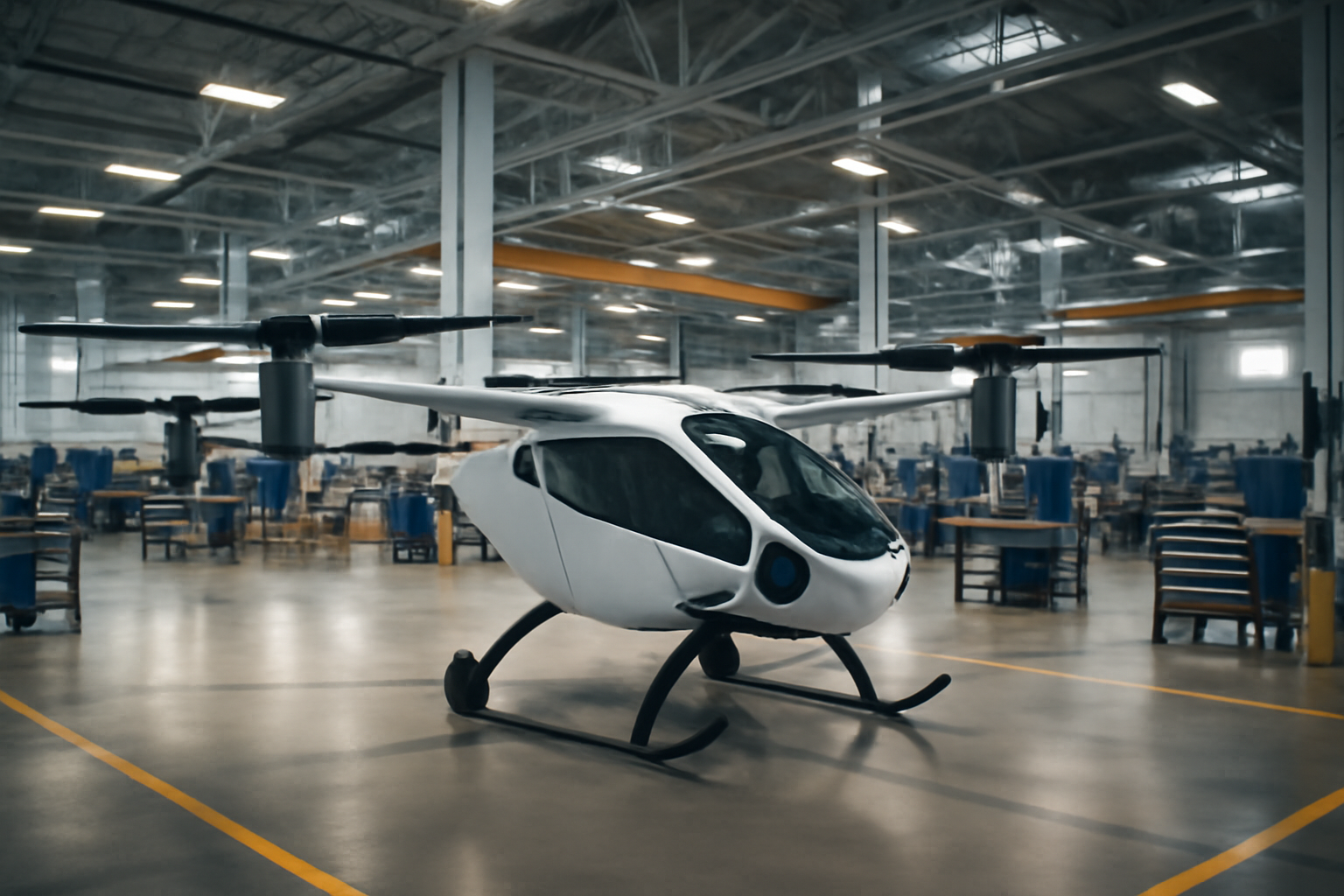
The facility will likely become a center of excellence for aircraft assembly, quality control, and final manufacturing processes. As orders for eVTOL aircraft continue to accumulate from operators and early adopters worldwide, domestic manufacturing capacity becomes increasingly critical to meeting demand and reducing supply chain vulnerabilities that could otherwise constrain market growth.
Manufacturing Infrastructure Development
The construction of a dedicated manufacturing plant in Polk County represents a substantial capital investment in the eVTOL supply chain. Unlike many aerospace ventures that remain concentrated in California or traditional aviation clusters, this facility brings advanced manufacturing expertise and high-skilled employment opportunities to central Florida. The facility will need to accommodate specialized tooling, testing equipment, and quality assurance protocols required for aircraft production.
Manufacturing eVTOL aircraft presents unique challenges compared to traditional fixed-wing aircraft or helicopters. Facilities must be equipped to handle composite materials, battery systems, electric propulsion components, and sophisticated avionics packages. The Israeli company’s decision to build these capabilities in Polk County suggests they are committed to scaling production rapidly and establishing a long-term presence in the United States market.
This investment also carries positive implications for local economic development. Air taxi manufacturing requires skilled technicians, engineers, and support staff, creating direct employment opportunities. Additionally, the facility will likely attract suppliers and service providers, generating secondary economic benefits throughout the region and establishing Polk County as a node in the emerging eVTOL manufacturing network.
Market Implications and Competitive Positioning
The decision to establish U.S. manufacturing operations reflects the Israeli company’s confidence that the eVTOL market is transitioning from the development and testing phase into early commercialization. Several factors support this optimistic outlook: regulatory frameworks are becoming clearer, pilot programs are launching in major cities, and early orders from operators suggest genuine commercial demand. Having domestic manufacturing capacity positions the company to compete more effectively against other international eVTOL manufacturers considering similar investments.
From a competitive standpoint, this move signals the company’s intent to establish itself as a serious contender in the rapidly consolidating eVTOL market. Companies with proven manufacturing capability and reliable supply chains will have advantages in securing long-term contracts with potential operators. The Polk County facility demonstrates commitment to fulfilling those orders on schedule and at competitive costs, addressing one of the key concerns many potential customers have about eVTOL startups.
The facility also positions the Israeli company to take advantage of evolving trade and industrial policy favorable to domestic manufacturing. As governments worldwide consider incentives and requirements for local production, companies with established U.S. manufacturing footprints will be better positioned to capture market opportunities in North America and potentially access government contracts or subsidized financing programs.
Advanced Air Mobility Ecosystem Growth
This manufacturing announcement is part of a broader ecosystem expansion in the advanced air mobility sector. Beyond aircraft production, successful eVTOL operations will require charging infrastructure, maintenance facilities, pilot training programs, and regulatory compliance systems. Polk County’s new facility could become the nucleus around which these supporting services develop, creating a comprehensive advanced air mobility cluster.
The Israeli company’s investment also raises the profile of Florida as a premier location for air mobility innovation. Other manufacturers, infrastructure providers, and service companies may view this facility as validation of the region’s capabilities and desirability. Over time, this could catalyze additional investments, creating network effects that strengthen Florida’s position in the emerging eVTOL industry.
Furthermore, the presence of an advanced manufacturing facility brings valuable expertise and institutional knowledge to the region. Engineers and technicians working in air taxi production will develop specialized skills and potentially start their own ventures or support other aviation companies entering the market. This knowledge transfer and talent development will accelerate innovation cycles and help establish a sustainable competitive advantage for the region.
Key Takeaways from This Announcement
- An Israeli air taxi manufacturer is establishing production operations in Polk County, Florida, representing a major commitment to U.S.-based eVTOL aircraft manufacturing and commercial market entry
- The facility will create skilled manufacturing jobs, support supply chain development, and position Polk County as an emerging center for advanced air mobility technology production
- This investment signals confidence that eVTOL technology is transitioning from development into early commercialization, with serious manufacturers now scaling production capacity to meet anticipated demand
The announcement of Israeli air taxi manufacturing operations in Polk County marks a pivotal moment in the eVTOL industry’s maturation. As companies move beyond prototypes and flight testing into commercial aircraft production, the establishment of dedicated manufacturing facilities becomes essential infrastructure. This facility will not only produce aircraft but will also serve as a beacon attracting further investment and talent to central Florida. The combination of Israeli aerospace expertise, American manufacturing capabilities, and Florida’s business-friendly environment creates an ideal foundation for scaling air taxi production. As regulations continue to clarify and operational networks begin launching in major metropolitan areas, facilities like this one in Polk County will prove essential to meeting market demand and establishing sustainable, competitive eVTOL operations. For the aviation industry and communities looking to participate in the air mobility revolution, this development represents validation that the transition from concept to commercial reality is well underway.