HIGHLIGHTS
- The US achieved pilotable flying platform flight in the 1950s with the Hiller VZ-1 Pawnee, predating China’s recent announcement by over 70 years.
- Modern eVTOL platforms differ fundamentally through electric battery propulsion, distributed redundant motors, advanced composites, and integrated urban air traffic frameworks unavailable in prior eras.
- China’s development contributes meaningfully to the global eVTOL race, though success depends on regulatory certification, public acceptance, and ecosystem integration rather than isolated technological breakthroughs.
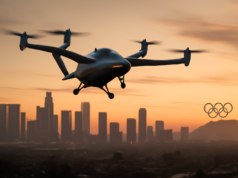
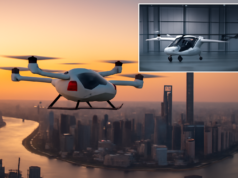
China has made headlines with its unveiling of what it claims is the “world’s first” pilotable flying platform, joining the rapidly expanding global race toward urban air mobility. However, this development carries a fascinating historical echo: the United States had successfully achieved similar technological milestones more than seventy years earlier, during the 1950s. This comparison offers valuable perspective on how aviation innovation cycles and geopolitical competition shape the trajectory of personal air mobility technologies.
China’s Latest Flying Platform: A Milestone or Marketing?
China’s recent announcement of its pilotable flying platform represents a significant statement within the broader eVTOL ecosystem. The platform showcases advances in battery technology, autonomous flight systems, and pilot-integrated control interfaces that reflect the current generation of aerial vehicle design. Chinese manufacturers have invested heavily in this sector, viewing urban air mobility as a strategic industrial opportunity and a solution to congestion in rapidly expanding metropolitan areas.
The platform’s design prioritizes operator control and safety features, incorporating redundant systems typical of modern electric vertical takeoff and landing vehicles. This focus on pilotable systems—where a human operator maintains direct control—distinguishes China’s approach from some competitors who emphasize autonomous operation. The distinction carries implications for regulatory approval, insurance frameworks, and public acceptance in different markets.
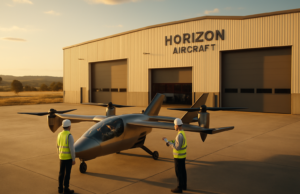
Chinese companies have benefited from substantial government support, access to manufacturing infrastructure, and growing domestic investment in aerospace technology. The announcement positions China as a credible player in the eVTOL market, competing alongside established players from North America, Europe, and other Asia-Pacific nations. However, the framing of this achievement as historically “first” warrants careful examination when compared to documented aviation history.
The 1950s American Precedent: When Flying Platforms Were Real
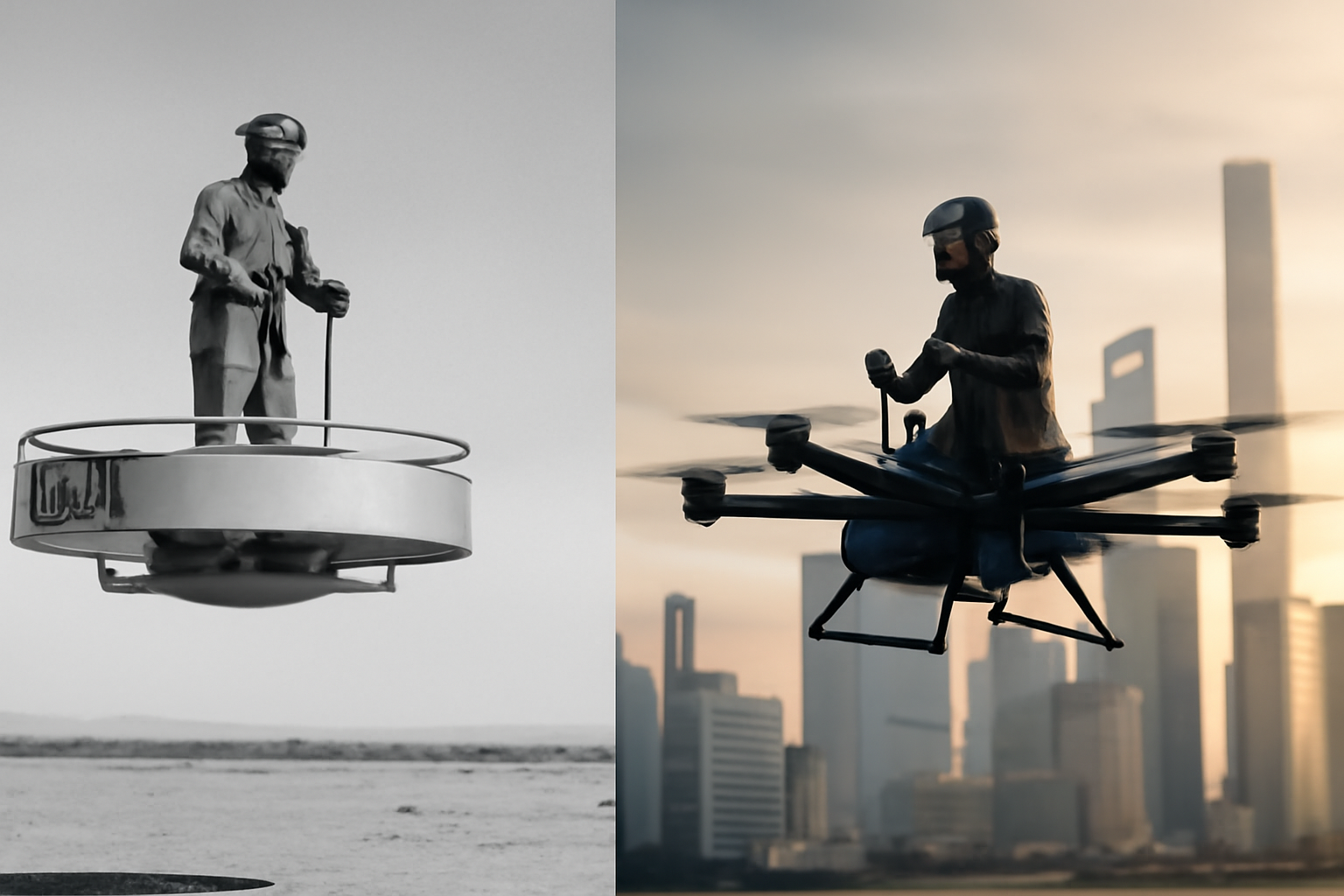
The historical record reveals that the United States successfully developed and tested pilotable flying platforms during the 1950s, well before modern eVTOL terminology even existed. The most notable example is the Hiller VZ-1 Pawnee, an open-rotor flying platform that achieved first flight in 1955. This aircraft represented genuine innovation in vertical lift technology and demonstrated the feasibility of platform-style personal aviation during an era of pioneering aerospace development.
The VZ-1 Pawnee was extensively tested by the U.S. Army and featured a novel ducted-rotor design that prioritized pilot safety and control stability. The aircraft could hover and transition between vertical and forward flight, characteristics that modern eVTOL platforms also pursue. While powered by conventional fuel engines rather than batteries, the Pawnee proved that the fundamental concept of a pilotable flying platform was viable with 1950s technology.
Beyond the Hiller platform, the 1950s saw numerous experimental aircraft and design concepts that explored similar operational spaces. These included other open-rotor designs, tethered test vehicles, and theoretical studies that contributed to aerospace engineering knowledge. This period represented a golden age of aviation experimentation, where government agencies, private manufacturers, and individual engineers pushed the boundaries of what vertical-lift aircraft could achieve.
Why History Matters: Context for Modern eVTOL Development
Understanding this historical context is essential for accurately assessing China’s technological progress and positioning within the global eVTOL market. Claims of being “first” deserve scrutiny based on technical definitions, historical documentation, and international aviation records. The difference between genuine innovation and marketing language can significantly influence investor expectations, regulatory frameworks, and public understanding of the sector.
The 1950s achievements also highlight how geopolitical cycles influence technology development priorities. The U.S. Army’s interest in flying platforms was driven by Cold War military considerations, while today’s eVTOL boom centers on commercial urban air mobility, sustainability goals, and addressing transportation bottlenecks in megacities. These different motivations shape technical specifications, safety requirements, and ultimate market applications.
Historical awareness also demonstrates that technological innovation often follows non-linear paths. The fact that flying platforms were feasible in the 1950s but didn’t become mainstream doesn’t invalidate their conceptual validity. Rather, it shows that technological maturity depends on multiple factors converging: energy storage solutions (batteries vs. fuel), manufacturing costs, regulatory frameworks, insurance mechanisms, and market demand. Modern eVTOL development benefits from all these conditions being far more favorable than in the 1950s.
The Global eVTOL Race: Multiple Competitors, Shared Challenges
China’s announcement occurs within an intensifying global competition for eVTOL market leadership. Companies across North America, Europe, Asia, and the Middle East are developing pilotable and autonomous flying platforms, each with distinct technical approaches and target markets. Joby Aviation, Archer Aviation, EHang, Lilium, and numerous other firms are advancing toward commercial certification and eventual deployment in urban environments.
All competitors face similar fundamental challenges regardless of geographic origin: achieving extended battery range, reducing noise to acceptable urban levels, establishing international regulatory standards, securing airspace access, and building public confidence in safety. These barriers affect American, Chinese, European, and other manufacturers equally. The race is as much about solving these systemic problems as it is about individual technological breakthroughs.
China’s industrial policy approach—combining government support, manufacturing scale, and coordinated private-sector investment—offers certain advantages in rapid prototyping and component production. However, this approach must ultimately satisfy international aviation safety standards, obtain certifications from multiple regulatory bodies, and demonstrate reliability in real-world operations. Technical capability alone doesn’t guarantee market success without these supporting infrastructure elements.
What’s Actually Different About Modern Flying Platforms?
While the concept of pilotable flying platforms isn’t new, modern implementations incorporate several genuinely transformative technologies unavailable in the 1950s. Advanced battery chemistry offers power density and cycle life that would have seemed miraculous to 1950s engineers. Electric motors with integrated control electronics enable precise thrust management that was mechanically impossible with era-appropriate technology.
Modern eVTOL vehicles incorporate sophisticated composite materials, advanced aerodynamics refined through computational fluid dynamics, and autonomous flight systems using sophisticated sensors and artificial intelligence. Safety systems include distributed electric propulsion (multiple independent motors for redundancy), automated stability control, and collision avoidance capabilities derived from decades of aerospace development and software engineering progress.
The most significant difference may be the supporting ecosystem: established air traffic control frameworks, comprehensive aviation insurance, international certification standards, and integrated urban planning considerations. The 1950s prototype lacked this institutional infrastructure. Modern flying platforms succeed or fail not solely on engineering merit but on their integration into complex urban and regulatory systems.
Key Distinctions Between Historical and Modern Platforms
- Battery-electric propulsion enables zero-emission urban operation versus fuel-powered 1950s designs with significant noise and pollution.
- Modern redundancy systems and distributed electric propulsion provide safety margins impossible with single-engine mechanical designs from prior decades.
- Comprehensive international regulatory frameworks and certification standards exist today, whereas 1950s experimental aircraft operated in less structured environments.
China’s flying platform announcement represents legitimate progress in bringing eVTOL technology closer to commercial viability. The engineering teams involved have clearly achieved substantial technical accomplishments worthy of recognition. However, accurately contextualizing this progress within aviation history provides clearer understanding of how innovation evolves and how technological cycles interact with market conditions, regulatory development, and public acceptance. The 1950s didn’t fail to produce flying platforms because the concept was impossible—they failed to generate sustained markets because supporting infrastructure, economics, and societal readiness hadn’t converged. Today’s eVTOL industry succeeds where mid-century experiments stalled precisely because all these conditions are now aligning. China’s contribution accelerates this convergence, benefiting the entire sector regardless of manufacturer nationality.