HIGHLIGHTS
- LA28 Olympics will debut electric air taxi service, making it the first Olympic Games to offer eVTOL mobility for athletes and officials.
- Electric aircraft will reduce congestion and emissions during the 2028 Games, demonstrating viable solutions for large-scale event logistics.
- This partnership signals growing confidence in electric vertical takeoff technology and its readiness for real-world commercial deployment.
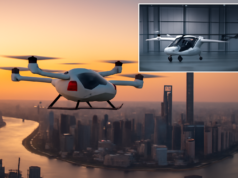
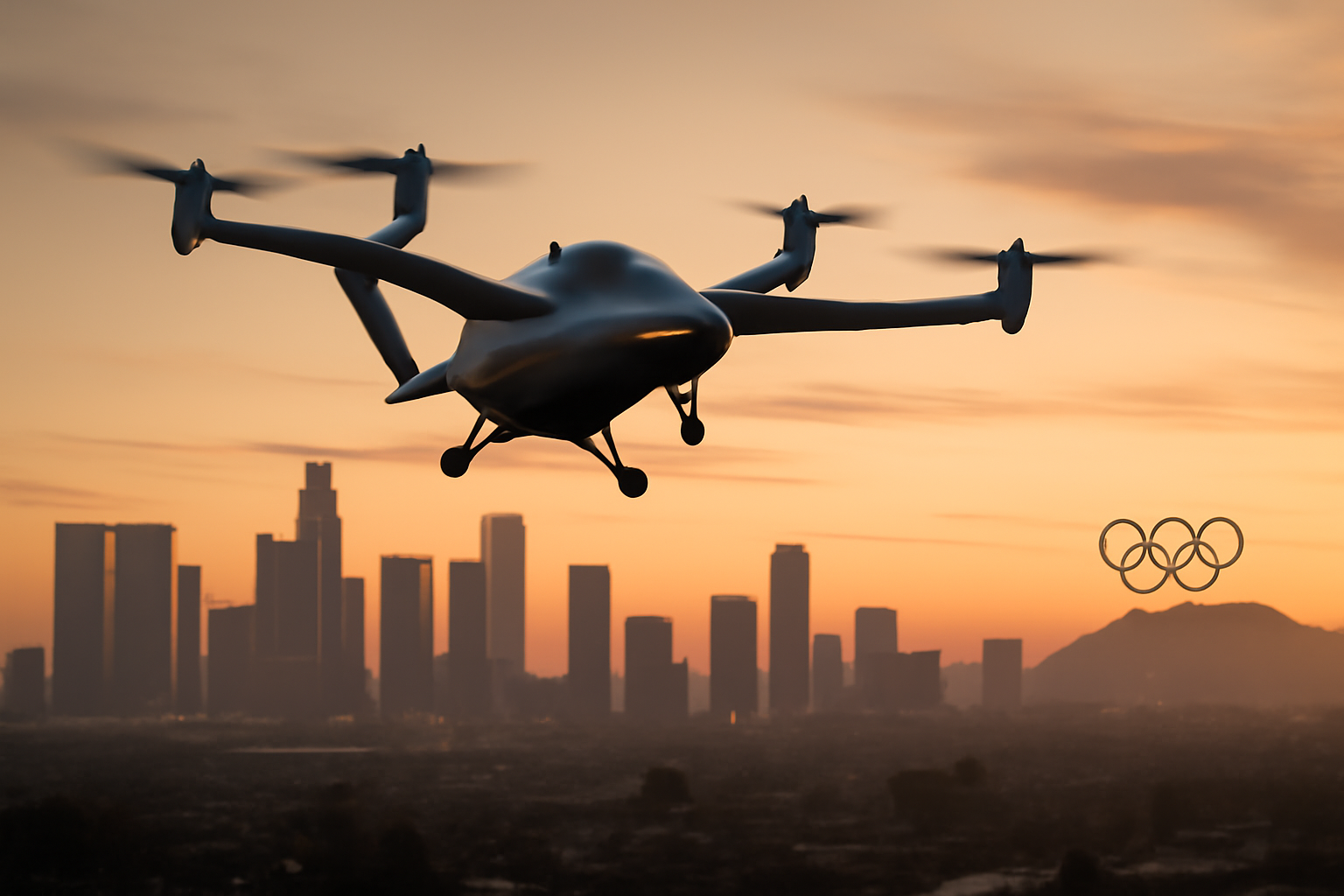
The 2028 Los Angeles Olympics are set to make aviation history by incorporating electric vertical takeoff and landing (eVTOL) aircraft into their transportation infrastructure. This groundbreaking initiative will provide air taxi services for Olympic athletes, officials, and select personnel, marking the first time a global sporting event will deploy electric aircraft at scale for operational mobility. The decision reflects growing confidence in eVTOL technology and signals a major inflection point for personal air mobility entering mainstream adoption.
Olympic Air Mobility: A Revolutionary Transportation Solution
The LA28 Olympics represent an unprecedented opportunity to showcase electric aviation in real-world conditions. With tens of thousands of participants and the world’s media spotlight, the Games provide an ideal proving ground for demonstrating eVTOL safety, reliability, and efficiency to a global audience. The air taxi service will alleviate ground transportation congestion across Los Angeles, which historically faces severe traffic challenges during major events, while simultaneously reducing the carbon footprint of Olympic operations.
This commitment aligns with the International Olympic Committee’s sustainability initiatives and Los Angeles’s broader climate goals. By integrating electric aircraft into the Olympic transportation network, LA28 organizers are positioning the city as a leader in innovative urban mobility solutions and setting a precedent for future mega-events to follow. The deployment demonstrates that eVTOL technology is no longer purely experimental—it’s operationally viable for complex, high-stakes scenarios.
The selection of electric aircraft over traditional helicopters reflects advancing battery technology, regulatory approvals, and operator confidence in next-generation aviation platforms. Multiple eVTOL manufacturers have been working toward this milestone, and the Olympic contract represents validation of their years of development, safety certifications, and real-world testing protocols.
Infrastructure and Operational Requirements
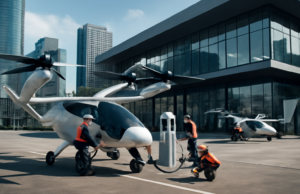
Hosting an air taxi service during the Olympics requires sophisticated ground infrastructure, including dedicated vertiports, charging stations, and traffic management systems. Los Angeles is developing a network of strategically positioned landing facilities near major Olympic venues—stadiums, athlete villages, and transportation hubs—to maximize operational efficiency. These vertiports will be purpose-built to handle continuous operations with minimal noise and environmental impact, serving as models for permanent urban air mobility infrastructure beyond 2028.
The operational logistics are equally complex. Coordinating flight schedules with Olympic event timelines, security protocols, weather conditions, and airspace management requires unprecedented coordination between aviation authorities, Olympic organizers, and eVTOL operators. Real-time traffic management systems will prevent airspace congestion, while redundancy protocols ensure service continuity. Flight crews will undergo specialized training specific to Olympic operations, including secure transportation procedures and emergency response protocols.
Charging infrastructure represents another critical component. High-capacity charging stations at vertiports must support rapid turnarounds between flights, potentially requiring advanced grid management or on-site energy storage solutions. Battery technology optimization and charging speed improvements have been key developments enabling this kind of intensive operational deployment. The LA28 Olympic air taxi service will serve as a live data source for understanding real-world power consumption, charging efficiency, and fleet management at scale.
Safety, Regulation, and Certification
Operating commercial air taxi services during the Olympics requires full regulatory approval from the Federal Aviation Administration (FAA) and coordination with other aviation authorities. eVTOL operators must demonstrate compliance with Part 135 certification standards for commercial operations, undergo rigorous safety audits, and maintain detailed operational protocols. The Olympic context adds additional scrutiny, as any incident would receive global media attention and could significantly impact public perception of electric aviation technology.
Safety certifications have been accelerating in recent years, with the FAA issuing operational approvals for several advanced air mobility (AAM) operators. The Olympics will represent one of the most demanding safety environments for these certifications, requiring redundancy in all critical systems—propulsion, navigation, communication, and emergency procedures. Aircraft will undergo more frequent inspections than typical commercial operations, and pilot training will emphasize scenarios specific to urban Olympic environments and high-volume flight operations.
Insurance and liability frameworks have evolved to accommodate commercial eVTOL operations, though the Olympic scale presents novel challenges. Operators and organizers have worked with underwriters to establish comprehensive coverage for this unprecedented deployment. The successful completion of LA28 Olympic air taxi operations will provide crucial precedent for regulatory bodies worldwide and help establish standardized protocols for eVTOL commercial deployment at major events and in urban centers.
Impact on Personal Air Mobility Industry
The LA28 Olympics represent a watershed moment for the eVTOL industry. Successful execution will validate technology maturity, demonstrate operational scalability, and accelerate timelines for commercial air taxi services in major cities worldwide. Urban air mobility companies have invested billions in aircraft development, vertiport infrastructure, and airspace integration systems—the Olympics provide tangible proof that their business models are approaching viability.
Media coverage of the Olympic air taxi service will reach billions of viewers, creating unprecedented awareness of electric aviation capabilities among the general public. Seeing eVTOL aircraft routinely transporting Olympic athletes will normalize the technology and shift public perception from “experimental concept” to “established transportation mode.” This psychological shift is crucial for customer adoption and regulatory support as commercial air taxi services eventually expand to everyday urban mobility.
The LA28 Olympics will also generate invaluable operational data—flight times, energy consumption patterns, maintenance requirements, passenger experience metrics, and safety performance—that will inform industry standards and best practices. This data will accelerate the path to profitability for commercial operators and help justify the massive infrastructure investments required for citywide air taxi networks. Additionally, the high-profile Olympic deployment may catalyze regulatory changes in other jurisdictions, encouraging faster certification and integration of eVTOL services globally.
Looking Beyond 2028: The Future of Urban Air Mobility
The LA28 Olympic air taxi service is not merely a one-off spectacle; it’s a foundational step toward permanent urban air mobility infrastructure. Los Angeles plans to leverage the vertiport networks and operational frameworks developed for the Olympics to establish commercial air taxi services extending beyond 2028. This continuity ensures that the massive capital investments in infrastructure become assets for long-term economic benefit rather than temporary Olympic installations.
Other cities are watching closely. The success of LA28’s eVTOL deployment will almost certainly influence planning for future Olympic Games, World Expos, and other major events. Cities from Singapore to Paris to future host nations are already exploring how advanced air mobility could enhance their own transportation networks. The Olympics serve as an accelerant for technology adoption, compressing timelines that might otherwise require a decade of incremental development into a four-year sprint toward operational readiness.
Beyond the Olympics, the normalized presence of eVTOL aircraft in Los Angeles airspace will support the broader rollout of commercial air taxi services to everyday passengers. Regulatory frameworks, pilot training programs, maintenance infrastructure, and public acceptance all benefit from the intensive experience gained during the Games. By 2030 and beyond, air taxi services could become a standard feature of major metropolitan transportation networks, beginning with the foundations laid at LA28.
Key Takeaways: The Olympic Air Mobility Moment
- LA28 will be the first Olympic Games to deploy electric air taxi services, proving eVTOL technology readiness for large-scale commercial operations under real-world conditions.
- Vertiport infrastructure, charging networks, and operational systems developed for the Olympics will transition to permanent commercial service post-2028, establishing foundations for citywide air mobility.
- Global media exposure and successful deployment during the Olympics will accelerate public acceptance and regulatory progress for eVTOL services in major cities worldwide.
The LA28 Olympics represent far more than a sporting event—they embody a pivotal moment in transportation history. By integrating electric aircraft into Olympic operations, Los Angeles is demonstrating that personal air mobility is no longer science fiction or distant possibility. It’s a present-day reality, ready to transform how we move through our cities. As the world watches athletes and officials traverse the LA28 Olympics via electric air taxi, they’ll witness the future of urban transportation arriving in real time.