HIGHLIGHTS
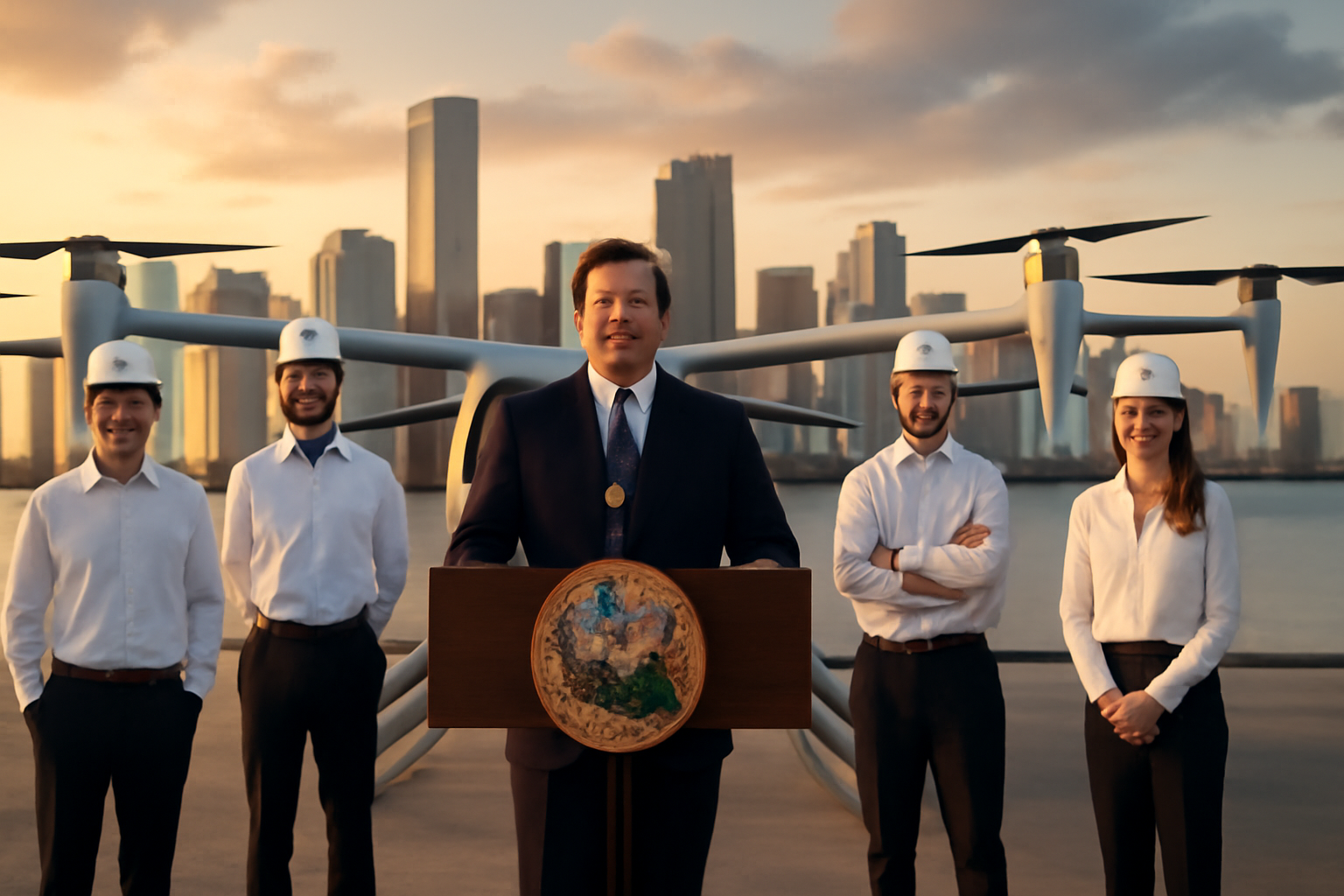
- Governor Ron DeSantis has announced Florida’s comprehensive testing program for eVTOL flying taxis and autonomous vehicles, positioning the state as a leader in advanced mobility innovation.
- The integrated multi-modal approach combines eVTOL aircraft with autonomous ground vehicles to create seamless first-mile, last-mile, and point-to-point urban transportation connectivity.
- Florida’s collaborative FAA framework ensures safety standards and environmental oversight while generating federal regulation data, creating economic opportunities in aerospace and technology sectors.
Florida is positioning itself at the forefront of urban air mobility and autonomous transportation innovation with an ambitious new testing program for eVTOL flying taxis and autonomous vehicles. Under the leadership of Governor Ron DeSantis, the state has announced comprehensive plans to integrate next-generation mobility solutions into its transportation infrastructure, signaling a major shift in how Americans might commute in the coming decades. This groundbreaking initiative demonstrates Florida’s commitment to fostering technological advancement while maintaining safety and regulatory oversight.
Florida’s Bold Vision for Urban Air Mobility
Governor Ron DeSantis has championed Florida’s entry into the eVTOL sector with a clear strategic vision: position the state as a testing ground for revolutionary transportation technology. The initiative goes beyond simple pilot projects, representing a comprehensive approach to integrating flying taxis into existing urban infrastructure. Florida’s geographic advantages—including year-round flying weather, established aerospace expertise, and dense metropolitan areas—make it an ideal location for these transformative tests.
The announcement reflects broader national trends as the FAA gradually creates pathways for commercial eVTOL operations. By establishing testing protocols early, Florida aims to influence how regulations are developed and implemented across the United States. This proactive stance could attract major eVTOL manufacturers and operators seeking favorable regulatory environments and established infrastructure support.
DeSantis’s administration has emphasized that the program will balance innovation with public safety, ensuring comprehensive testing frameworks are in place before widespread commercial deployment. This measured approach appeals to both technology companies seeking rapid market entry and residents concerned about airspace congestion and noise implications.
eVTOL Flying Taxis: Technology and Implementation
Electric vertical takeoff and landing aircraft represent a fundamental reimagining of urban transportation, offering point-to-point connectivity without relying on congested ground infrastructure. These aircraft typically accommodate 2-6 passengers and can travel 20-50 miles on a single charge, making them ideal for medium-distance commutes and airport shuttles. Florida’s testing program will evaluate how these vehicles perform in real-world conditions, including varied weather patterns and high-density urban environments.
The proposed flying taxi routes would likely connect major urban centers, airports, and transportation hubs throughout South Florida and other metropolitan areas. Operators are targeting flight times that dramatically reduce commute durations compared to traditional ground transportation—a 30-mile journey that might take 90 minutes by car could take 15-20 minutes by eVTOL. The environmental benefits are equally compelling, with zero direct emissions and significantly lower noise levels than conventional helicopters.
Key challenges that Florida’s testing program will address include battery technology optimization, vertical charging infrastructure development, air traffic management integration, and passenger safety protocols. Manufacturers participating in the tests will gather critical data on operational efficiency, maintenance requirements, and customer experience metrics essential for commercial viability.
Autonomous Vehicle Integration and Multi-Modal Ecosystem
The inclusion of autonomous ground vehicles in Florida’s testing program reflects recognition that future mobility solutions require seamless integration across multiple transportation modes. Autonomous vehicles complement eVTOL operations by providing first-mile and last-mile connectivity—transporting passengers from their origins to eVTOL vertiports and from landing sites to final destinations. This multi-modal ecosystem creates a comprehensive urban mobility network far more efficient than any single technology.
Florida’s approach acknowledges that successful urban air mobility depends on reliable ground transportation connections. A passenger landing at an airport vertiport still needs convenient ground transportation to reach their final destination; autonomous vehicles solve this integration challenge while reducing congestion at centralized transportation hubs. The testing program will evaluate how these systems communicate and coordinate to optimize passenger flow and convenience.
The autonomous vehicle component also allows researchers to study how Florida communities respond to significant transportation changes. Public acceptance of eVTOL and autonomous vehicles will partly depend on seeing these technologies work together seamlessly in everyday scenarios. Early testing builds confidence and generates valuable behavioral data that informs future regulatory frameworks.
Regulatory Framework and Safety Standards
Florida’s testing initiative operates within the evolving FAA framework that governs advanced air mobility. The state is working closely with federal regulators to establish safety standards, noise limits, and operational boundaries that protect public interests while enabling innovation. This collaborative approach ensures that tests generate data the FAA can use in developing national eVTOL regulations, benefiting the entire aerospace industry.
Safety protocols are paramount in the testing program, with comprehensive requirements for pilot training, aircraft maintenance, emergency procedures, and passenger communication. Each flight will be meticulously documented and analyzed to identify operational challenges and optimization opportunities. Safety data from Florida’s tests will inform best practices adopted nationwide as commercial eVTOL operations begin.
Environmental impact assessment is also central to the regulatory framework. Noise monitoring, emissions tracking, and airspace usage studies will ensure that eVTOL and autonomous vehicle testing doesn’t negatively affect Florida communities. This comprehensive environmental oversight sets high standards for responsible innovation and demonstrates state commitment to balancing technological progress with quality of life for residents.
Economic and Strategic Implications
Florida’s commitment to advanced mobility testing positions the state to become a major hub for aerospace and transportation technology companies. Manufacturers, operators, and service providers will be attracted to locations with favorable regulatory environments and existing testing infrastructure. This economic development opportunity could create high-skilled jobs in engineering, operations, maintenance, and logistics sectors.
The testing program also establishes Florida as a thought leader in urban innovation, attracting venture capital investment and talented researchers seeking cutting-edge opportunities. Universities and research institutions throughout the state can leverage the testing program to advance academic research in urban air mobility, autonomous systems, and transportation engineering. This ecosystem of innovation generates economic multiplier effects extending far beyond the direct aerospace sector.
Interstate and international competition for eVTOL ecosystem dominance is intensifying as other states and countries recognize the opportunity. By moving decisively to establish testing programs and supportive regulatory frameworks, Florida avoids being left behind in this transportation revolution. Early movers gain competitive advantages in infrastructure development, industry partnerships, and skilled workforce development that compound over time.
Key Takeaways for Industry and Community Stakeholders
- Florida’s integrated testing program for eVTOL flying taxis and autonomous vehicles positions the state as a national leader in advanced mobility innovation and next-generation transportation infrastructure development.
- The comprehensive safety framework and collaborative FAA partnership ensure that Florida tests generate critical data informing federal regulations, while protecting public interests and community quality of life.
- Early establishment of eVTOL and autonomous vehicle ecosystems creates significant economic opportunities in technology development, high-skilled employment, and industry leadership that compound as commercial operations scale nationally.
Florida’s announcement represents more than a single testing initiative—it reflects a strategic commitment to shaping the future of how people move through cities and regions. By combining eVTOL flying taxis with autonomous ground vehicles under thoughtful regulatory oversight, Florida is demonstrating that technological innovation and public responsibility can advance together. As these tests progress, they will generate crucial insights that transform urban mobility nationwide while positioning Florida as a destination for advanced transportation companies and talent seeking to lead the next transportation revolution.