
HIGHLIGHTS
- Just £3.70 powered a 27-minute test flight—£8.22 per hour versus £200-£500 for conventional aircraft
- Battery-electric propulsion delivers both zero emissions and superior operating economics, making sustainability profitable
- Technology maturity proven at scale transforms electric aviation from concept to viable commercial platform
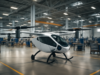
The world’s largest battery-electric aircraft has achieved a remarkable milestone that could reshape the future of sustainable aviation. During a recent 27-minute test flight, the operational cost to power the massive electric plane amounted to just £3.70—a figure that demonstrates the extraordinary cost efficiency of battery-electric propulsion systems compared to traditional fossil fuel alternatives. This breakthrough moment highlights how rapidly the economics of electric aviation are transforming, making zero-emission flight increasingly viable for commercial operators worldwide.
The Historic Achievement in Battery-Electric Aviation
This milestone represents a watershed moment for the electric aviation industry. The successful test flight of the world’s largest battery-electric plane proves that large-scale electric propulsion is no longer a distant dream but an operational reality. With such minimal energy costs, the aircraft demonstrates that the primary expense barrier to electric aviation adoption is shifting away from fuel consumption toward infrastructure development and aircraft manufacturing.
The £3.70 operating cost for 27 minutes of flight time translates to approximately £8.22 per hour of operation—an extraordinarily low figure when compared to conventional aircraft. A typical general aviation aircraft running on avgas or jet fuel might spend £200-£500 per hour on fuel alone. This cost advantage becomes even more pronounced when considering the reduced maintenance requirements of electric motors compared to combustion engines, which have thousands of moving parts requiring regular servicing.
The implications extend beyond simple economics. This test validates years of engineering investment by the development team and provides compelling evidence that battery-electric propulsion can scale to accommodate larger aircraft. Previous assumptions about weight penalties and battery density limitations are being systematically disproven by real-world performance data.
Energy Efficiency and Battery Technology Breakthroughs
The minuscule operating cost reflects major advances in battery chemistry and energy management systems. Modern lithium-based battery cells have achieved energy densities that make large-scale aviation feasible, while integrated battery management systems optimize power delivery throughout flight operations. The aircraft’s design maximizes aerodynamic efficiency, minimizing energy draw during the test flight and demonstrating that thoughtful engineering can overcome traditional constraints.
The cost calculation likely reflects grid electricity rates rather than specialized aviation fuel pricing, highlighting another advantage of electric aviation. Operators charging from regional power grids benefit from wholesale electricity rates, which are substantially cheaper than refined jet fuel. In regions with abundant renewable energy generation, charging costs could theoretically drop even further, making electric aviation not just economically competitive but genuinely cost-superior.
Battery thermal management played a crucial role in achieving optimal performance during the test. Advanced cooling systems maintained cell temperatures within ideal operating ranges, preserving capacity and extending the usable energy from each cell. This engineering focus demonstrates that success in electric aviation depends not just on battery selection but on holistic system design that addresses every technical challenge.
Commercial and Environmental Implications
The commercial viability established by this test flight opens new possibilities for regional air transport operators, cargo services, and specialized aviation sectors. Airlines and operators facing mounting pressure to reduce emissions now have concrete evidence that electric alternatives offer economic benefits alongside environmental advantages. The combination of lower operating costs and zero direct emissions creates a compelling business case that extends beyond regulatory compliance.
Environmental impact calculations become increasingly favorable when electricity comes from renewable sources. If the power grid supplying the aircraft uses solar, wind, or hydroelectric generation, the entire flight cycle produces zero greenhouse gas emissions while costing a fraction of conventional operations. This creates a virtuous cycle: operators save money while reducing environmental impact, making sustainability a profitable proposition rather than an expensive mandate.
The successful test also validates investment strategies by governments and private backers supporting electric aviation development. Public funding agencies promoting zero-emission transportation now have proof-of-concept data demonstrating that their investments yield genuinely transformative results. This success likely triggers additional funding commitments and accelerates development timelines for subsequent electric aircraft programs.
Future Scaling and Market Adoption Potential
The path from this impressive test to widespread commercial deployment requires addressing infrastructure, certification, and manufacturing scale-up. Airports worldwide need charging infrastructure capable of rapidly replenishing large battery packs between flights. Aviation authorities must establish certification standards for electric propulsion systems, safety protocols, and operational procedures. These challenges, while significant, are fundamentally solvable through existing technologies and regulatory frameworks adapted for electric operations.
The cost advantage established through this test flight creates powerful market incentives for manufacturers to develop electric aircraft across multiple categories. Regional routes—where most commercial aviation operates—become prime candidates for electrification. Cities separated by 200-400 kilometers could be connected by electric aircraft at operating costs that undercut current turboprop services while providing superior passenger experience and zero emissions.
Supply chain development and manufacturing capacity will determine how rapidly electric aviation scales. As battery production increases and manufacturing processes mature, per-unit costs will decline further. Learning curves in aerospace manufacturing suggest that electric aircraft could achieve cost parity with conventional aircraft within 10-15 years, with superior operating economics arriving much sooner. Investment in production capacity represents the next critical barrier to market transformation.
Key Takeaways: Electric Aviation Economics Transformed
- The world’s largest battery-electric aircraft completed a test flight powered for just £3.70—approximately £8.22 per flight hour, versus £200-£500 for conventional aircraft
- Cost advantage combined with zero emissions creates compelling economic incentive for operators, shifting sustainability from expensive mandate to profitable strategy
- Success validates battery technology maturity and engineering solutions, accelerating development timelines for commercial electric aircraft deployment
This achievement marks a turning point in aviation history. When the world’s largest battery-electric aircraft can complete test flights with operational costs barely above pocket change, the economic argument for electrification becomes undeniable. Operators, manufacturers, and policymakers now possess concrete evidence that sustainable aviation is not just environmentally necessary—it’s economically superior. The transition to electric air mobility has moved from theoretical possibility to demonstrated reality, with costs so favorable they challenge our conventional understanding of aviation economics. The question is no longer whether electric aviation will succeed, but how quickly the industry can scale production and infrastructure to meet demand.