
HIGHLIGHTS
- eVTOL aircraft made a major debut at the 2026 Farnborough Airshow, signaling industry confidence in electric vertical flight technology
- Multiple manufacturers demonstrated advanced eVTOL platforms with improved battery efficiency and autonomous flight capabilities
- Industry experts remain cautious about near-term mainstream adoption due to regulatory, infrastructure, and cost challenges
The 2026 Farnborough International Airshow has become a pivotal moment for the electric vertical takeoff and landing (eVTOL) industry, with multiple manufacturers and startups showcasing their latest aircraft designs and technological innovations. Once the stuff of science fiction, eVTOL aircraft are now taking physical form on the airshow floor, attracting intense scrutiny from investors, aviation regulators, and the public. Yet despite the visible progress and breakthrough demonstrations, fundamental questions remain about whether these aircraft will truly revolutionize everyday urban mobility or remain a niche solution for specialized markets.
The eVTOL Revolution Lands at Farnborough
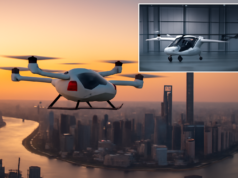
The presence of eVTOL aircraft at Farnborough 2026 represents a watershed moment for the personal air mobility sector. Where previous airshows featured mostly concept renderings and scale models, this year’s exhibition showcased flight-ready prototypes and production-intent designs from established aerospace companies and innovative startups alike. The visibility and scale of this presence reflects a maturing industry that is moving beyond theoretical discussions and into real-world engineering challenges and solutions.
Several manufacturers used the Farnborough platform to unveil aerodynamic refinements, upgraded propulsion systems, and enhanced safety features developed over the past two years of intensive R&D. The competitive energy on display suggests that companies recognize the critical importance of this moment—those who demonstrate reliable, efficient, and safe eVTOL platforms now may secure regulatory approvals and market position for the decade to come. The airshow served as both a technology showcase and a reality check for an industry racing toward commercialization.
Media coverage of the eVTOL exhibits drew comparisons to the early aviation era, when daring pioneers showcased experimental aircraft to prove that heavier-than-air flight was possible. However, today’s eVTOL developers face vastly more complex regulatory, certification, and infrastructure requirements than the Wright brothers ever encountered. The Farnborough Airshow spotlight amplifies both the promise and the pressure facing the sector.
Technical Advances and Flight Demonstration Highlights
Multiple eVTOL designs on display at Farnborough 2026 incorporated significant advances in battery technology, electric motor efficiency, and flight control systems. Manufacturers reported improvements in energy density, allowing for longer flight times and greater payload capacity compared to previous generations. Several aircraft demonstrated new regenerative braking capabilities and optimized rotor designs that reduce noise and vibration—critical factors for urban operations where community acceptance is essential.
Flight demonstration schedules became a centerpiece of the Farnborough program, with multiple eVTOL manufacturers conducting tethered flights and controlled demonstrations to showcase stability, responsiveness, and power management. These public demonstrations served a dual purpose: proving technological maturity to skeptical observers while generating media coverage that maintains investor confidence and public interest in the sector. Pilots reported smooth handling characteristics and reliable autonomous systems during the test flights, encouraging optimism among industry observers.
Battery technology emerged as a central theme in technical discussions throughout the airshow. Manufacturers revealed partnerships with battery suppliers to integrate next-generation lithium-based and solid-state battery systems offering higher energy density, faster charging times, and improved safety characteristics. The evolution of battery capabilities directly impacts the commercial viability of eVTOL aircraft, determining flight range, payload capacity, and operational efficiency. Progress in this domain was widely cited as the most significant technical breakthrough demonstrated at Farnborough 2026.
Regulatory Pathways and Certification Momentum
A significant portion of Farnborough discussions centered on the regulatory landscape governing eVTOL certification and operation. Aviation authorities from Europe, North America, and Asia were present at the airshow, offering guidance on certification requirements and operational approval timelines. The European Union Aviation Safety Agency (EASA) provided updates on its Special Conditions framework for eVTOL aircraft, indicating that the first operational approvals could occur by 2027-2028 for initial limited service operations. This regulatory progress provides manufacturers with clearer development targets and risk assessments.
Multiple countries announced or reaffirmed commitments to develop eVTOL-friendly airspace management frameworks and vertiport infrastructure. Germany, for example, outlined plans for designated eVTOL corridors connecting major cities and airports, with the first operational routes potentially launching in 2028. Similar initiatives in the United States, through the FAA’s programs, and in Asia, through partnerships with Singapore and South Korea, suggest a coordinated global effort to enable practical eVTOL operations. However, regulatory approval for commercial passenger operations remains years away, requiring extensive testing, certification, and public safety validation.
Insurance and liability frameworks represent an emerging regulatory challenge barely addressed at Farnborough. As eVTOL aircraft transition from experimental platforms to operational vehicles carrying paying passengers, questions about insurance coverage, manufacturer liability, and third-party damage liability become critical. Industry leaders acknowledged that establishing clear liability and insurance standards will be essential before mainstream eVTOL services can launch, yet no consensus emerged on the appropriate regulatory approach.
Market Viability and Real-World Operational Challenges
Despite the optimistic tone and visible technical progress at Farnborough, critical questions about the real-world viability of eVTOL services remain unanswered. The economic case for eVTOL transportation depends on achieving operational costs competitive with existing transportation modes—helicopters, ride-hailing services, and eventually autonomous ground vehicles. Most independent analyses suggest that eVTOL operating costs will remain substantially higher than conventional transportation for years, limiting initial markets to premium services connecting airports, luxury resorts, and wealthy urban centers.
Noise pollution emerged as a significant concern in Farnborough discussions with local communities and environmental groups. While eVTOL aircraft are quieter than traditional helicopters, repeated flights over residential areas could create community opposition strong enough to block vertiport licenses and operational approvals. Manufacturers must demonstrate noise levels compatible with urban integration, and route planning must account for noise-sensitive areas. Several manufacturers announced new propeller designs and operational profiles specifically aimed at reducing noise signatures, recognizing this as a critical factor for market acceptance.
Weather limitations also constrain eVTOL practical utility. Unlike large commercial aircraft equipped with advanced weather radar and equipped to fly in instrument meteorological conditions, most eVTOL designs are limited to visual flight rules operations in good weather. High wind speeds, low visibility, and precipitation significantly restrict operational windows compared to ground-based transportation. For short urban routes, weather-related cancellations could render eVTOL services unreliable for time-critical journeys, limiting their appeal to premium markets where convenience and reliability are paramount.
Key Takeaways and Strategic Implications
Critical Factors for eVTOL Market Success
- Battery Technology Maturation: Next-generation lithium and solid-state batteries are essential for achieving commercially viable range, payload, and charging times. Without continued battery breakthroughs, eVTOL costs and limitations will restrict the market to ultra-premium niches.
- Regulatory Clarity and Approval: The path to certification and operational approval must be accelerated without compromising safety standards. Clear timelines and transparent requirements from aviation authorities reduce investment risk and enable manufacturers to plan production schedules.
- Infrastructure Development: Vertiport construction, airspace management systems, and ground support infrastructure must develop in parallel with aircraft certification. Communities must accept eVTOL operations through transparent safety data and engagement processes, avoiding opposition that could delay or block service launches.
- Economic Viability: Demonstrating cost structures and revenue models that support sustainable eVTOL operations is essential. Initial services will likely focus on premium airport shuttles and luxury applications, but long-term market growth requires achieving cost parity with alternative transportation modes.
The 2026 Farnborough Airshow demonstrated that eVTOL aircraft are no longer theoretical concepts but engineering realities approaching operational maturity. Multiple manufacturers displayed flight-ready aircraft with advanced capabilities, and regulatory pathways are becoming clearer. However, transforming technological achievement into everyday transportation requires solving complex economic, regulatory, and social challenges that extend far beyond the engineering domain. The coming two to three years will be critical for the industry—success in obtaining regulatory approvals, establishing operational infrastructure, and achieving economic viability will determine whether eVTOL aircraft become a transformative mobility solution or remain a specialized niche technology serving only premium markets and elite passengers.