
HIGHLIGHTS
- EHang releases Q2 2026 unaudited financial results on August 25, marking a critical checkpoint in autonomous air taxi commercialization.
- Results will reveal whether EHang’s China-based EHang 216 operations are generating meaningful commercial revenue and approaching profitability.
- Fleet size, regulatory approvals, utilization rates, and partnership announcements will demonstrate EHang’s progress toward sustainable, scalable service delivery.
EHang Holdings Limited, one of the world’s leading autonomous aerial vehicle (AAV) manufacturers, is set to release its unaudited financial results for the second quarter of 2026 on Tuesday, August 25, 2026. This quarterly earnings report represents a critical benchmark for investors, industry analysts, and stakeholders tracking the company’s progress in the rapidly evolving personal air mobility sector. As the autonomous air taxi market matures and regulatory frameworks crystallize globally, EHang’s Q2 performance will provide valuable insights into the commercial viability and market adoption of electric vertical takeoff and landing (eVTOL) technology.
EHang’s Market Leadership in the eVTOL Sector
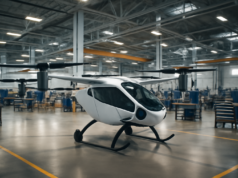
EHang has established itself as a pioneer in autonomous aerial vehicles, with a comprehensive portfolio spanning passenger air mobility, cargo delivery, and emergency response applications. The company’s flagship EHang 216 autonomous air taxi has undergone extensive testing and regulatory validation across multiple jurisdictions, positioning EHang at the forefront of commercial eVTOL deployment. By Q2 2026, the company’s operational capabilities and revenue-generating activities should reflect meaningful progress toward scaling air taxi operations in key markets.
The competitive landscape of the eVTOL industry has intensified considerably since 2025, with major aerospace suppliers, automotive manufacturers, and venture-backed startups all pursuing certification and commercialization timelines. EHang’s Q2 results will reveal whether the company is maintaining its technological and operational leadership amid this heightened competition, or whether rivals have gained ground in securing regulatory approvals and launch partnerships.
China’s role as EHang’s primary market remains fundamental to understanding the company’s trajectory. The company has leveraged supportive government policies, dedicated airspace corridors, and partnerships with local stakeholders to advance air taxi operations in cities like Guangzhou and beyond. Q2 2026 earnings will clarify whether these China-based operations are transitioning from pilot phases to sustained, profitable revenue streams that can fund international expansion.
Financial Performance Indicators and Revenue Drivers
Investors and analysts will scrutinize EHang’s Q2 2026 revenue figures, operating margins, and cash flow metrics to assess the company’s path to profitability. The eVTOL sector has historically been capital-intensive, with extended pre-revenue development phases. If EHang has achieved meaningful commercial revenue from passenger air taxi services, cargo operations, or licensing arrangements, this milestone will validate the broader business model and justify continued investor confidence in the sector.
The composition of EHang’s revenue streams deserves particular attention. Passenger air taxi operations would represent the most valuable and publicized segment, demonstrating proof-of-concept for the core business model. However, ancillary revenue from simulator leases, licensing intellectual property to regional partners, or providing maintenance and support services could also drive financial performance and signal ecosystem strength. Q2 results should break down these revenue categories to offer transparency into business mix and growth drivers.
Cost structure and operational efficiency will also be critical. As EHang scales fleet operations, manufacturing, and regulatory compliance activities, the company’s ability to manage operating expenses while growing revenue will determine whether a pathway to sustainable profitability exists. Quarterly cash burn rates, capital expenditure trends, and working capital management will give observers confidence in the company’s financial runway and strategic flexibility.
Regulatory Approvals and Operational Milestones
Beyond financial metrics, EHang’s Q2 2026 results presentation will likely highlight regulatory approvals, fleet expansion, and operational milestones achieved during the period. The certification of autonomous air taxi systems for passenger operations remains the most closely watched regulatory achievement in the industry. If EHang has secured expanded operational approvals or launched commercial routes in new cities, these developments would underscore the company’s regulatory strategy and market access advantages.
Fleet size and utilization rates represent tangible indicators of operational progress. Investors will want to understand how many EHang 216 aircraft are in active service, daily flight hours, passenger volumes, and operational reliability metrics. These indicators provide granular insight into whether autonomous air taxi operations are becoming a functional, scalable service or remain a niche, demonstration-phase offering.
Partnerships and ecosystem expansion also merit close examination in Q2 results. EHang’s collaborations with government agencies, tourism operators, emergency services, and infrastructure developers can accelerate market adoption and diversify revenue streams. Any announcements regarding new partnership agreements, expanded deployment jurisdictions, or technology licensing arrangements would signal confidence in the company’s competitive position and market timing.
Market Trends and Industry Context for Q2 2026
By mid-2026, the broader eVTOL market landscape has matured significantly from earlier years. Multiple companies have achieved or are approaching certification milestones, regulatory frameworks have become clearer in major markets, and commercial timelines have shifted from speculative to actionable. Within this context, EHang’s Q2 results will be interpreted not in isolation but relative to peer company announcements, regulatory developments, and macroeconomic conditions affecting capital availability and corporate spending.
The integration of air mobility into existing urban transportation networks has progressed beyond theoretical planning into pilot projects and limited commercial operations. Infrastructure investments in vertiports, charging facilities, and air traffic management systems have begun in leading markets. EHang’s participation in and benefit from these infrastructure developments will influence the company’s operational footprint and cost structure.
Investor sentiment toward eVTOL companies has experienced cycles of enthusiasm and skepticism as timelines have shifted and technical challenges have become apparent. A strong Q2 2026 financial and operational report could reinvigorate confidence in near-term commercialization, while disappointing results might trigger reassessment of timeline expectations and investment priorities within the sector. EHang’s relative strength as an operator with real flights and revenue will likely outperform pure-play development-stage competitors.
Key Takeaways for Industry Observers
- EHang’s Q2 2026 financial results will reveal whether autonomous air taxi operations are generating meaningful commercial revenue and moving toward profitability in core markets.
- Regulatory approvals, fleet size, utilization rates, and operational metrics will demonstrate progress from demonstration phases toward sustainable, scalable service delivery.
- Partnership announcements and geographic expansion indicators will clarify EHang’s competitive positioning and the company’s ability to capitalize on growing global interest in urban air mobility solutions.
The August 25 earnings release marks an important checkpoint in the development of commercial air mobility. As EHang reports its Q2 2026 results, stakeholders across aviation, transportation, technology, and investment communities will assess whether the promise of autonomous air taxi systems is translating into real operational progress and financial viability. For the broader personal air mobility sector, this report could serve as a bellwether for the speed and scale of eVTOL commercialization globally.