HIGHLIGHTS
- Joby Aviation’s Toyota partnership provides hundreds of millions in capital and access to world-class manufacturing expertise for scaling production.
- Archer Aviation differentiates itself through cost-efficiency focus and operational practicality, designing aircraft for profitable air taxi services.
- Both companies are advancing FAA certification simultaneously, with regulatory approval being the critical path to commercial viability and market dominance.
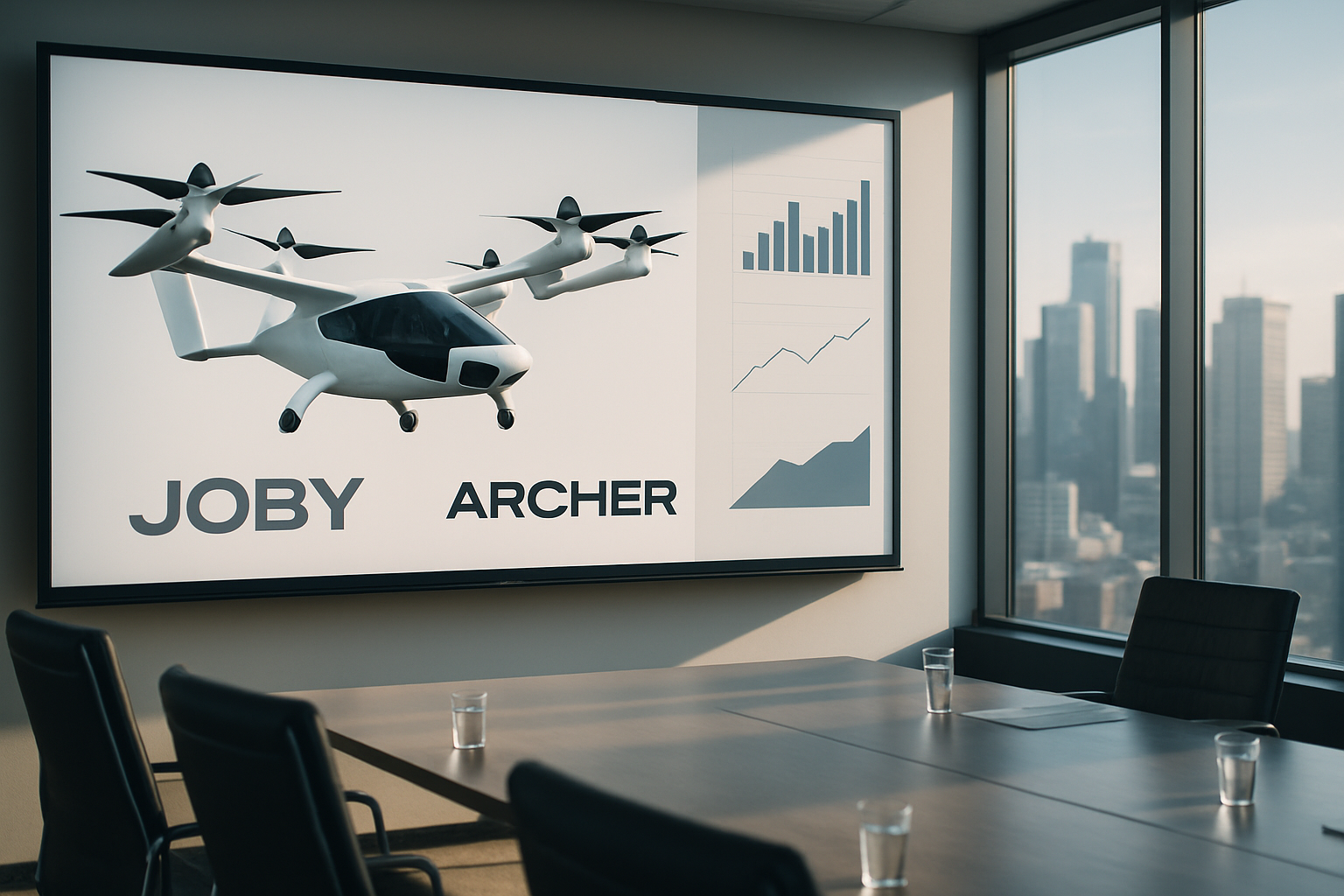
The electric vertical takeoff and landing (eVTOL) industry is rapidly maturing, with several companies competing to dominate the personal air mobility market. Among the most prominent contenders are Joby Aviation and Archer Aviation, two firms that have attracted significant investment and media attention. As the race to commercialize air taxis accelerates, investors and industry observers are increasingly asking which company is better positioned for long-term success. This comparison examines the strengths, challenges, and growth prospects of both organizations to help stakeholders understand the competitive landscape of urban air mobility.
Joby Aviation: The Market Leader with Toyota’s Backing
Joby Aviation has emerged as one of the most well-funded and strategically positioned eVTOL manufacturers in the world. The company went public through a SPAC merger in 2023 and has since attracted major investments from industry giants, most notably Toyota, which has invested hundreds of millions of dollars in the company. This partnership provides Joby with not only capital but also access to Toyota’s manufacturing expertise and supply chain relationships, critical advantages in scaling production.
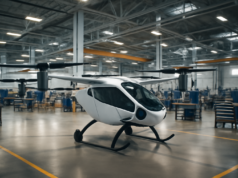
The company’s eVTOL aircraft is designed for quiet, efficient urban air taxi operations, featuring innovative noise-reduction technology that addresses one of the primary regulatory and public acceptance challenges facing the industry. Joby’s focus on quieter operations has positioned them favorably with regulators and urban planners, who recognize that noise pollution is a key barrier to widespread adoption in densely populated areas. The company has also demonstrated significant progress toward obtaining certification from the Federal Aviation Administration (FAA), with multiple test flights and safety evaluations completed to date.
Joby’s path to commercialization includes partnerships with ride-sharing platforms and airport operators to establish air taxi services in major metropolitan areas. The company has articulated a clear timeline for service launches, though like many aerospace ventures, these timelines may shift based on regulatory approvals and technical developments. With Toyota’s support and its advanced technology, Joby represents the establishment approach to eVTOL manufacturing, combining experience from one of the world’s largest automakers with innovative aviation design.
Archer Aviation: The Agile Challenger with Distinct Advantages
Archer Aviation, while newer to the public markets, has quickly established itself as a formidable competitor in the eVTOL space. The company also completed a SPAC merger and has secured substantial backing from leading investors and strategic partners in the aviation and transportation sectors. Archer’s approach emphasizes rapid prototyping and iterative design improvements, allowing the company to adapt quickly to market demands and regulatory feedback.
One of Archer’s key differentiators is its focus on operational efficiency and cost-effectiveness, designing aircraft intended to reduce operating costs compared to competing eVTOL platforms. This emphasis on economics is crucial, as the ultimate success of air taxi services will depend not only on technological feasibility but on affordability for consumers and profitability for operators. Archer’s team brings diverse expertise from aerospace, automotive, and technology sectors, combining different perspectives to solve the complex challenges of urban air mobility.
Archer has also demonstrated strong progress in aircraft development, with prototype testing and regulatory engagement advancing steadily. The company’s modular design approach offers flexibility in adapting to different market needs and regulatory requirements across various jurisdictions. Additionally, Archer has cultivated partnerships with established transportation and logistics companies, positioning itself to leverage existing customer networks and operational infrastructure as it scales.
Technological Capabilities and Aircraft Design
Both Joby and Archer have developed sophisticated eVTOL aircraft, but their engineering philosophies differ in meaningful ways. Joby’s aircraft features advanced electric propulsion systems and aerodynamic designs optimized for passenger comfort and noise reduction. The company has invested heavily in materials science and lightweight construction, essential for maximizing range and payload capacity while minimizing energy consumption.
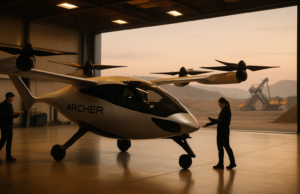
Archer’s aircraft design emphasizes reliability and maintainability, with attention to practical operational challenges that will face air taxi operators. The company’s engineering team has prioritized systems that are easier to maintain and repair, recognizing that operational downtime directly impacts profitability. This pragmatic approach to design reflects Archer’s focus on the business realities of running commercial air taxi services, not merely technological demonstration.
Both companies continue to invest in battery technology and electric propulsion systems, understanding that advances in energy storage and power delivery are fundamental to extending range and reducing operational costs. The race between these two companies has spurred innovation across the industry, with each breakthrough from one company encouraging faster development at competitors. This competitive dynamic benefits the entire eVTOL ecosystem by accelerating progress toward commercially viable air taxi services.
Regulatory Status and Certification Progress
Obtaining certification from the FAA is one of the most critical milestones for any eVTOL manufacturer, and both Joby and Archer are actively engaged with regulators. Joby has made significant strides in special conditions and type certification discussions with the FAA, leveraging its larger engineering and compliance team to address regulatory requirements comprehensively. The company’s Toyota partnership also provides access to safety and quality management systems developed for automotive manufacturing, which directly apply to aerospace certification processes.
Archer is pursuing a similarly rigorous certification pathway, with its regulatory team working closely with the FAA to ensure compliance with all safety and operational standards. The company has demonstrated transparency in its regulatory engagement, publishing updates on certification progress and working collaboratively with regulators rather than viewing the process as an obstacle. Both companies recognize that certification is not a destination but an ongoing process that will evolve as operational experience accumulates and regulations mature.
The regulatory environment for eVTOL aircraft remains dynamic, with the FAA and international aviation authorities still developing comprehensive rules for electric aircraft operations in urban airspace. Companies that can navigate this evolving regulatory landscape effectively will gain significant competitive advantages. Both Joby and Archer have invested heavily in regulatory affairs expertise, understanding that the path to commercialization runs through certification and operational approval, not just technical achievement.
Market Position and Investment Prospects
From an investment perspective, both companies present different risk-return profiles. Joby’s Toyota partnership and significant funding provide a financial cushion that reduces near-term existential risk but may constrain upside potential due to corporate governance and strategic priorities. Archer’s more independent approach offers greater strategic flexibility and potentially higher returns if successful, but carries higher execution risk given the company’s need to fund continued development with limited resources relative to Joby’s war chest.
The addressable market for eVTOL services is enormous, potentially including urban air taxi services, emergency transport, logistics delivery, and regional connections between cities. Industry analysts estimate that the global urban air mobility market could reach hundreds of billions of dollars annually if adoption proceeds as projected. Both Joby and Archer are positioning themselves to capture significant market share, but success will ultimately depend on operational execution, regulatory approval, and consumer acceptance.
Investors evaluating these two companies should consider their risk tolerance, investment timeline, and views on the pace of eVTOL commercialization. Joby’s stronger financial position and strategic partnerships suggest lower near-term risk but potentially more moderate returns. Archer’s leaner operations and entrepreneurial culture may offer higher growth potential for investors willing to accept greater uncertainty and a longer payoff timeline.
Key Takeaways Summary
- Joby Aviation benefits from Toyota’s massive investment and manufacturing expertise, providing financial stability and operational credibility for scaling production.
- Archer Aviation emphasizes cost efficiency and operational practicality, positioning itself as a solution for profitable commercial air taxi services.
- Both companies are advancing FAA certification simultaneously, with success in regulatory approval being a critical determinant of commercial viability and competitive positioning.
The competition between Joby Aviation and Archer Aviation will shape the future of personal air mobility, with both companies driving innovation and progress toward commercial eVTOL services. Rather than a zero-sum competition, the market is likely large enough to support multiple successful platforms, each serving different geographic markets and operational needs. For investors, employees, and industry stakeholders, monitoring the progress of both companies will provide valuable insights into the timeline and economics of the emerging urban air mobility industry. The coming years will prove whether either company’s approach—established corporate backing versus entrepreneurial agility—proves more effective in bringing eVTOL services to reality.