
HIGHLIGHTS
- Companies are investing hundreds of millions in rapid-charging networks and battery technology to eliminate infrastructure barriers before commercial eVTOL operations begin.
- Maintenance technician certification programs and predictive maintenance platforms are being developed to ensure long-term operational reliability and safety at scale.
- Industry leaders are actively collaborating with aviation authorities to establish regulatory standards and vertiport infrastructure aligned with emerging eVTOL requirements.
The eVTOL industry stands at a critical inflection point. While aircraft designs have captured headlines with impressive test flights and certification milestones, the less glamorous but equally essential work of infrastructure development is accelerating behind the scenes. Companies across the ecosystem—from aircraft manufacturers to charging networks and ground operators—are making substantial investments to ensure the industry is ready when commercial operations begin. This infrastructure race will ultimately determine whether eVTOL achieves mainstream adoption or remains a niche aviation segment.
Charging Networks and Energy Infrastructure
One of the most pressing challenges facing eVTOL operators is access to reliable, rapid-charging infrastructure. Unlike traditional aviation, which relies on established fuel supply chains, electric aircraft require entirely new energy ecosystems. Companies are actively building charging stations at vertiports and developing proprietary charging technologies to minimize turnaround times between flights.
Several major eVTOL manufacturers are partnering with energy providers and infrastructure companies to deploy charging networks in target cities. These partnerships ensure that once aircraft enter service, operators won’t face the “chicken-and-egg” problem of having vehicles but no way to power them. The scale of investment is substantial, with some companies committing hundreds of millions to build regional charging hubs.
Battery technology development is advancing in parallel. Companies are working to increase energy density, reduce charging times, and improve thermal management systems. These improvements are critical because they directly impact flight range, safety margins, and operational efficiency. The goal is to achieve charging cycles that allow multiple flights per day while maintaining the highest safety standards.
Maintenance and Servicing Ecosystems
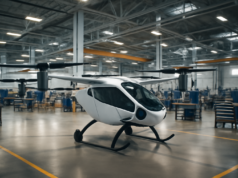
Aircraft maintenance is a complex, highly regulated process. For eVTOL to scale commercially, the industry needs trained technicians, standardized service protocols, and specialized facilities. Companies are proactively building these capabilities rather than waiting for regulators to mandate them.
Original equipment manufacturers (OEMs) are establishing certification programs for maintenance technicians, creating digital service platforms for diagnostics, and designing aircraft with serviceability in mind. Some companies are opening their own service centers in strategic markets, while others are developing franchised networks of authorized service providers. This diversified approach ensures geographic coverage while distributing the capital burden.
Predictive maintenance is becoming a competitive advantage. By integrating advanced sensors and data analytics into aircraft, companies can anticipate component failures before they occur, reducing downtime and improving safety. This approach is more efficient than traditional time-based maintenance and signals a maturation of the industry’s operational thinking.
Regulatory Collaboration and Standards Development
The regulatory environment is rapidly evolving, and forward-thinking companies are actively shaping it rather than passively waiting for rules to be established. Industry players are collaborating with aviation authorities to develop certification standards, operational guidelines, and safety protocols tailored to eVTOL characteristics.
This proactive engagement accelerates the path to commercialization while ensuring that regulations are technically feasible and economically viable. Companies are sharing test data, investing in safety research, and participating in regulatory working groups. This collaborative approach has proven effective in several jurisdictions where eVTOL operators have secured early exemptions or special certificates.
Standards development is happening at multiple levels: national aviation authorities, international bodies like ICAO, and industry consortiums. Companies are ensuring their operations align with emerging standards, reducing the risk of costly redesigns or operational constraints later. This forward-planning demonstrates confidence in the sector’s trajectory.
Urban Air Mobility Ecosystem Integration
eVTOL doesn’t exist in isolation—it’s part of a broader urban air mobility (UAM) ecosystem. Companies are building digital platforms for airspace management, passenger booking, and fleet coordination. These systems must integrate with traditional aviation, drone operations, and ground transportation to create seamless mobility networks.
Several companies are developing air traffic management (ATM) solutions specifically designed for low-altitude urban airspace. These systems handle thousands of simultaneous eVTOL operations, ensure separation between aircraft, and coordinate with ground infrastructure. The complexity rivals traditional air traffic control but operates at a smaller scale and requires faster decision-making cycles.
Vertiport design and development is also advancing rapidly. Companies are working with real estate developers and city planners to identify optimal locations for eVTOL infrastructure, design facilities that minimize noise and environmental impact, and integrate vertiports into existing transportation hubs. This urban planning component is essential for creating convenient, passenger-friendly networks.
Key Areas of Infrastructure Preparation
- Rapid-charging networks and battery technology development to enable multiple flights per day with minimal turnaround time
- Maintenance technician certification programs and digital service platforms ensuring worldwide operational support and predictive maintenance capabilities
- Active regulatory collaboration with aviation authorities to establish certification standards and safety protocols tailored to eVTOL operations
The infrastructure race for eVTOL is intensifying as the industry approaches commercialization. Companies that secure strategic advantages in charging networks, maintenance ecosystems, and regulatory positioning will shape the future competitive landscape. The winners won’t necessarily be those with the fastest aircraft, but those who build the most reliable, efficient, and scalable operational ecosystems. As these preparations accelerate, the path from concept to commercial reality becomes increasingly clear.