HIGHLIGHTS
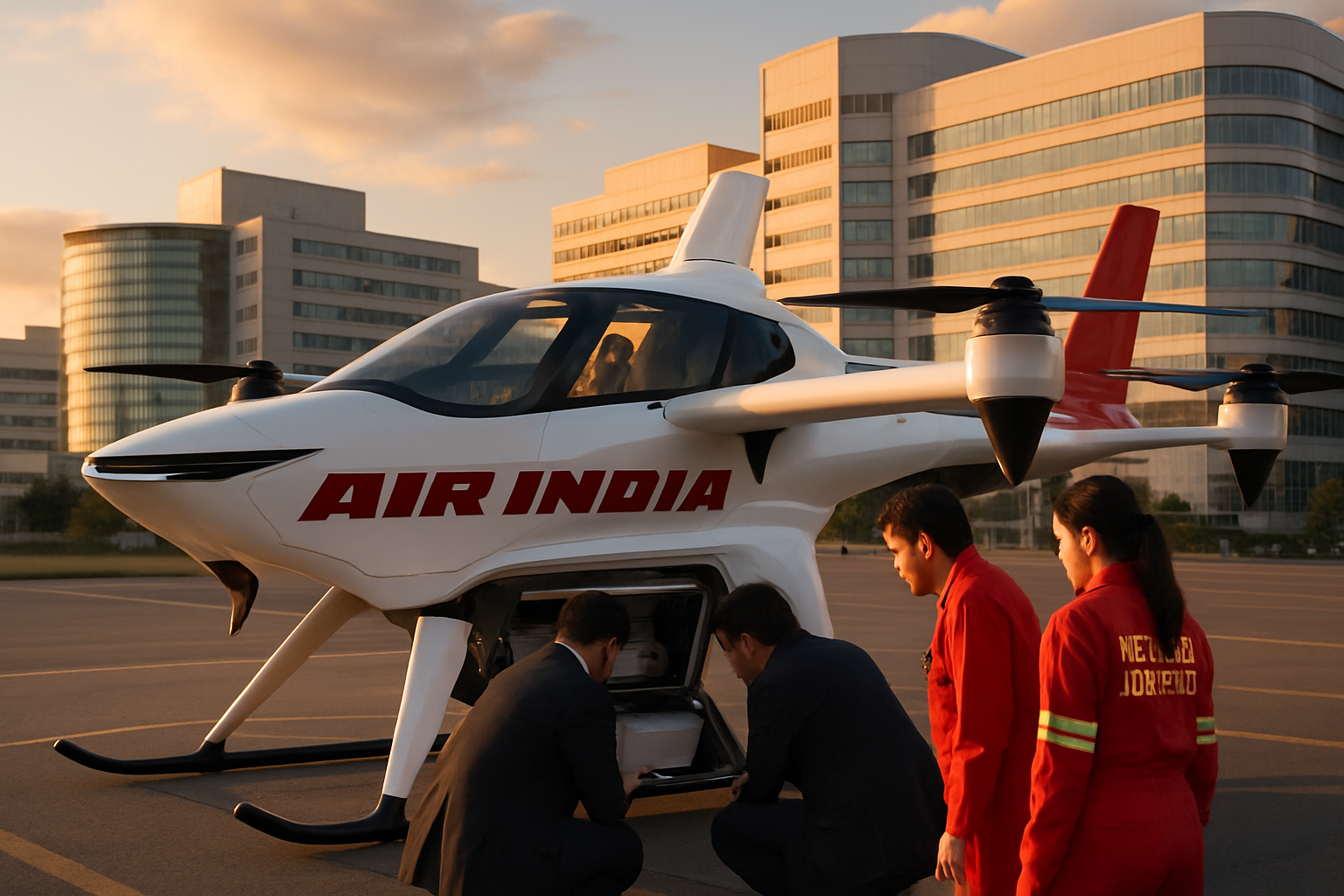
- Air India, Skydrive, and Suzuki form a strategic alliance to deploy eVTOL aircraft for rapid medical supply and emergency logistics delivery across India.
- This partnership marks a major milestone in commercializing electric vertical takeoff technology for critical healthcare applications in the Asia-Pacific region.
- The collaboration leverages Suzuki’s manufacturing expertise, Skydrive’s aviation technology, and Air India’s logistics network to accelerate medical drone deployment.
The personal air mobility sector reached a landmark moment as Air India, Japanese eVTOL manufacturer Skydrive, and automotive giant Suzuki announced a strategic collaboration to develop electric vertical takeoff and landing solutions for medical logistics. This groundbreaking partnership represents one of the first major initiatives to integrate advanced air mobility technology with critical healthcare delivery in India, signaling strong momentum in the commercialization of electric aircraft for real-world applications beyond passenger transport.
Strategic Partnership Framework
The tripartite agreement brings together three major players with complementary expertise. Air India contributes its extensive logistics network and decades of aviation operational experience, while Skydrive brings cutting-edge electric vertical takeoff aircraft technology refined through years of development and testing. Suzuki rounds out the partnership with its manufacturing prowess and supply chain capabilities, ensuring the scalability needed for widespread deployment across India’s diverse geography and climate conditions.
This collaboration structure represents a strategic shift in how eVTOL companies approach market entry. Rather than attempting independent commercialization efforts, the partnership model allows each organization to focus on core competencies while sharing regulatory, technical, and market-entry risks. The combination of an established airline, an innovative aircraft manufacturer, and a diversified automotive conglomerate creates a robust foundation for transforming medical logistics in one of Asia’s largest markets.
The partnership also reflects growing confidence among traditional aviation and automotive industries in the viability of electric aircraft technology. When major established players like Air India and Suzuki commit resources and reputation to eVTOL initiatives, it signals that the technology has transitioned from experimental to commercially credible. This institutional backing could accelerate regulatory approvals and infrastructure development across India.
Medical Logistics as the Primary Use Case
Medical delivery represents an ideal initial application for eVTOL aircraft, combining clear social value with practical operational advantages. Emergency blood supplies, organ transplant materials, critical medications, and diagnostic equipment often face time-critical constraints where traditional ground transportation proves inadequate. Electric vertical takeoff aircraft eliminate the need for runway infrastructure, enabling direct delivery from centralized medical facilities to remote hospitals and clinics that currently rely on expensive helicopter services or unreliable ground routes.
India’s geography and healthcare infrastructure create particular advantages for eVTOL medical deployment. The country’s diverse terrain includes mountainous regions, archipelagic states, and densely populated urban centers where ground transportation faces severe congestion. Rural hospitals and clinics frequently lack access to specialized medical resources within critical time windows. The ability to bypass traffic and terrain obstacles while maintaining electric propulsion’s lower noise and operating costs positions eVTOL aircraft as transformative for emergency response and specialized medicine delivery.
The medical logistics focus also carries significant regulatory advantages. Healthcare applications typically receive expedited regulatory review compared to passenger transport, allowing the partnership to begin commercial operations while still developing broader eVTOL certification frameworks. This staged approach lets the partners accumulate operational data, refine procedures, and demonstrate safety protocols that will inform subsequent expansion into passenger mobility and general cargo transport.
Skydrive’s Technology Foundation
Skydrive brings proven electric vertical takeoff technology to the partnership, having successfully conducted multiple test flights and developed aircraft specifically designed for cargo and emergency logistics applications. The company’s development philosophy emphasizes practical reliability and regulatory compliance rather than maximizing speed or distance, making the technology well-suited for structured medical delivery operations. Skydrive’s aircraft utilize distributed electric propulsion systems that provide redundancy and reliability critical for emergency medical transport.
The Skydrive platform offers advantages in operational flexibility that legacy helicopter services cannot match. Electric propulsion eliminates expensive fuel logistics and maintenance protocols associated with combustion engines. Vertical takeoff capability removes dependency on prepared helipads, allowing operation from hospital rooftops, parking areas, and improvised sites. The aircraft’s relatively compact size and electric powerplant make it suitable for rapid deployment in emergency scenarios without the extended runway and infrastructure requirements of fixed-wing aviation.
Skydrive’s participation signals the company’s confidence in the Indian market and its commitment to moving beyond prototype demonstrations into sustained commercial operations. The partnership provides access to Air India’s operational expertise and Suzuki’s manufacturing infrastructure, enabling the company to transition from a technology developer into a service provider operating within established aviation and logistics frameworks.
Air India and Suzuki’s Operational Contributions
Air India’s involvement transforms this from a technology pilot into a full-scale logistics operation. The airline brings established relationships with hospitals, regulatory authorities, and aviation infrastructure across India. Air India’s operations teams understand the complexities of managing large-scale, multi-node networks serving time-critical medical requirements. The airline’s experience with cargo optimization, emergency procedures, and regulatory compliance will directly apply to coordinating eVTOL medical missions across diverse regions and operational conditions.
Suzuki’s manufacturing and supply chain expertise addresses the critical challenge of scaling production beyond small demonstration batches. As an established automotive and industrial equipment manufacturer with significant Indian operations, Suzuki can establish production facilities, develop local supplier networks, and maintain sustained manufacturing quality. This manufacturing capacity proves essential for moving from limited pilot operations to the dozens or hundreds of aircraft required for comprehensive medical logistics coverage across India.
The automotive manufacturer’s presence also indicates commitment to long-term development of electric propulsion systems applicable across multiple vehicle categories. Suzuki’s investments in battery technology, electric motors, and power management systems for automobiles transfer directly to eVTOL applications. This cross-platform technical synergy creates opportunities for cost reduction and performance improvement through shared component development and supply chain economies of scale.
Regulatory and Infrastructure Implications
Key Takeaways and Future Outlook
- The partnership positions India as a major market for eVTOL commercialization, with established aviation and automotive players validating the technology’s readiness for operational deployment
- Medical logistics represents the optimal entry point for eVTOL services, offering clear regulatory pathways and compelling use cases that justify premium operating costs compared to traditional transport
- Collaborative partnerships between aircraft manufacturers, incumbent airlines, and automotive suppliers accelerate commercialization by combining technical innovation with operational expertise and manufacturing capacity
This Air India, Skydrive, and Suzuki collaboration signals a fundamental shift in the personal air mobility industry. Rather than viewing eVTOL aircraft as distant futures or niche recreational applications, the partnership treats electric vertical takeoff technology as an immediately deployable solution for critical operational needs. Medical logistics serves as the proving ground where eVTOL aircraft can demonstrate reliability, safety, and economic value while establishing regulatory precedents and operational procedures that will support broader commercialization. As the partnership develops operational capabilities and demonstrates successful medical deliveries across India, the model will likely inspire similar collaborations in other major markets, accelerating the global transition to electric aircraft for logistics and mobility applications.