HIGHLIGHTS
- Merlin successfully demonstrated autonomous flight capabilities in an official evaluation by the Texas Department of Transportation, a critical step toward regulatory certification.
- This demonstration validates autonomous eVTOL technology for potential integration into state-level transportation infrastructure and urban air mobility networks.
- The achievement strengthens the case for autonomous air vehicles in commercial operations and highlights Texas as a leading hub for advanced aviation innovation and testing.
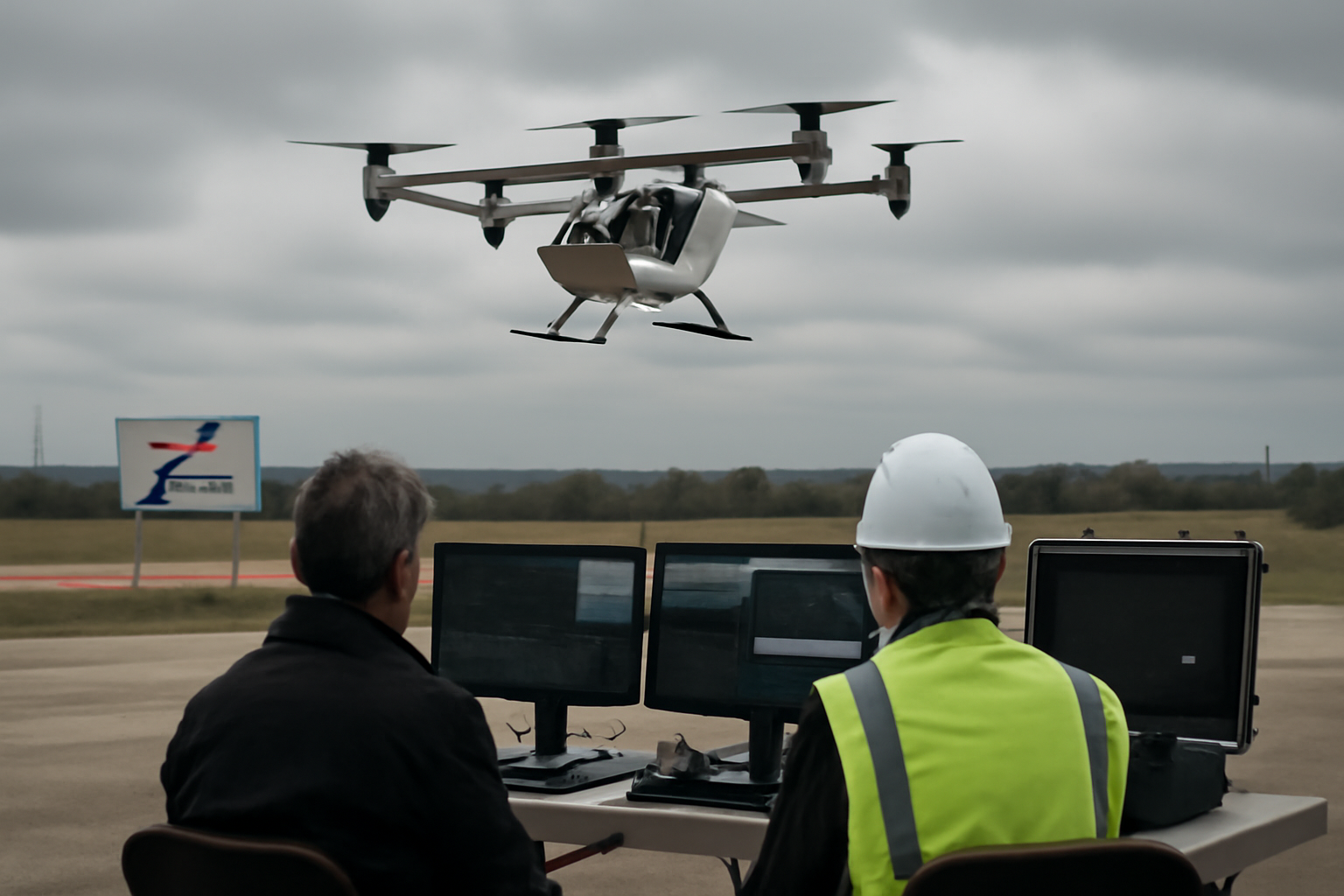
On September 10, 2026, Merlin achieved a significant milestone in the evolution of autonomous electric vertical takeoff and landing (eVTOL) aircraft. The company demonstrated its autonomous flight capabilities in an official evaluation conducted by the Texas Department of Transportation (TxDOT), marking a pivotal moment for the regulatory validation of autonomous air mobility technology. This demonstration represents a crucial step toward integrating autonomous aircraft into real-world transportation infrastructure and establishes a benchmark for how emerging aviation technologies can be safely evaluated and certified.
Merlin’s Autonomous Flight Demonstration
The demonstration showcased Merlin’s ability to execute autonomous flight operations under controlled conditions monitored by the Texas Department of Transportation. Rather than relying on remote pilot control or traditional flight crew oversight, the aircraft demonstrated independent flight management systems capable of executing predefined flight paths with precision and safety redundancy. This level of autonomous capability is essential for future urban air mobility networks, where human pilots may not be physically present in every aircraft operating the system.
Merlin’s autonomous systems integrate advanced sensor arrays, including LiDAR, radar, and optical cameras, to maintain situational awareness throughout the flight envelope. These sensors feed data to onboard artificial intelligence systems that make real-time decisions about navigation, obstacle avoidance, and emergency response. The demonstration proved that these systems can operate reliably during the evaluation process, a requirement for any aircraft seeking approval for broader commercial deployment.
The successful demonstration at TxDOT follows industry trends toward greater automation in aviation. Unlike traditional helicopters and fixed-wing aircraft, which have been certified with varying levels of automation for decades, eVTOLs represent a new category where autonomous operation is being designed in from the ground up. This allows manufacturers like Merlin to optimize autonomy into every aspect of the aircraft’s design and control architecture.
Regulatory Significance and Pathway to Certification
State-level transportation departments, including the Texas DOT, are increasingly taking on roles in evaluating advanced air mobility technologies before federal certification processes are finalized. The Merlin demonstration in Texas represents a collaborative approach between private manufacturers and public transportation authorities to build the regulatory framework that will eventually govern autonomous eVTOL operations. By conducting these evaluations, TxDOT is gathering critical data on how autonomous aircraft perform in real conditions and what safety protocols need to be in place.
The Federal Aviation Administration (FAA) has outlined pathways for special airworthiness certificates and experimental flight permits that allow companies to test autonomous systems under controlled conditions. Merlin’s demonstration at TxDOT appears to leverage these frameworks, using state-level partnerships to validate systems before pursuing full FAA certification. This approach allows regulators to gain confidence in autonomous eVTOL technology while maintaining safety as the paramount concern.
Successful demonstrations like Merlin’s create precedents that inform future regulatory decisions. When a manufacturer can show that autonomous systems operate safely and reliably during independent evaluation, it accelerates the timeline toward approval for broader operations. Texas, which has positioned itself as a hub for advanced aviation testing and innovation, benefits from hosting these demonstrations through increased expertise, data collection, and industry attraction.
Autonomous eVTOL Market Development
Merlin’s demonstration occurs within a rapidly expanding market for autonomous eVTOL aircraft. Companies across the industry—from traditional aerospace manufacturers to electric aviation startups—are investing in autonomous capabilities because they unlock new use cases and improve operational economics. An autonomous eVTOL can operate continuously with minimal human intervention, reducing labor costs and enabling 24/7 mission availability for cargo delivery, emergency response, and intercity travel.
The autonomous eVTOL market is expected to grow significantly as regulations mature and manufacturers gain confidence in their systems. Current estimates suggest that the global eVTOL market could reach $90 billion or more within the next decade, with autonomous aircraft capturing an increasing share of that value. Merlin’s successful demonstration puts the company in a position to capture early adopter demand from logistics companies, government agencies, and urban air mobility operators seeking the efficiency benefits of autonomous operations.
Competition in autonomous eVTOL development is intensifying as well. Companies like Joby Aviation, Lilium, and others are also developing autonomous capabilities, though not all have conducted public demonstrations with government bodies yet. Merlin’s visibility in the Texas demonstration could provide competitive advantages in securing partnerships and investment, positioning the company as a leader in autonomous air mobility technology.
Safety, Testing, and Future Operations
Safety is the cornerstone of any autonomous aircraft program. For Merlin’s demonstration to be meaningful, the aircraft had to prove that its autonomous systems could handle nominal flight conditions, unexpected environmental changes, and simulated emergency scenarios. TxDOT’s evaluation likely included assessment of how the aircraft detects and responds to hazards, how it manages communication failures, and how it executes safe landing procedures if systems degrade.
The path from successful demonstration to regular commercial operations involves multiple phases of testing and validation. Merlin will need to demonstrate sustained autonomous operation across diverse weather conditions, geographic regions, and operational scenarios. This includes proving that autonomous systems work reliably over urban areas, near airports, and in complex airspace. Each phase of testing contributes data that regulators use to refine certification standards and operational requirements.
Once autonomous eVTOL aircraft are approved for regular operations, they could transform logistics, emergency medical services, and urban transportation. A package delivery network of autonomous eVTOLs could operate with minimal human supervision, dispatching and routing aircraft based on demand without the need for human pilots. In emergency scenarios, autonomous aircraft could respond immediately without waiting for human crew availability, potentially saving lives through rapid transport of medical supplies or personnel.
Key Takeaways for Autonomous eVTOL Adoption
- Autonomous flight demonstrations with state transportation departments create essential regulatory precedents and build confidence in the technology among public authorities.
- Successful autonomous eVTOL validation accelerates the timeline toward FAA certification and commercial deployment in logistics, medical, and urban air mobility markets.
- As multiple manufacturers advance autonomous capabilities, early demonstrations create competitive advantages in securing partnerships, investment, and first-mover market share in emerging autonomous air mobility services.
Merlin’s autonomous flight demonstration at the Texas Department of Transportation represents a watershed moment for autonomous air mobility. By proving that autonomous eVTOL systems can operate safely and reliably under official evaluation, Merlin has advanced the entire industry toward a future where autonomous aircraft are commonplace. As more manufacturers conduct similar demonstrations and regulators gain experience with autonomous systems, the path to widespread autonomous eVTOL deployment becomes increasingly clear. The skies above Texas may soon become a proving ground for the autonomous air mobility systems that will serve cities and industries worldwide.