HIGHLIGHTS
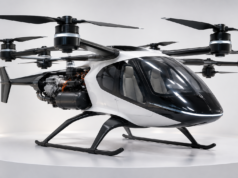
- SkyDrive abandons traditional designs in favor of multi-rotor architecture, offering redundant thrust paths and superior fault tolerance for safer urban operations.
- Compact airframe design eliminates need for massive vertiports, enabling rooftop takeoffs and faster infrastructure deployment in existing urban environments.
- SkyDrive’s technical differentiation may accelerate Japanese regulatory approval, positioning the company ahead of competitors pursuing helicopter-inspired designs.
Japan’s leading eVTOL developer SkyDrive has made a significant strategic pivot toward multi-rotor aircraft design, marking a notable shift in the company’s approach to personal air mobility. This decision reflects deeper engineering considerations and practical advantages in developing compact vertical takeoff and landing vehicles for urban environments. The company’s reasoning behind this multi-rotor bet provides valuable insights into the evolving technical landscape of electric aviation.
Why SkyDrive Chose Multi-Rotor Architecture
SkyDrive’s transition to multi-rotor design isn’t arbitrary—it stems from rigorous analysis of operational efficiency and market demands. Multi-rotor systems distribute thrust across numerous propellers, offering superior redundancy and control characteristics compared to traditional fixed-wing or dual-rotor configurations. This architecture aligns with the company’s vision of safe, reliable urban air mobility that can operate in constrained airspace.
The multi-rotor approach also simplifies mechanical complexity in certain areas while allowing engineers to optimize power distribution and battery performance. By spreading the workload across multiple smaller rotors, SkyDrive can achieve better efficiency curves at various flight regimes—from hover to forward flight transitions. This flexibility is critical for urban operations where aircraft must perform near-hover maneuvers in tight quarters.
Additionally, multi-rotor systems offer superior fault tolerance. If individual rotors experience degradation or minor mechanical issues, the distributed architecture maintains safe operation through redundant thrust paths. This safety-first design philosophy resonates strongly with regulatory bodies evaluating certification requirements for passenger-carrying eVTOL aircraft.
Compact Aircraft Design Advantages
SkyDrive’s emphasis on compact airframes addresses a fundamental challenge in urban air mobility: infrastructure compatibility. Smaller aircraft require less ground space for takeoff and landing pads, potentially enabling operations from rooftops, parking structures, and existing urban infrastructure. This compactness directly translates to operational flexibility and faster market deployment without waiting for massive vertiport construction.
Compact designs also reduce overall system weight, which is critical for battery-powered aircraft. Lighter airframes mean longer range and better payload capacity relative to total aircraft weight. SkyDrive’s engineering team has likely determined that a compact multi-rotor configuration optimizes the weight-to-thrust ratio, maximizing operational range within regulatory payload constraints.
The smaller footprint of compact eVTOLs also addresses public perception and regulatory acceptance. Communities are more receptive to aircraft that don’t dominate rooftlines or require massive dedicated infrastructure. Compact designs enable integration into existing urban landscapes, supporting SkyDrive’s long-term commercialization strategy.
Technical Implications for Battery Systems
Multi-rotor architecture demands sophisticated energy management systems. SkyDrive must balance power distribution across multiple motor-rotor pairs, requiring advanced electronic control systems and battery management that can respond to dynamic flight conditions. This technical challenge has driven innovation in power electronics and real-time flight optimization algorithms.
Battery performance becomes even more critical in multi-rotor designs, where individual cell degradation must be monitored and compensated in real-time. SkyDrive’s investment in advanced battery systems—likely including cellular-level diagnostics—supports safe, predictable operation across hundreds of flight cycles. Modern high-energy-density lithium-based cells, combined with sophisticated thermal management, enable the compact designs SkyDrive is pursuing.
The distributed motor architecture also allows for better thermal management, as waste heat is spread across multiple smaller motors rather than concentrated in fewer large units. This distributed heat dissipation can extend battery life and improve overall energy efficiency, directly impacting mission range and economics.
Competitive Positioning in the eVTOL Market
SkyDrive’s multi-rotor strategy differentiates the company from competitors pursuing traditional helicopter-inspired designs or fixed-wing approaches. While companies like Joby Aviation and Archer have embraced tiltwing and tiltrotor concepts, SkyDrive’s multi-rotor focus targets a different operational niche—potentially lower altitude, slower-speed urban missions where ultimate efficiency matters less than safety and infrastructure compatibility.
This positioning could prove advantageous as regulatory frameworks mature. If compact, distributed-rotor aircraft receive earlier certification pathways, SkyDrive gains first-mover advantages in specific market segments. The company’s willingness to pursue a less-traveled technical path suggests confidence in their engineering team and manufacturing capabilities.
Japan’s regulatory environment, overseen by the Civil Aviation Bureau, may also favor safety-prioritized designs like SkyDrive’s multi-rotor architecture. By demonstrating superior redundancy and fault tolerance through hardware architecture, SkyDrive potentially accelerates certification timelines and builds stronger relationships with Japanese regulators—a foundation for future international expansion.
Manufacturing and Scalability Considerations
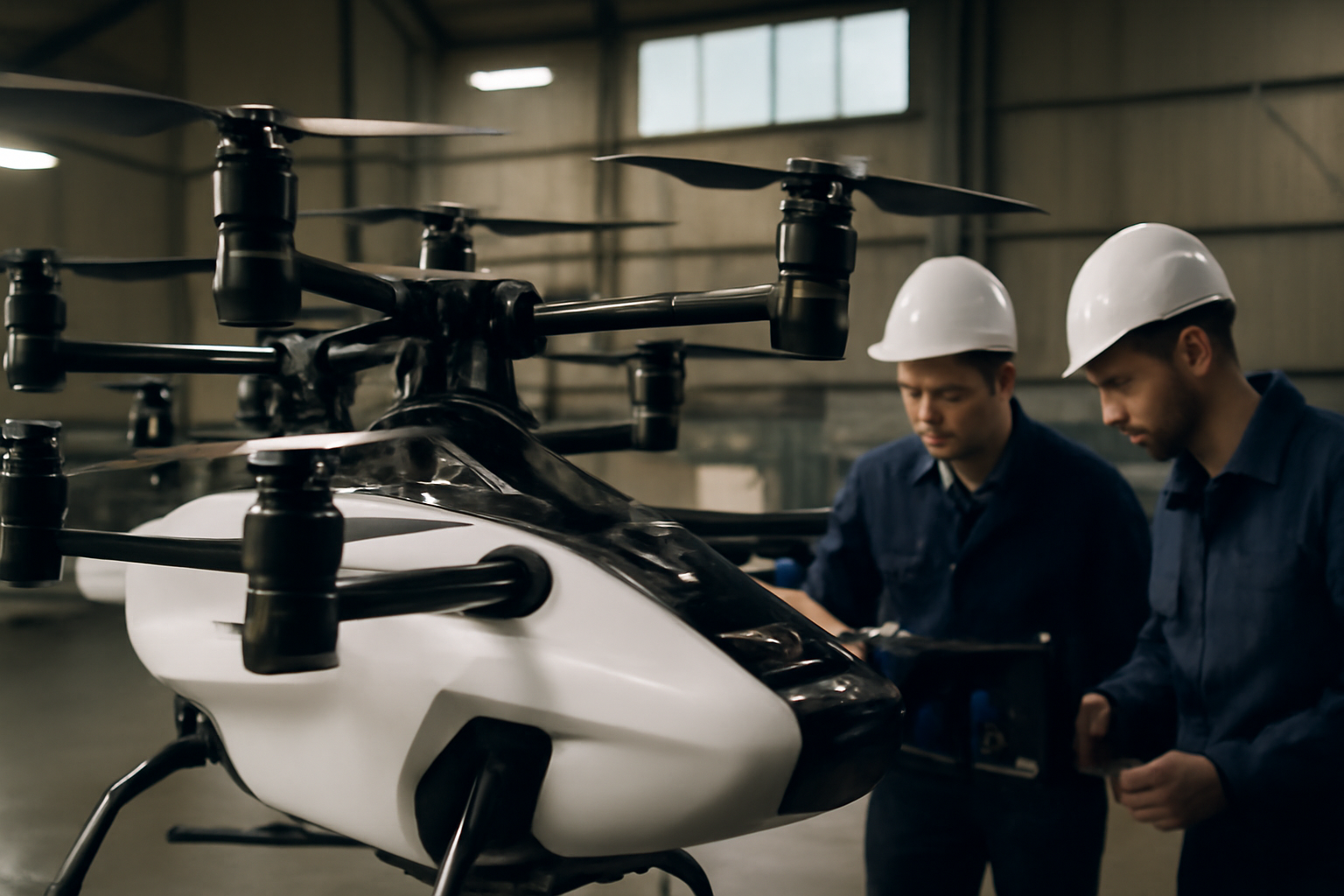
Multi-rotor designs present distinct manufacturing advantages and challenges. On one hand, standardized motor-rotor units can be mass-produced more efficiently than complex gearbox systems required for traditional helicopter designs. SkyDrive can leverage automotive and electronics manufacturing expertise throughout Japan to scale production. Standardized components reduce supply chain complexity and enable faster iteration cycles.
However, multi-rotor systems demand precise assembly and calibration of numerous identical components. The slightest imbalance across multiple rotors creates vibration and control instability. SkyDrive’s manufacturing strategy likely incorporates precision automation and rigorous quality control, potentially increasing production costs per unit initially but improving long-term economies of scale.
The compact form factor also supports modular manufacturing approaches. Different rotor configurations could be deployed for varying payload and range requirements, expanding SkyDrive’s addressable market without completely redesigning the airframe. This modularity supports diverse revenue streams—from passenger transport to cargo missions.
Key Market Takeaways
- Multi-rotor architecture provides superior redundancy, fault tolerance, and precise flight control essential for urban air mobility safety certification.
- Compact aircraft designs reduce infrastructure requirements, enabling rooftop and parking structure operations while minimizing community impact and regulatory complexity.
- SkyDrive’s technical strategy positions the company for potentially faster regulatory approval and differentiated market positioning against competitors pursuing traditional helicopter-inspired designs.
SkyDrive’s commitment to multi-rotor compact eVTOL design represents a calculated engineering decision that prioritizes safety, regulatory alignment, and urban infrastructure compatibility. As the eVTOL market matures and regulatory pathways clarify, this technical approach may prove prescient. By explaining their design philosophy publicly, SkyDrive builds stakeholder confidence and positions itself as a technically rigorous, safety-first developer in an industry where such credentials are essential for commercial success and regulatory approval. The coming years will reveal whether SkyDrive’s multi-rotor strategy captures significant market share or remains a niche approach within the broader personal air mobility landscape.