HIGHLIGHTS
- Joby’s autonomous eVTOL completed a hands-free continental US crossing with zero pilot intervention, marking a watershed moment for self-flying aircraft technology.
- The FAA-supervised demonstration provides critical regulatory precedent and safety validation data, accelerating the certification pathway for commercial autonomous air mobility operations.
- Autonomous operation eliminates pilot labor costs and enables continuous fleet utilization, fundamentally improving air mobility economics and making profitable regional services commercially viable.
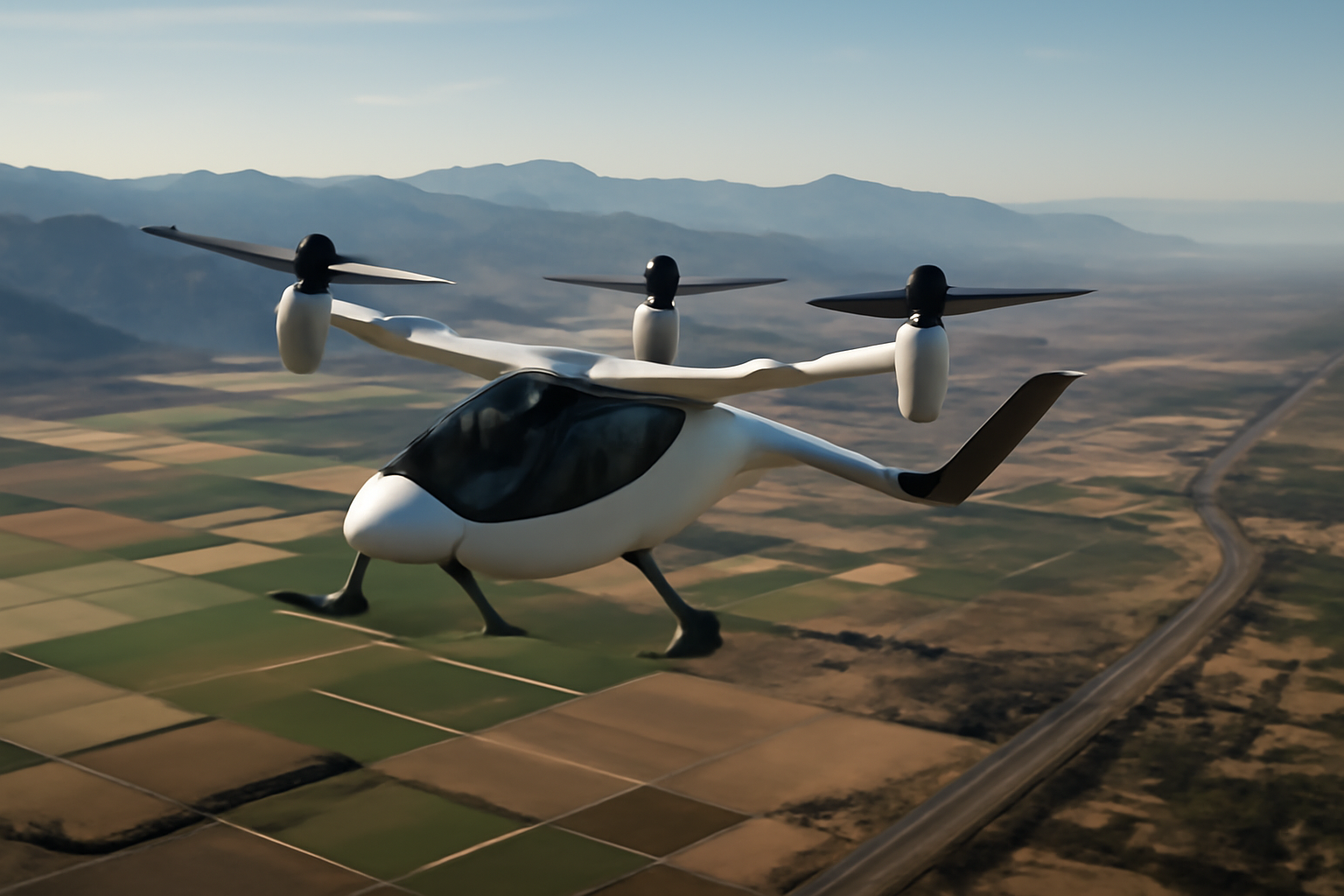
In a groundbreaking achievement for autonomous aviation, Joby Aviation has successfully flown a self-piloting aircraft across the continental United States without requiring pilot intervention at any point during the journey. This historic demonstration represents a watershed moment for the personal air mobility industry, showcasing the viability of fully autonomous electric vertical takeoff and landing (eVTOL) technology for long-distance operations. The cross-country flight validates years of research, development, and rigorous testing protocols that have brought autonomous air travel closer to mainstream reality.
The Journey: Autonomy Across America
Joby’s self-flying aircraft completed its trans-continental crossing relying entirely on advanced autonomous flight systems and onboard artificial intelligence to navigate, avoid obstacles, and manage all aspects of flight operations. The aircraft demonstrated consistent performance across varying weather conditions, diverse terrain, and complex airspace that characterizes the journey from coast to coast. This continuous, hands-free operation proved that autonomous eVTOL systems can reliably handle the demands of extended cross-country missions without human pilot intervention.
The flight path traversed multiple airspace classifications, from controlled zones near major airports to remote rural areas, requiring sophisticated decision-making algorithms and real-time environmental awareness. Joby’s systems successfully managed route optimization, altitude adjustments, and dynamic obstacle avoidance while maintaining strict adherence to Federal Aviation Administration (FAA) protocols and air traffic management requirements. The achievement underscores the maturity of autonomous flight technology when properly integrated with comprehensive safety architectures.
Throughout the journey, Joby’s aircraft collected extensive data on autonomous system performance, battery management during extended flights, and real-world operational scenarios. This telemetry provides invaluable insights for refining autonomous eVTOL operations and accelerating the path toward commercial autonomous urban air mobility services. The successful completion without pilot intervention sets a new benchmark for what is technically possible in self-flying aviation.
Autonomous Technology Behind the Achievement
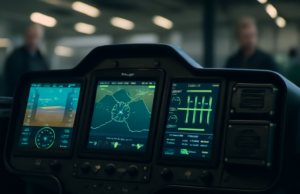
Joby’s autonomous flight system integrates multiple layers of redundancy, sensor fusion, and artificial intelligence to enable safe, independent flight operations. The aircraft relies on advanced LiDAR, radar, and camera systems working in concert to build real-time 3D models of its environment, enabling sophisticated obstacle detection and avoidance. These sensors feed continuous streams of data to onboard computing systems that process millions of data points per second to make autonomous flight decisions.
The artificial intelligence powering Joby’s autonomous operations has been trained on vast datasets encompassing diverse flight scenarios, weather conditions, and edge cases encountered during thousands of hours of testing flights. Machine learning algorithms enable the system to adapt to novel situations while maintaining strict adherence to predetermined safety boundaries and operational parameters. The architecture prioritizes safety through fail-safe design principles, where any system anomaly triggers conservative recovery behaviors rather than risky autonomous decisions.
Communication systems maintain constant links with ground-based monitoring stations, allowing human operators to observe flight progression and intervene if necessary, though the cross-country demonstration proved such intervention unnecessary. The integration of autonomous systems with air traffic management infrastructure demonstrates that self-flying aircraft can coexist within existing aviation ecosystems while progressively expanding operational boundaries. This layered approach to safety and autonomy represents the industry standard for emerging autonomous aviation platforms.
Regulatory Implications and FAA Approval
The successful autonomous cross-country flight was conducted with full FAA oversight and approval, representing an important step in the regulatory pathway toward commercial autonomous eVTOL operations. The demonstration provides critical data supporting the FAA’s development of certification standards for autonomous air vehicles, helping establish safety baselines and operational parameters for this emerging category. Regulators observed that autonomous systems can maintain or exceed safety standards established for piloted aircraft when properly designed and validated.
The achievement accelerates discussions within the aviation regulatory community about the timeline for transitioning from experimental autonomous flights to limited commercial operations in controlled environments. Joby’s demonstrated capability provides a foundation for licensing autonomous eVTOL services in specific corridors or geographic regions, beginning with lower-risk operations before expanding to complex urban environments. The FAA can leverage data from this flight to refine certification requirements and establish performance standards that other operators must meet.
International aviation regulators are watching closely as U.S. autonomy milestones advance, seeking to establish global standards that enable safe autonomous air mobility while maintaining competitive fairness among operators. The precedent set by Joby’s autonomous crossing influences how other nations approach autonomous eVTOL certification, potentially leading to harmonized international standards. This regulatory alignment will be essential for enabling cross-border autonomous air operations and establishing interconnected urban air mobility networks on a continental scale.
Commercial Implications for Urban Air Mobility Markets
Autonomous operation capability fundamentally changes the economics of air mobility services by eliminating pilot labor costs, one of the largest operational expenses for traditional aviation. When scaled to commercial operations, autonomous eVTOLs could reduce per-passenger costs substantially, making air mobility services economically viable for middle-market transportation use cases currently served by ground transit. Joby’s achievement demonstrates that this cost reduction pathway is technically feasible, accelerating investor confidence in autonomous air mobility business models.
The elimination of pilot requirements opens new operational paradigms where aircraft can operate continuously throughout the day with minimal downtime, maximizing asset utilization and revenue generation. Autonomous aircraft can be deployed to serve demand dynamically, routing themselves to high-demand zones without requiring pilots to position themselves geographically. This operational flexibility enables service models that would be economically impossible with pilot-dependent operations, from rapid emergency response networks to high-frequency urban commute services.
Joby’s milestone strengthens its competitive positioning in the race to establish the first commercial autonomous air mobility services, potentially enabling earlier market entry than competitors relying on piloted operations. The company’s demonstrated autonomy capability becomes a competitive differentiator that investors, partners, and potential customers recognize as a path toward sustainable, profitable air mobility operations. As other eVTOL manufacturers pursue their own autonomy programs, Joby’s successful cross-country flight establishes a reference point for evaluating autonomous readiness across the industry.
Key Takeaways from Joby’s Autonomous Achievement
- Joby’s self-flying aircraft completed a hands-free continental crossing without pilot intervention, validating autonomous eVTOL technology for extended operations and proving technical feasibility at scale.
- The FAA-overseen demonstration provides critical safety data and regulatory precedent for certifying autonomous air vehicles, accelerating the timeline toward commercial autonomous air mobility services.
- Eliminating pilot requirements through autonomous operation dramatically improves the economics of air mobility, potentially reducing per-passenger costs and enabling profitable commercial urban air mobility networks.
Joby Aviation’s successful autonomous cross-country flight represents far more than a single technological achievement—it marks the moment when self-flying aircraft transitioned from theoretical capability to demonstrated reality. The elimination of pilot intervention across thousands of miles and countless operational scenarios proves that autonomous eVTOL technology has matured beyond research phases into deployable systems ready for real-world applications. As regulators refine certification pathways and manufacturers advance their autonomy programs, the vision of a continent-spanning autonomous air mobility network moves from future possibility to near-term probability. The industry has crossed a significant threshold, and the momentum toward autonomous urban and regional air mobility continues accelerating.