HIGHLIGHTS
- Germany funds tens of thousands of Quantum Systems interceptor drones, marking unprecedented scale for autonomous military eVTOL deployment across European defense
- Ukraine theater accelerates real-world system validation and operational doctrine development, compressing traditional defense procurement timelines from years to months
- Military-driven manufacturing scale strengthens European eVTOL industrial capacity with spillover benefits for civilian air mobility regulation and commercial applications
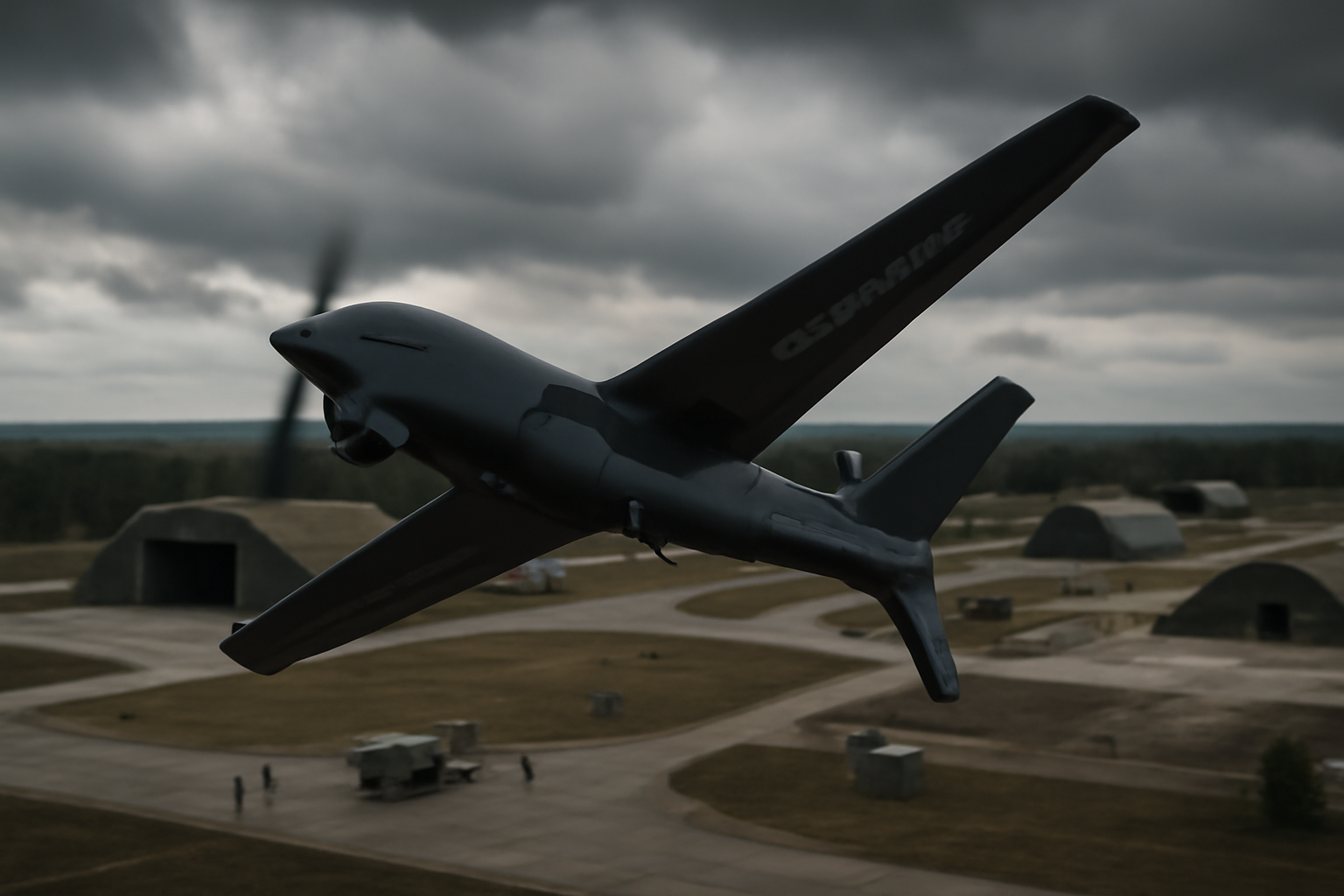
Germany has announced a significant investment in tens of thousands of interceptor drones as Quantum Systems, a leading European eVTOL manufacturer, rapidly scales its operations to meet demand from Ukraine and other European defense initiatives. This development marks a pivotal moment in the commercialization of autonomous air mobility technology beyond civilian urban air transport, with military and defense applications driving unprecedented volumes and innovation cycles. The funding decision underscores how geopolitical pressures are accelerating the real-world deployment of drone technology at scale.
Quantum Systems’ Strategic Expansion in European Defense
Quantum Systems, headquartered in Germany and known for developing intelligent autonomous drone systems, has positioned itself at the forefront of European defense technology innovation. The company’s interceptor drone technology represents a sophisticated evolution beyond traditional quadcopters, incorporating advanced autonomy, swarm capabilities, and precision targeting systems designed for rapid response scenarios. Germany’s decision to fund tens of thousands of units signals confidence in the company’s manufacturing capacity and technological maturity.
The scaling initiative addresses critical gaps in modern defense infrastructure where rapid deployment of aerial assets can provide tactical advantages in contested airspace. Quantum Systems has leveraged its expertise in autonomous flight systems to develop interceptor drones that can operate with minimal human intervention, reducing response times from minutes to seconds. This represents a fundamental shift in how air defense strategies are being reimagined across NATO and allied nations.
The partnership between Germany’s government and Quantum Systems also reflects broader European strategy to reduce dependence on non-European suppliers for critical defense technology. By building sovereign capacity for autonomous drone manufacturing, Germany strengthens not only its own security posture but contributes to collective European defense resilience. The funding commitment likely includes provisions for supply chain development, workforce training, and manufacturing infrastructure expansion.
The Ukraine Theater as a Proving Ground for Scale
Ukraine’s ongoing conflict has emerged as a proving ground for rapid deployment and validation of emerging drone technologies, including autonomous interceptor systems. The frontline demand for counter-drone capabilities has created unprecedented testing conditions where systems must perform reliably under real-world stress, electronic warfare interference, and logistical constraints. Quantum Systems’ involvement in Ukrainian defense operations provides the company with direct feedback loops that accelerate product refinement and reliability improvements.
The scale of the German investment—tens of thousands of units—suggests military planners expect sustained or escalated demand for interceptor drone capabilities throughout the conflict and beyond. Unlike traditional defense procurement cycles that measure timelines in years, the urgency of modern aerial warfare is compressing decision-making and deployment windows to months. This acceleration directly benefits manufacturers like Quantum Systems that can rapidly scale production while maintaining quality and performance standards.
International military assistance to Ukraine increasingly incorporates drone technology as a core component of strategy, alongside traditional air defense systems. Interceptor drones offer advantages in cost-effectiveness, rapid deployment, and distributed defense compared to conventional anti-aircraft systems. The German funding commitment signals that European NATO members view autonomous drone technology as essential infrastructure for modern conflict, not peripheral capability.
Autonomous Interceptor Technology and Operational Advantages
Interceptor drones represent a distinct category within the broader eVTOL ecosystem, optimized for speed, agility, and autonomous decision-making rather than cargo capacity or passenger comfort. These systems typically feature advanced sensors, real-time threat detection, and the ability to coordinate with other platforms in networked swarms. The autonomy layer is particularly critical—reducing latency between threat detection and response can be the difference between successful interception and failure in contested airspace.
The technical challenges of scaling interceptor drone production involve not just manufacturing airframes but integrating complex avionics, autonomy software, and communications systems that must operate in GPS-denied or electronically contested environments. Quantum Systems’ expertise in autonomous flight—developed through years of civilian mapping and surveillance drone operations—provides a strong foundation for military applications. The company’s ability to rapidly iterate and improve systems based on real-world feedback from Ukraine directly accelerates the maturation of this technology class.
From a strategic perspective, distributed interceptor drone networks offer NATO-aligned nations a layered defense architecture that complements traditional air defense systems. A single battalion might control dozens of autonomous interceptors through a central command node, creating flexible response capability across multiple sectors simultaneously. This represents a fundamental reimagining of air defense doctrine, where autonomous platforms extend the reaction envelope far beyond what human-piloted systems can achieve.
Manufacturing Scale and Supply Chain Implications
Germany’s commitment to fund tens of thousands of interceptor drones requires Quantum Systems to dramatically expand manufacturing capacity, workforce, and supply chain resilience. This is not merely a matter of building more factory floor space—it involves developing suppliers for specialized components, establishing quality control processes for high-volume production, and training technicians to assemble complex autonomous systems. The economic impact on German industrial capacity and employment will be significant, particularly in regions where aerospace and defense manufacturing maintains strong presence.
The funding decision likely includes long-term contracts that provide Quantum Systems with revenue predictability and capital for facility expansion. Such agreements accelerate growth in ways that traditional commercial market dynamics might not achieve—a single government order for tens of thousands of units can fund years of R&D and infrastructure investment. This model has historically been how aerospace companies scaled from startup to major defense contractors, though typically over longer timescales.
Supply chain resilience becomes critical when manufacturing interceptor drones at scale. Quantum Systems must secure reliable sources for semiconductors, motors, sensors, and composite materials while maintaining quality standards and avoiding single points of failure. Germany’s strategic interest in sovereign defense capability likely includes measures to ensure supply chain security, potentially through government investment in critical component suppliers or strategic stockpiling of essential materials.
Broader Implications for Personal Air Mobility and eVTOL Markets
While interceptor drones represent a military application, the scaling of autonomous eVTOL technology across European manufacturers has spillover effects on the broader personal air mobility sector. Manufacturing processes, autonomy algorithms, battery technology, and regulatory frameworks developed for defense applications often find civilian use once proven and matured. Germany’s investment in Quantum Systems indirectly strengthens the entire European eVTOL ecosystem by validating the commercial viability of autonomous flight systems at scale.
The technological convergence between military and civilian air mobility systems is becoming increasingly blurred. Urban air mobility (UAM) platforms, cargo drones, and emergency response aircraft share fundamental architecture with military interceptor systems—autonomy software, lightweight composite structures, distributed power systems, and advanced sensors. Companies that scale production for military contracts gain manufacturing expertise and capital that improves their competitiveness in civilian markets.
Regulatory frameworks are also evolving in parallel. European aviation authorities must develop certification processes for autonomous interceptor drones operating in shared airspace, which accelerates the development of broader autonomous aviation regulations applicable to civilian eVTOL vehicles. The urgency and resources directed toward military autonomous systems create institutional knowledge and regulatory pathways that civilian air mobility companies benefit from downstream.
Key Takeaways
- Germany’s funding of tens of thousands of Quantum Systems interceptor drones represents unprecedented scale for autonomous military eVTOL technology deployment
- Ukraine’s conflict serves as real-world validation environment, accelerating product refinement and establishing operational doctrine for autonomous drone defense systems
- Manufacturing scale and supply chain development triggered by military contracts strengthen broader European eVTOL industrial capacity with civilian spillover benefits
Germany’s decision to invest in tens of thousands of Quantum Systems interceptor drones marks a transformative moment in autonomous air mobility deployment. The convergence of urgent military need, proven technology, and European industrial capacity has created conditions for rapid scaling that transcend traditional defense procurement timelines. As Quantum Systems expands manufacturing and refines systems based on Ukrainian operational feedback, the company—and the broader European eVTOL sector—enters a growth phase with profound implications for both military strategy and civilian air mobility markets. The ability to deploy autonomous interceptor networks at scale fundamentally reshapes European defense architecture while simultaneously validating the technical and economic viability of autonomous flight systems that will eventually serve civilian applications across the continent.