HIGHLIGHTS
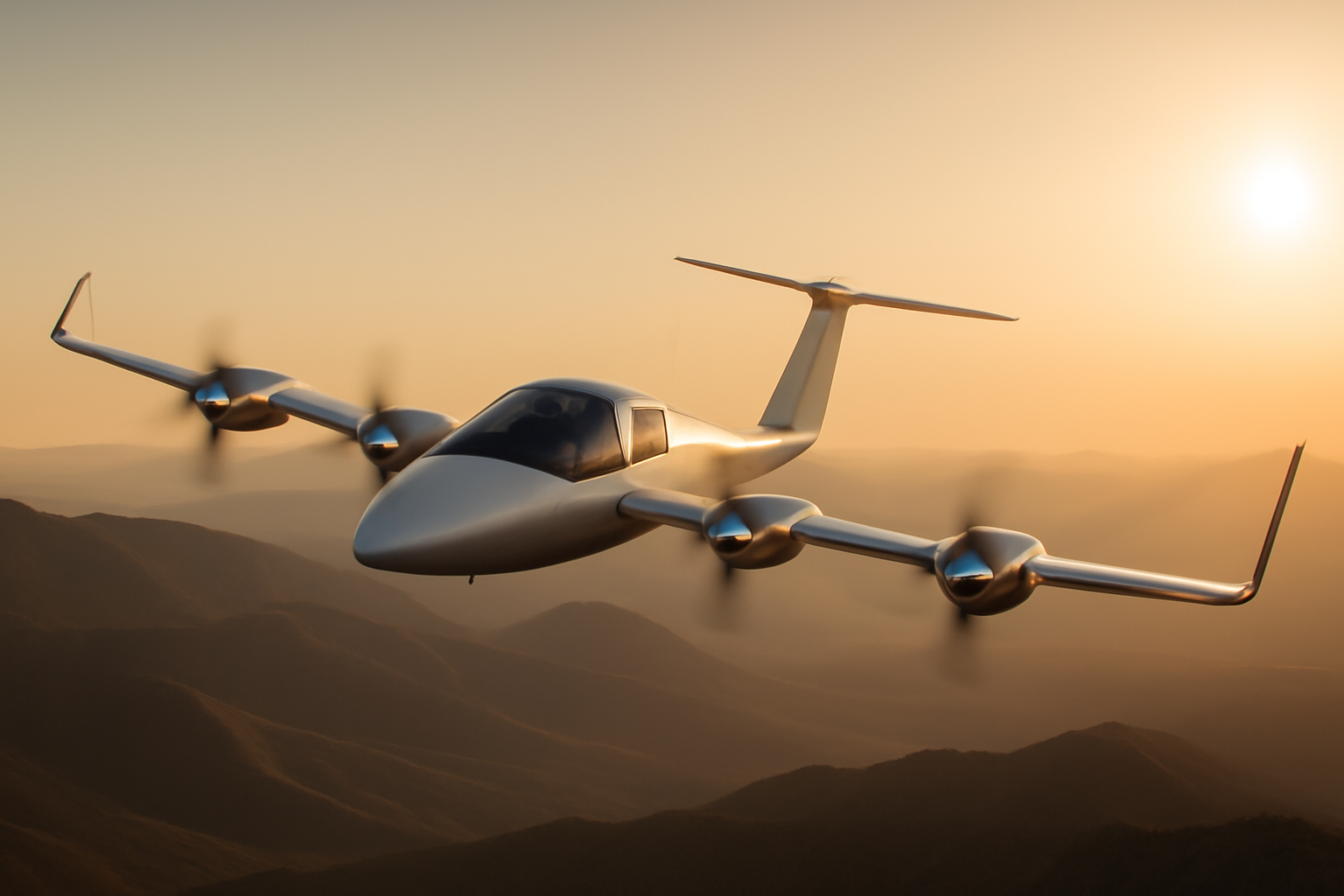
- Quad-engine electric propulsion enables multi-engine safety redundancy in general aviation, allowing safe operations even with engine failures
- Electric motors reduce maintenance intervals by 75-80% and eliminate combustion-related failures, delivering substantially lower lifecycle costs
- Digital integration with flight management systems unlocks autonomous landing, obstacle avoidance, and real-time battery optimization capabilities
The landscape of general aviation is undergoing a fundamental transformation as electric propulsion systems continue to mature and demonstrate unprecedented capabilities. The introduction of four-engine electric configurations represents a paradigm shift in how aircraft designers approach safety, redundancy, and performance optimization. This emerging technology promises to redefine operational standards while addressing some of the most persistent challenges in aviation today.
The Architecture of Quad-Engine Electric Propulsion
Four-engine electric systems represent a deliberate engineering choice that prioritizes safety through redundancy and distributed power delivery. Unlike traditional single or twin-engine aircraft, this configuration allows each engine to operate at optimal efficiency levels while maintaining multiple failsafe pathways. The distributed nature of quad-engine designs means that loss of one or even two engines does not compromise the aircraft’s ability to continue safe operations and reach designated landing sites.
The electrical architecture supporting four independent motors requires sophisticated battery management systems that can dynamically distribute power across all propulsion units. Modern battery technology, combined with advanced power electronics, enables seamless load-sharing between motors, optimizing energy consumption and extending flight endurance. This level of sophistication was simply impossible with legacy internal combustion engines, making electric propulsion uniquely suited for distributed multi-engine configurations.
Each electric motor in a four-engine setup operates with minimal vibration and noise compared to conventional engines, resulting in significantly reduced acoustic signatures. This acoustic advantage opens new possibilities for operations in noise-sensitive areas and extends flight windows in communities adjacent to general aviation facilities. The elimination of mechanical complexity associated with traditional fuel systems further reduces maintenance burdens and improves aircraft reliability.
Safety Advantages and Redundancy Systems
The transition to four-engine electric propulsion fundamentally enhances safety margins in ways that single-engine general aviation aircraft cannot achieve. With four independent electric motors, aircraft can maintain controlled flight on two engines, landing safely even in emergency scenarios. This redundancy architecture mirrors commercial aviation principles while remaining practical and economically viable for the general aviation sector.
Electric motors eliminate many failure modes inherent to reciprocating engines, including fuel system contamination, carburetor icing, and mechanical wear requiring frequent overhauls. The absence of combustion processes means no explosion risk, no oil circulation system failures, and no spark plug deterioration. Modern electric propulsion systems employ sophisticated health monitoring through continuous sensor integration, providing real-time diagnostics of motor, battery, and power electronic status.
Battery management systems in quad-engine aircraft implement multiple layers of protection, including individual cell monitoring, temperature regulation, and isolated power distribution networks. In the event of any detected anomaly, the system can instantly redistribute power or safely shutdown affected components without compromising flight safety. These multi-layered safety protocols create an operational environment substantially safer than conventional general aviation aircraft.
Performance Characteristics and Operational Efficiency
Four-engine electric aircraft demonstrate performance characteristics that challenge conventional assumptions about power-to-weight ratios and efficiency. Electric motors deliver maximum torque instantaneously from zero RPM, eliminating the power curve inefficiencies of traditional engines. This characteristic enables more responsive control and superior performance during critical phases of flight including takeoff, climb, and landing approaches.
The efficiency gains from electric propulsion systems translate directly into extended range and increased payload capacity compared to similarly-sized conventional aircraft. Electric motors operate at consistent efficiency levels across their power band, unlike combustion engines that suffer significant efficiency penalties at partial throttle settings. For general aviation operations involving frequent partial-power flight segments, this efficiency advantage accumulates into substantial operational cost reductions.
Thermal management in quad-engine systems distributes heat dissipation across four independent cooling pathways, reducing peak temperatures and improving overall system longevity. The absence of extreme temperature cycling associated with combustion processes means fewer material stresses and extended component lifespans. Scheduled maintenance intervals for electric propulsion systems span thousands of hours compared to hundreds for conventional aircraft, fundamentally improving operational economics.
Integration with Modern Avionics and Flight Management
Four-engine electric aircraft represent ideal platforms for integrating next-generation digital flight management systems that optimize power distribution in real-time. Advanced flight computers can balance thrust vectoring across four motors to enhance handling characteristics and improve response to pilot inputs. This level of control precision enables flight characteristics previously achievable only in larger, more complex aircraft.
The electrical nature of quad-engine propulsion systems enables seamless integration with autonomous flight capabilities and advanced navigation systems. Electric motors respond to digital control signals with microsecond precision, enabling automation algorithms that enhance safety and reduce pilot workload. Future iterations may incorporate autonomous emergency landing capabilities and automated obstacle avoidance systems impossible with conventional propulsion.
Real-time battery state monitoring integrates with flight management systems to provide pilots with accurate energy management data throughout flight operations. Predictive algorithms can calculate safe diversion options based on current battery status and expected power consumption profiles. This integration transforms battery management from a manual estimation process into a precise engineering function, eliminating range anxiety and enabling optimized flight planning.
Industry Adoption and Market Development
General aviation manufacturers are accelerating development programs for four-engine electric aircraft models targeting training, personal transportation, and regional delivery applications. Early adopter organizations demonstrate strong operational commitment to electric propulsion, with multiple aircraft entering service in 2026 and beyond. Industry consensus projects rapid scaling of manufacturing capacity as battery technology costs continue declining predictably.
Certification pathways for electric general aviation aircraft are maturing through collaborative efforts between manufacturers, regulatory authorities, and industry associations. Special Conditions and modified certification standards specifically address electric propulsion characteristics, acknowledging their fundamental differences from combustion-based systems. Expedited approval processes for electric aircraft represent regulatory recognition of their inherent safety advantages.
Investment capital is flowing into electric aircraft development at unprecedented levels, with venture funding and established aerospace suppliers committing resources to next-generation platforms. Market projections indicate quad-engine electric aircraft will capture significant market share in the general aviation sector within five years. This transition creates substantial opportunities for forward-thinking operators and service providers prepared for electric aviation’s growth phase.
Key Takeaways in Electric General Aviation
- Four-engine electric configurations provide redundancy and safety margins equivalent to commercial aviation while remaining practical for general aviation applications
- Electric motors eliminate combustion inefficiencies, reduce maintenance requirements by 75-80%, and enable extended flight range compared to conventional aircraft
- Integration with digital flight management systems creates opportunities for autonomous capabilities and real-time battery management impossible with traditional propulsion
The emergence of four-engine electric aircraft marks a watershed moment in general aviation history, establishing electric propulsion as the dominant technology for new aircraft development. Safety advantages, operational efficiency, environmental benefits, and lower lifecycle costs combine to create compelling economics for fleet operators. As battery technology continues its exponential improvement trajectory, electric general aviation will transition from specialized niche to industry standard, fundamentally transforming how pilots train, travel, and conduct aerial operations.