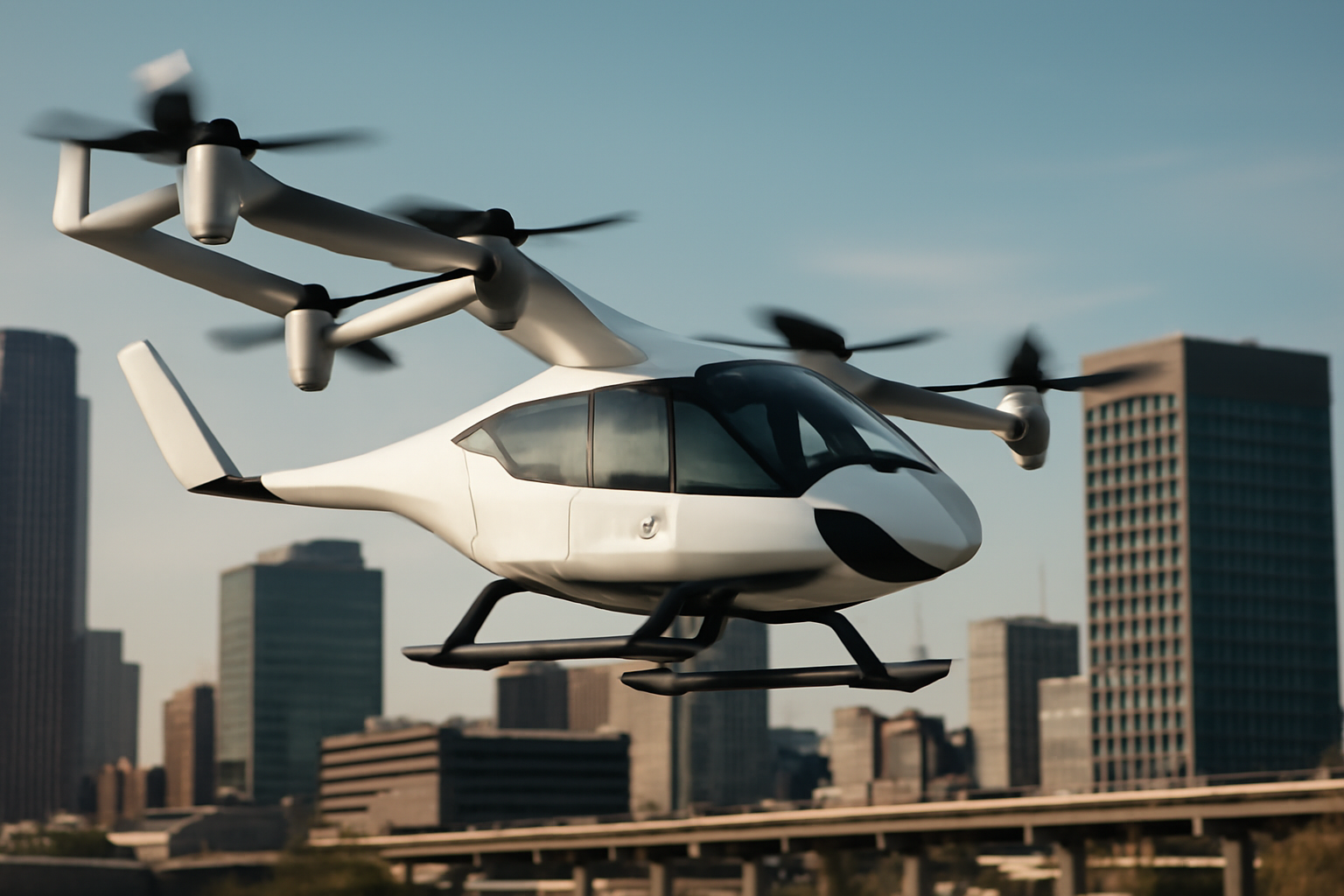
HIGHLIGHTS
- Eve Urban Air Mobility forges independent US air taxi demonstrations despite exclusion from official pilot programme, signaling strong technological confidence.
- Multi-location demonstration strategy builds regulatory credibility, gathers operational data, and establishes direct relationships with municipalities and potential partners.
- Eve’s approach reflects industry evolution where autonomous flight readiness and customer traction matter more than formal government programme participation for competitive success.
Eve Urban Air Mobility is moving forward with ambitious plans to demonstrate its autonomous air taxi capabilities across the United States, even after not being selected for participation in an official pilot programme. The Brazilian aircraft manufacturer’s determination to proceed with independent demonstrations signals strong confidence in the viability of urban air mobility solutions and reveals a shifting competitive landscape in the emerging eVTOL sector.
Eve’s Strategic Response to Pilot Programme Exclusion
Being excluded from a major government-backed pilot programme might discourage some aviation startups, but Eve has chosen to interpret the setback as an opportunity to chart its own course. Rather than waiting for official endorsement or a second opportunity to secure pilot programme participation, the company is leveraging its technical readiness and regulatory progress to launch independent demonstrations across multiple US markets. This proactive strategy positions Eve as an autonomous player willing to take calculated risks to advance the air taxi sector.
The company’s decision to bypass the formal pilot route demonstrates the maturity of Eve’s technology development. With years of investment in autonomous flight systems, battery technology, and airframe design, Eve possesses the infrastructure and expertise necessary to conduct safe, credible public demonstrations without government coordination. By showcasing its capabilities independently, Eve can potentially influence regulatory agencies and potential customers directly, creating bottom-up momentum for urban air mobility adoption.
Eve’s approach also reflects broader industry trends where leading manufacturers are diversifying their market entry strategies. Rather than putting all resources behind winning government contracts, companies are pursuing multiple pathways simultaneously—including cargo operations, tourism flights, and private corporate demonstrations. This diversification hedges against regulatory timelines and ensures that technological progress continues regardless of political or bureaucratic hurdles.
Technical Readiness and Operational Demonstrations
For Eve to confidently move forward with US demonstrations despite pilot programme exclusion, the company must have achieved significant milestones in autonomous flight validation and safety certification. The demonstration phase represents a critical juncture where theoretical engineering meets real-world operational challenges. Eve’s readiness to conduct these public demonstrations suggests that the company has completed extensive simulation testing, achieved key regulatory approvals, and validated its autonomous systems in controlled environments.
The US air taxi demonstration market has become increasingly competitive and technically sophisticated. Companies undertaking this challenge must prove not only that their aircraft can fly autonomously, but that they can do so reliably, safely, and efficiently in complex urban and suburban airspace. Eve’s planned demonstrations will likely focus on specific capabilities—silent flight operations, precision landing systems, autonomous obstacle avoidance, and rapid turnaround times—that differentiate its offering from competitors still in earlier development phases.
Demonstrations serve multiple strategic purposes beyond simply proving technical capability. They generate valuable operational data, test ground support systems and infrastructure requirements, gather public sentiment on eVTOL vehicles, and provide pilot training opportunities for crew members who will eventually operate these aircraft commercially. Each demonstration location also functions as a case study for potential launch customers, helping airports, city governments, and ride-sharing operators understand the practical requirements of integrating air taxi services.
Regulatory Strategy and Market Positioning
Eve’s decision to pursue independent demonstrations reflects a calculated assessment of US regulatory pathways. Rather than relying solely on a single government pilot programme—which may have specific technological requirements, geographic limitations, or budget constraints—Eve is creating multiple demonstration opportunities. This multi-front approach allows the company to build evidence of safe operations across diverse US regions and to establish relationships with state aviation authorities, city governments, and potential operational partners.
The regulatory environment for urban air mobility in the United States remains in flux, with the FAA still developing certification standards for eVTOL aircraft and autonomous flight operations. Companies that can demonstrate safe, practical operations ahead of final regulatory frameworks position themselves favorably once certification standards crystallize. Eve’s approach essentially accumulates regulatory credibility through real-world demonstrations, which can inform the company’s eventual certification pathway and accelerate time-to-market for commercial services.
By demonstrating across multiple US locations, Eve also builds a portfolio of interested municipalities and potential operational partners. Cities and regions that host successful demonstrations may become priority launch markets for Eve’s commercial air taxi services, creating first-mover advantages in key corridors. This grassroots market development strategy complements any efforts to secure federal contracts or participate in government-coordinated initiatives down the line.
Competitive Implications and Industry Momentum
Eve’s announcement comes amid intense competition within the urban air mobility sector, where multiple manufacturers are racing toward commercial operations. Companies like Joby Aviation, Archer Aviation, and others are pursuing various combinations of government partnerships, private investment, and independent demonstration strategies. Eve’s exclusion from a particular pilot programme does not diminish its competitive position if the company can execute a compelling independent demonstration campaign that generates momentum and customer interest.
The broader industry context matters significantly here. As battery technology matures, autonomous flight systems advance, and regulatory frameworks become clearer, the competitive advantage increasingly depends on demonstration capability and customer traction rather than pure technological novelty. Eve’s readiness to demonstrate independently suggests that the company has reached a level of maturity where it can compete effectively against better-funded or more established competitors without requiring government support or coordination.
The competitive signal sent by Eve’s announcement could also influence other manufacturers’ strategies. If Eve can successfully conduct impressive demonstrations and generate customer interest outside of official pilot programmes, other companies may accelerate similar independent initiatives. This dynamic could actually accelerate overall market development, as multiple demonstration campaigns create a wealth of operational data, public engagement, and regulatory learning that benefits the entire urban air mobility sector.
Key Takeaways on Eve’s US Air Taxi Strategy
- Eve is proceeding with independent US air taxi demonstrations despite exclusion from an official pilot programme, demonstrating technological confidence and strategic flexibility.
- The company’s multi-location demonstration strategy creates regulatory credibility, gathers operational data, and builds relationships with municipal partners outside government-coordinated pathways.
- Eve’s approach reflects industry maturity, where autonomous flight readiness and customer traction increasingly matter more than formal government programme participation for competitive positioning.
Eve’s decision to pursue independent US air taxi demonstrations despite pilot programme exclusion underscores a crucial inflection point in the urban air mobility sector. The company’s confidence in its autonomous systems and operational readiness signals that eVTOL technology has matured beyond the purely theoretical stage. As Eve moves forward with its demonstration campaign, the aviation industry and potential customers will gain valuable insights into the practical realities of autonomous air taxi operations. This approach may ultimately prove more valuable than formal pilot programme participation, as Eve independently validates its technology, builds market relationships, and creates momentum for broader urban air mobility adoption across the United States.