
HIGHLIGHTS
- Gov. DeSantis launches comprehensive electric air taxi and autonomous vehicle testing programs, establishing Florida as a leader in next-generation mobility infrastructure.
- Integrated eVTOL and autonomous ground vehicle systems solve the “last-mile” transportation challenge, creating seamless end-to-end mobility solutions for passengers.
- Strategic vertiport development, federal regulatory alignment, and job creation across aerospace and technology sectors will drive Florida’s economic growth and competitive advantage.
Florida is accelerating its transition into the future of transportation. Governor Ron DeSantis has announced an ambitious initiative to launch electric air taxi and autonomous vehicle testing programs across the state, marking a significant milestone for both the aerospace and mobility sectors in the U.S. This development positions Florida as a pioneer in advanced air mobility infrastructure and demonstrates the state’s commitment to embracing cutting-edge technologies that could reshape urban transportation landscapes.
Florida’s Vision for Electric Air Mobility
Governor DeSantis’s announcement represents Florida’s strategic positioning in the rapidly evolving personal air mobility (PAM) market. The state has recognized that eVTOL aircraft and electric air taxis represent the next generation of urban and regional transportation, with the potential to reduce traffic congestion, lower emissions, and create high-value jobs in aerospace and technology sectors. This proactive stance aligns Florida with other regions globally that are investing heavily in air mobility infrastructure and regulatory frameworks.
The testing programs will provide real-world validation of electric air taxi operations in a variety of Florida environments, from dense urban areas to more suburban regions. This geographic diversity is crucial for understanding how eVTOL systems perform across different terrain, weather conditions, and population densities. By facilitating these trials, Florida is gathering essential data that will inform future commercial operations and regulatory approvals at both state and federal levels.
The announcement also signals Florida’s readiness to compete for investment and manufacturing headquarters from leading eVTOL developers and operators. Companies like Lilium, Joby Aviation, and Archer are actively seeking jurisdictions that offer supportive regulatory environments, testing facilities, and infrastructure investment. Florida’s early commitment to these technologies could attract significant capital and talent to the state’s aviation and technology sectors.
Autonomous Vehicle Integration and Smart Mobility
Beyond air taxis, DeSantis’s initiative includes autonomous vehicle (AV) testing programs, creating a comprehensive ecosystem for next-generation mobility. The integration of autonomous ground and air vehicles represents a holistic approach to transportation transformation, where commuters could seamlessly transition between autonomous rideshare services and air taxi networks. This multimodal integration is essential for creating practical, user-friendly transportation solutions in real-world urban environments.
Florida’s geographic characteristics make it an ideal location for autonomous vehicle testing. The state’s mix of urban cores (Miami, Tampa, Orlando), suburban regions, and varying weather conditions provides diverse testing scenarios. Additionally, Florida’s robust tourism infrastructure means that air taxi and autonomous vehicle services could quickly find market adoption among visitors and residents seeking faster, more convenient transportation alternatives to traditional methods.
The autonomous vehicle component also addresses the “last-mile” problem that has long challenged air mobility adoption. Even if eVTOL technology proves safe and economical, passengers still need ground transportation to reach vertiports (air taxi terminals) and final destinations. Integrated autonomous rideshare services solve this challenge, creating end-to-end mobility solutions that maximize the potential of aerial networks.
Regulatory Framework and Infrastructure Development
For air taxi and autonomous vehicle programs to succeed, robust regulatory frameworks and supporting infrastructure must be in place. DeSantis’s announcement likely includes commitments to streamline state-level permitting processes, coordinate with federal aviation authorities (FAA), and invest in vertiport development. Florida’s state government appears ready to work collaboratively with federal agencies and private operators to create the necessary conditions for safe, efficient operations.
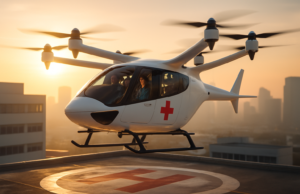
Vertiport infrastructure is particularly critical. These facilities—whether rooftop terminals, converted parking areas, or purpose-built hubs—must be strategically located near major employment centers, hospitals, entertainment districts, and transportation hubs. Florida’s announcement suggests the state is committed to identifying and designating vertiport locations that will maximize accessibility and operational efficiency for early eVTOL services.
The regulatory component also encompasses safety standards, noise regulations, airspace management, and public liability frameworks. By engaging early with these regulatory challenges, Florida positions itself as a thought leader in developing sensible rules that protect public safety while enabling innovation. Other states and countries will likely study Florida’s regulatory model as they develop their own air mobility policies.
Economic Opportunity and Job Creation
The economic implications of Florida’s air mobility investment are substantial. eVTOL manufacturing, vertiport construction, maintenance operations, pilot training, and software development will create thousands of skilled jobs across multiple sectors. Engineering talent, aerospace professionals, and technology specialists will be drawn to Florida as companies establish operations to support commercial air taxi services.
Tourism represents another significant economic opportunity. Florida attracts tens of millions of visitors annually. Premium air taxi services connecting major attractions, airports, and hospitality centers could become a powerful differentiator for the state’s travel and tourism industry. Tourists willing to pay premium fares for speed and convenience will likely generate substantial revenue for operators and valuable tax income for the state.
Real estate and urban planning will also be impacted positively. Properties near vertiports and autonomous transportation hubs may experience increased demand and value appreciation. This creates incentives for real estate developers and municipal planners to strategically integrate air mobility infrastructure into broader urban revitalization and development plans, potentially driving economic growth in underutilized areas.
Key Takeaways from Florida’s Air Mobility Initiative
- Governor DeSantis is launching comprehensive testing programs for both electric air taxis and autonomous vehicles, positioning Florida as a leader in next-generation mobility innovation.
- The integration of eVTOL and autonomous ground vehicle technologies creates an end-to-end transportation ecosystem that addresses real-world mobility challenges and maximizes market adoption potential.
- Successful implementation will require strategic vertiport development, regulatory alignment with federal aviation authorities, and job creation across aerospace, technology, and infrastructure sectors.
Florida’s announcement represents a pivotal moment for the personal air mobility industry in the United States. By committing to electric air taxi and autonomous vehicle testing at the state level, Governor DeSantis is demonstrating that advanced mobility technologies are transitioning from theoretical concepts to practical, near-term realities. As Florida develops the regulatory frameworks, infrastructure, and partnerships necessary for these systems to operate safely and efficiently, the state will serve as a blueprint for other regions seeking to participate in the mobility revolution. The coming years will reveal whether Florida’s early investments and policy support can translate eVTOL promise into widespread commercial adoption and tangible benefits for residents, visitors, and the broader economy.