HIGHLIGHTS
- Battery-powered eVTOL aircraft are actively undergoing field testing in Texas, collecting critical safety and performance data for FAA certification.
- Advanced battery technology, electric propulsion, and autonomous flight systems enable quiet, zero-emission aircraft suitable for urban air mobility operations.
- Texas’s aerospace infrastructure and business-friendly regulatory environment position it as a leadership hub for sustainable aviation innovation with major economic benefits.
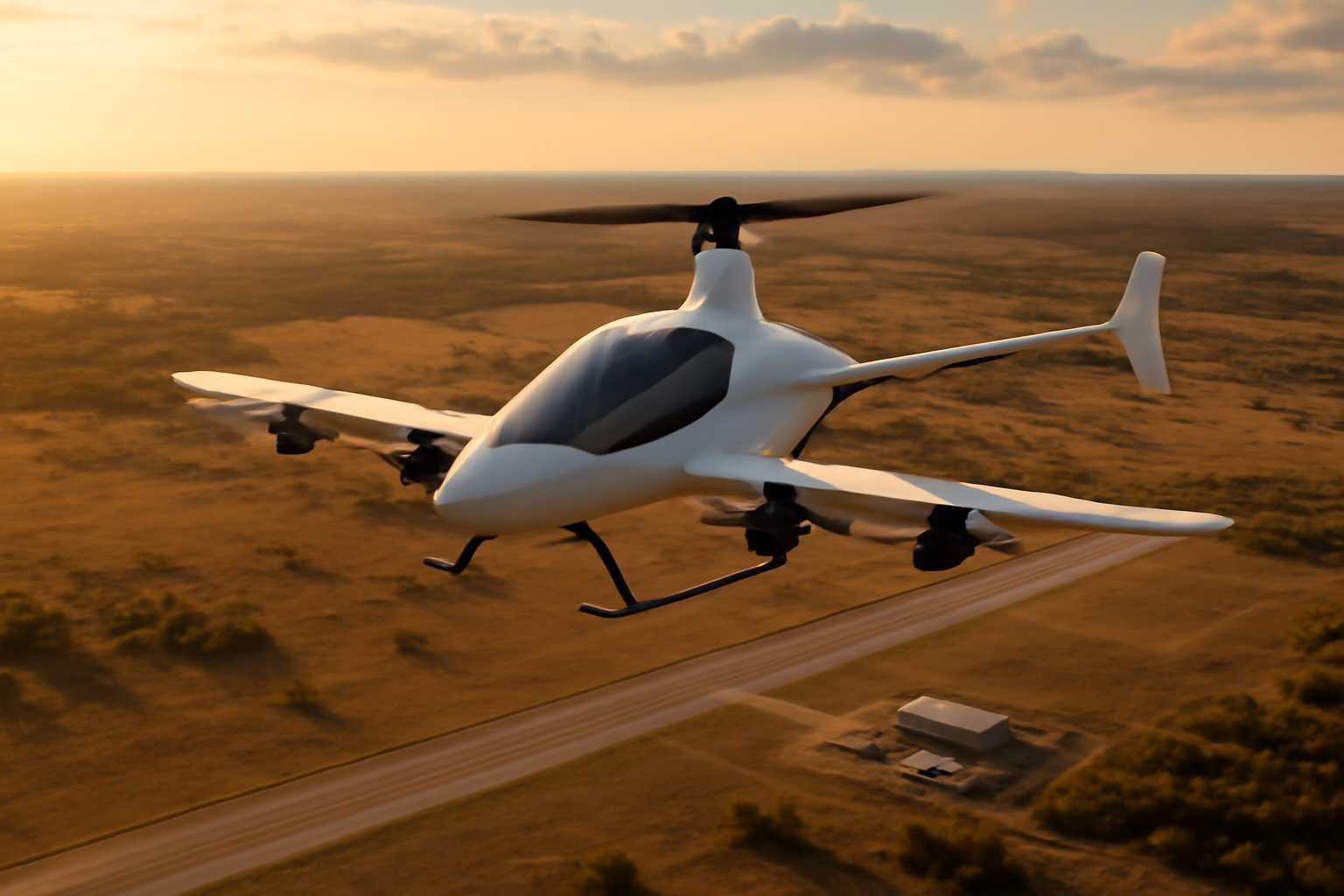
Texas is becoming a key testing ground for the next generation of aviation technology. Quiet, battery-powered electric vertical takeoff and landing (eVTOL) aircraft are now undergoing field testing across the state, signaling a transformative shift toward sustainable urban air mobility. These cutting-edge aircraft represent years of engineering innovation and regulatory collaboration, bringing the promise of zero-emission flight closer to commercial reality.
The Rise of Battery-Powered Aviation in Texas
Texas has emerged as an ideal location for advanced aviation testing, thanks to its diverse geography, favorable weather conditions, and established aerospace infrastructure. The state’s commitment to innovation and business-friendly regulations has attracted multiple eVTOL developers seeking real-world validation of their platforms. Battery-powered aircraft offer significant advantages over conventional combustion engines, including reduced noise pollution, lower operating costs, and zero direct emissions.
The testing phase represents a critical juncture in eVTOL development. Developers are collecting vital performance data, validating safety systems, and refining autonomous flight capabilities in real-world conditions. Texas’s spacious airspace and varied terrain provide the perfect laboratory for these experiments, from urban corridors to rural flight corridors.
Local communities have shown growing support for these initiatives, recognizing the economic benefits and technological leadership that advanced aviation brings to the region. This grassroots enthusiasm, combined with state-level backing, creates an ecosystem where innovation can flourish and mature rapidly.
Technological Innovations Driving eVTOL Development
Modern eVTOL aircraft represent a convergence of breakthrough technologies in battery chemistry, electric propulsion, and autonomous flight systems. Lithium-ion battery technology has reached efficiency thresholds that make multi-rotor and hybrid designs viable for commercial operations. These batteries deliver the high power density required for vertical takeoff while maintaining the energy density needed for meaningful flight ranges and payload capacity.
Electric propulsion systems offer unparalleled control precision compared to traditional engines. Multiple independent rotors allow for sophisticated flight stability algorithms, redundancy in critical systems, and the ability to operate at significantly lower noise levels. This combination makes eVTOL aircraft suitable for operations in populated areas where conventional helicopter noise would be prohibited.
Autonomous flight management systems have advanced dramatically, incorporating real-time weather analysis, obstacle detection, and air traffic integration. Texas testing programs are specifically validating these systems under diverse operational scenarios, ensuring that autonomous safety standards exceed those required for piloted aircraft. The data collected will inform future regulatory frameworks across North America.
Regulatory Framework and Safety Certification
Successful eVTOL deployment depends on establishing robust regulatory pathways that ensure safety while enabling innovation. The FAA has been working with industry partners, including those testing in Texas, to develop special airworthiness criteria and operational procedures for electric aircraft. These regulations must balance innovation speed with the safety requirements the public rightfully expects from aviation.
Texas testing programs operate under carefully structured experimental permits that allow developers to gather certification-critical data while maintaining safety oversight. Each test flight contributes evidence to demonstrate airworthiness and operational feasibility. This iterative approach has proven effective for accelerating technology maturation while managing risk.
International regulatory bodies are also monitoring these developments closely. Successful eVTOL certification in the United States will influence how other aviation authorities approach electric aircraft approval, potentially accelerating global deployment. The collaborative approach between government agencies, manufacturers, and testing facilities in Texas is setting a blueprint for responsible innovation in aviation.
Environmental and Economic Impact of Electric Flight
Battery-powered aircraft address critical environmental challenges associated with traditional aviation. By eliminating fuel combustion, eVTOL aircraft reduce not only greenhouse gas emissions but also particulate matter and NOx pollution that contribute to air quality degradation in urban areas. The cumulative environmental benefit grows exponentially as commercial operations scale and electricity grids incorporate more renewable energy sources.
Economically, eVTOL aircraft promise lower operating costs than helicopter or turbine-powered alternatives. Reduced maintenance requirements, zero fuel costs, and simplified logistics create new business models for air transport. Texas-based testing facilities are demonstrating that sustainable aviation can be economically competitive, attracting investors and entrepreneurs to the sector.
Job creation opportunities span manufacturing, maintenance, pilot training, and ground support operations. As eVTOL technology matures and enters commercial service, Texas is positioned to capture significant economic value from the emerging air mobility ecosystem. Regional manufacturers and service providers are already positioning themselves to support this transition.
Key Takeaways: Texas eVTOL Testing Milestone
- Battery-powered eVTOL aircraft are actively undergoing field testing in Texas, with developers collecting critical safety and performance data to support FAA certification pathways.
- Advanced lithium-ion battery technology, electric propulsion systems, and autonomous flight management are converging to enable quiet, zero-emission aircraft suitable for urban operations.
- Texas’s favorable regulatory environment, diverse geography, and aerospace infrastructure position the state as a leadership hub for sustainable aviation innovation with significant economic and employment benefits.
The testing of battery-powered aircraft in Texas represents a watershed moment for aviation’s transition to sustainability. These quiet, efficient machines are not merely technological demonstrations—they are the foundation of a reimagined air transportation system. As developers continue validating eVTOL platforms and regulatory frameworks mature, Texas will play an increasingly central role in bringing this transformative technology to commercial reality. The skies over the Lone Star State are witnessing the birth of aviation’s electric era.