HIGHLIGHTS
- Aerosonde’s mothership platform extends reconnaissance range by deploying multiple SPARTA drones from airborne positions, eliminating geographical constraints of ground-based systems.
- The system enables persistent, multi-area surveillance simultaneously, providing US Army commanders with real-time intelligence from multiple vantage points without additional staging areas or infrastructure.
- SPARTA drones support diverse mission payloads from high-resolution imaging to electronic warfare, delivering flexible ISR capabilities across conventional and counterinsurgency operations.
The US Army is poised to dramatically enhance its reconnaissance and surveillance capabilities through an innovative partnership with Aerosonde, a leading provider of unmanned aerial systems. The Aerosonde Drone Mothership, equipped with SPARTA (Specialized Platform for Reconnaissance and Target Acquisition) technology, represents a significant advancement in military drone deployment strategy. This cutting-edge system is designed to extend operational range, improve mission efficiency, and provide the Army with unprecedented flexibility in intelligence gathering and tactical operations across diverse theater environments.
The Aerosonde Mothership Concept
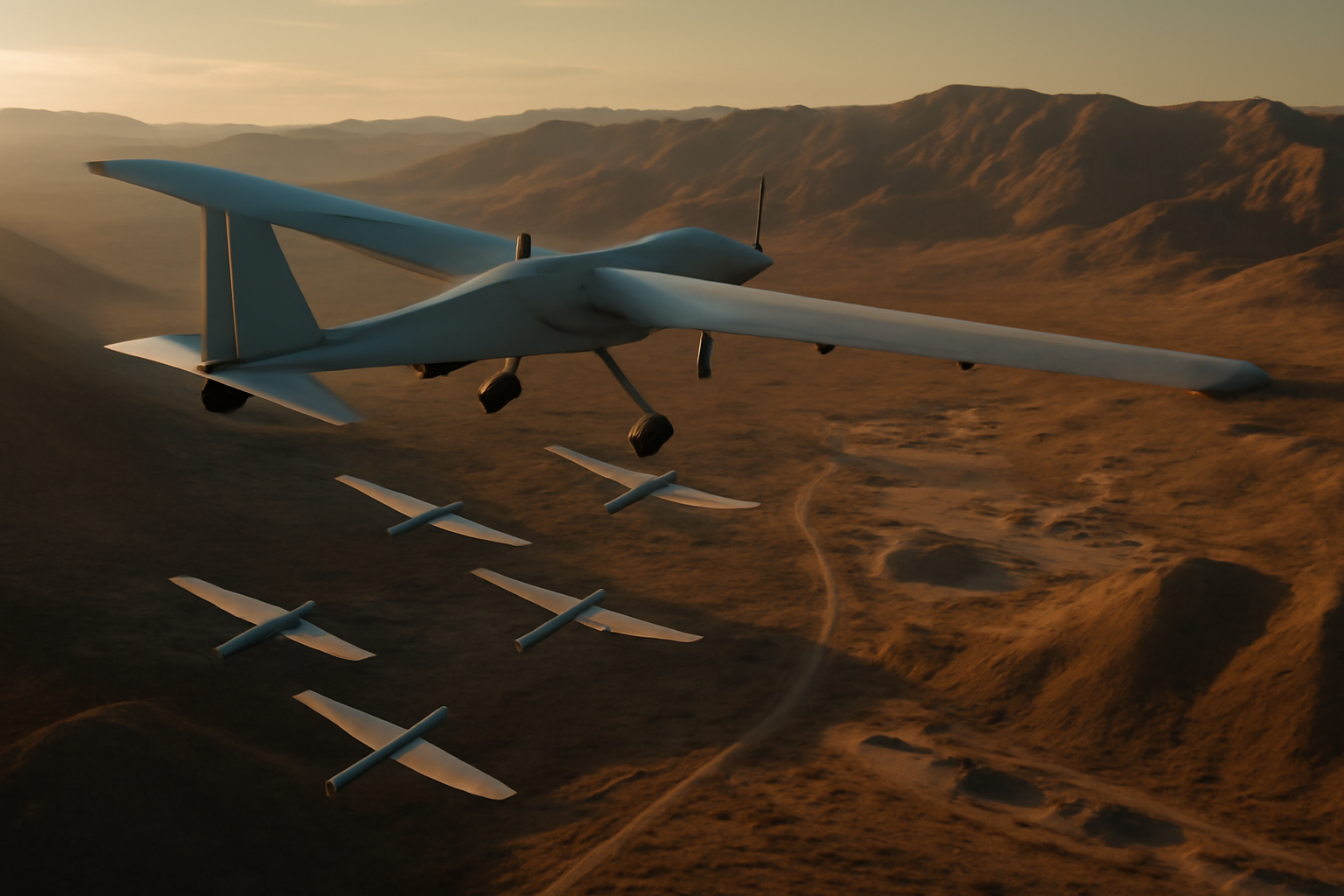
The Aerosonde Drone Mothership operates on a revolutionary principle: instead of launching reconnaissance drones from fixed ground stations or mobile units with limited range, the mothership serves as an airborne platform that can deploy smaller SPARTA drones deep into target areas. This concept fundamentally changes the tactical equation by eliminating the geographical constraints that traditionally limit drone operations. The mothership itself can fly to strategic positions while carrying multiple drone payloads, then release them for independent reconnaissance missions.
This dual-system approach combines the endurance and payload capacity of a larger carrier aircraft with the agility, speed, and precision of smaller tactical drones. The mothership acts as a mobile command hub, maintaining communication links with deployed drones while simultaneously serving as a launch and recovery platform. By leveraging this layered deployment strategy, the US Army can achieve significantly greater coverage areas and maintain persistent surveillance capabilities over extended periods without requiring additional ground infrastructure or support bases.
The integration of SPARTA technology into the Aerosonde platform demonstrates how traditional aerospace engineering principles can be adapted for modern military reconnaissance needs. The system’s design prioritizes reliability, ease of operation, and seamless integration with existing Army command and control infrastructure, making it a practical solution for immediate operational deployment.
Extended Range and Operational Flexibility
One of the most significant advantages of the Aerosonde Mothership system is its dramatically extended operational range compared to conventional drone deployments. Traditional ground-launched reconnaissance systems face inherent limitations based on line-of-sight communication, battery endurance, and the physical distance from launch sites to target areas. The mothership concept overcomes these constraints by positioning launch and recovery capabilities directly above or near operational zones of interest.
With the ability to carry multiple SPARTA drones, the Aerosonde Mothership enables simultaneous multi-area surveillance operations that would require numerous separate drone sorties using conventional systems. This multiplier effect translates directly into enhanced situational awareness and more comprehensive intelligence collection. Army commanders gain access to real-time data from multiple vantage points and locations, enabling more informed tactical decision-making and improved response capabilities in dynamic operational environments.
The extended range capabilities also reduce the logistical burden on forward-deployed units. Instead of requiring multiple staging areas, supply lines, and technical support personnel distributed across a wide geographical area, units can consolidate operations around the Aerosonde Mothership platform. This consolidation improves operational security, reduces the footprint of Army installations in theater, and decreases the overall resource requirements for sustained reconnaissance operations.
Military Reconnaissance and Intelligence Applications
The Aerosonde Mothership system addresses critical intelligence, surveillance, and reconnaissance (ISR) requirements across multiple military domains. Army intelligence teams can deploy the system to gather real-time data on enemy positions, movement patterns, supply lines, and defensive installations. The SPARTA drones, once deployed from the mothership, can conduct detailed area surveillance, target identification, and battle damage assessment missions with greater precision and flexibility than larger, more visible platforms.
The system’s capability to maintain persistent surveillance represents a substantial improvement in tactical situational awareness. Rather than conducting discrete reconnaissance missions with identifiable patterns and timing, the Aerosonde Mothership enables continuous monitoring of high-priority areas. This continuous presence allows military commanders to detect threats in real-time, track the movement of hostile forces, and provide immediate intelligence support to ground units engaged in active operations.
Furthermore, the modular nature of the SPARTA drones allows for mission-specific payload configurations. Depending on operational requirements, the drones can be equipped with high-resolution imaging systems, infrared sensors, electronic warfare packages, or communications relay equipment. This versatility ensures that the system remains effective across a diverse range of military scenarios, from conventional force-on-force engagements to counterinsurgency operations and security force assistance missions.
Strategic Advantages for Army Operations
The adoption of Aerosonde’s mothership technology provides the US Army with several strategic advantages in an increasingly complex security environment. First, the system enhances force protection by enabling commanders to gather intelligence from standoff distances, reducing the exposure of manned platforms and personnel to hostile fire. Second, the rapid deployment capability of the Aerosonde platform allows Army units to respond quickly to emerging intelligence requirements without the delays associated with requesting support from higher echelons or distant command centers.
Third, the system’s integration with existing Army command and control networks ensures seamless data flow between reconnaissance platforms, tactical operations centers, and forward-deployed units. This interoperability is essential for modern military operations, where speed of information transmission directly correlates with operational success. The Aerosonde Mothership system is designed with these integration requirements in mind, allowing rapid incorporation into existing Army IT infrastructure and doctrine.
The scalability of the system also provides significant strategic value. Army units can operate single Aerosonde platforms for limited reconnaissance requirements, or can integrate multiple motherships for large-scale operations requiring extensive area coverage. This scalability ensures that the investment in Aerosonde technology provides value across the full spectrum of Army operations, from small unit patrols to major tactical operations involving brigade-level or larger force structures.
Key Takeaways
Essential Intelligence
- Aerosonde’s mothership platform extends reconnaissance range by deploying multiple SPARTA drones from airborne positions, eliminating geographical constraints of ground-based systems.
- The system enables persistent, multi-area surveillance simultaneously, providing US Army commanders with real-time intelligence from multiple vantage points without additional staging areas or infrastructure.
- SPARTA drones support diverse mission payloads from high-resolution imaging to electronic warfare, delivering flexible ISR capabilities across conventional and counterinsurgency operations.
The Aerosonde Drone Mothership represents a paradigm shift in how the US Army approaches reconnaissance and intelligence gathering. By combining the endurance and payload capacity of a large aerial platform with the agility and precision of smaller tactical drones, this system delivers capabilities that significantly exceed what either platform could achieve independently. The SPARTA drones, deployed from the Aerosonde mothership, extend operational range, improve mission efficiency, and provide commanders with unprecedented flexibility in intelligence collection.
As military operations continue to evolve toward more distributed, information-centric models, systems like the Aerosonde Mothership will play an increasingly critical role in maintaining American military superiority. The technology demonstrates how innovation in unmanned systems can directly translate into improved force protection, enhanced situational awareness, and more effective command decision-making. For the US Army and the broader Department of Defense, the integration of this system represents a significant investment in future capability that addresses real operational requirements in the current security environment. The successful deployment and operational integration of the Aerosonde Mothership platform signals a new era in military reconnaissance, where mothership-based drone deployment becomes a standard operational capability for advanced military forces worldwide.