HIGHLIGHTS
- Penn State’s undergraduate aerospace engineering team secured third place in a major flight design competition, demonstrating exceptional innovation in advanced aircraft design.
- Student-led projects in eVTOL and flight design are gaining prominence in engineering competitions, signaling industry interest in developing the next generation of air mobility engineers.
- University competitions serve as critical pipelines for talent recruitment, allowing aerospace companies to identify promising engineers early in their careers.
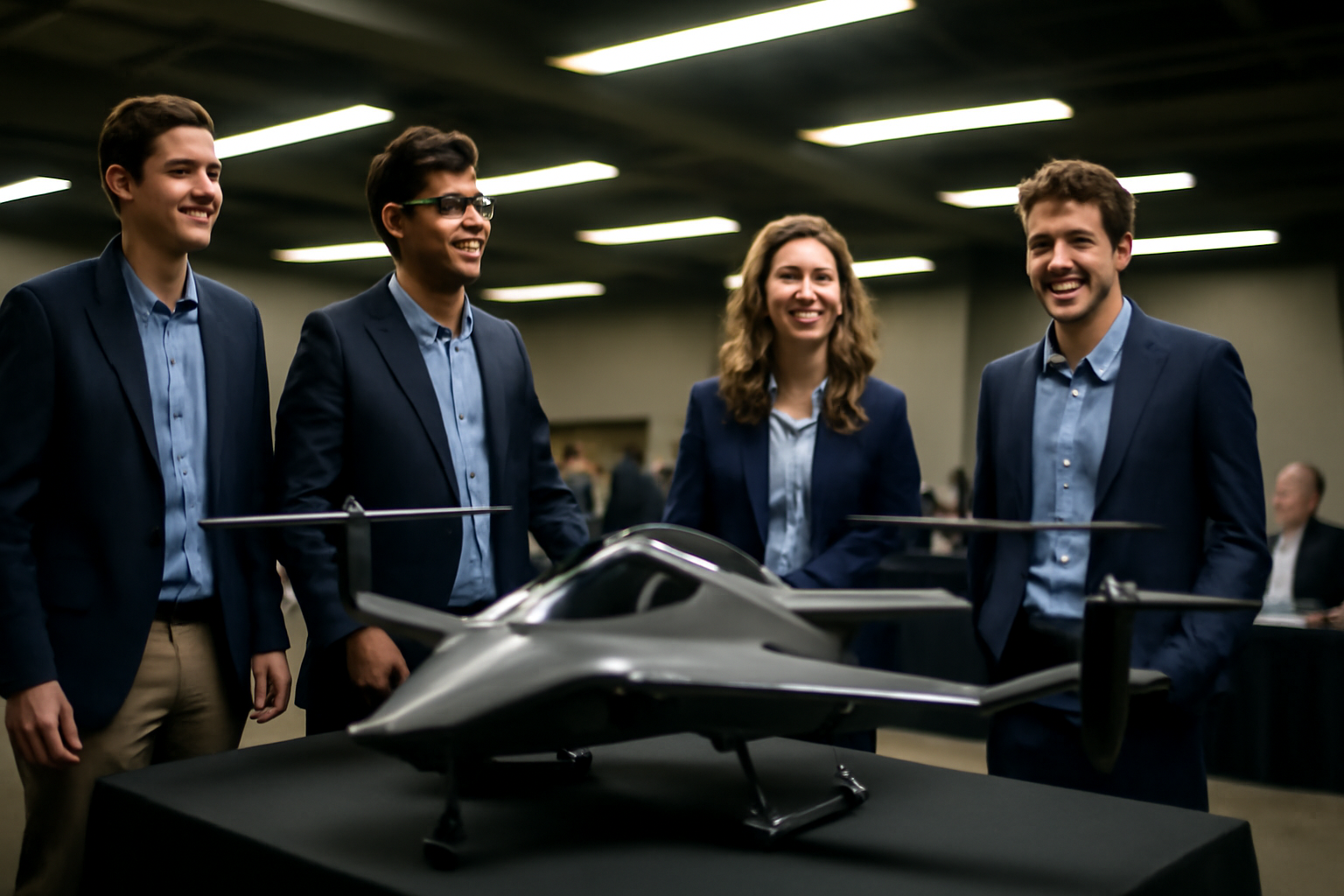
Penn State University’s aerospace engineering undergraduate team has earned recognition on the national stage, securing third place in a prestigious flight design competition. This achievement highlights the growing momentum of student-led innovation in the personal air mobility sector and underscores the critical role that university programs play in advancing eVTOL and electric aircraft technology. The competition victory represents more than a trophy—it reflects months of dedication, technical expertise, and forward-thinking design philosophy among some of the industry’s brightest emerging engineers.
Penn State’s Winning Flight Design Approach
The Penn State team demonstrated exceptional competency in addressing the complex engineering challenges inherent to modern aircraft design. Their third-place finish places them among the most accomplished undergraduate teams in the competition, competing against programs from universities across the country. The students’ ability to balance theoretical aeronautical principles with practical manufacturing constraints showcased a maturity in engineering thinking that impressed the panel of industry judges.
The competition required teams to design, build, and test aircraft that meet stringent performance criteria while adhering to strict budget and weight limitations. Penn State’s approach likely emphasized efficiency in power systems, structural optimization, and aerodynamic refinement—core competencies essential for next-generation eVTOL platforms. This comprehensive design methodology mirrors the interdisciplinary challenges faced by commercial manufacturers developing electric vertical takeoff aircraft for urban air mobility networks.
By participating in such competitions, Penn State’s students gain hands-on experience that textbooks alone cannot provide. They learn to navigate trade-offs between performance, cost, reliability, and manufacturability—the exact decisions that define success in the aerospace industry. This practical foundation positions these undergraduates to immediately contribute to professional teams upon graduation.
The Role of University Competitions in Industry Development
Flight design competitions have become vital breeding grounds for innovation in personal air mobility. These events bring together the brightest student minds with mentorship from faculty and industry professionals, creating an environment where experimental ideas can be tested rigorously. Companies like Joby Aviation, Lilium, and other eVTOL manufacturers actively scout universities for talent, recognizing that competition participants often possess both technical skills and entrepreneurial drive.
University programs focusing on eVTOL design and electric propulsion systems have expanded significantly over the past five years. Schools like MIT, Caltech, and Penn State have established dedicated labs and research centers for personal air mobility technologies. These institutional commitments signal that electric vertical takeoff and landing is no longer a niche research area but a legitimate engineering discipline warranting serious academic investment.
Penn State’s aerospace engineering department ranks among the nation’s most respected, consistently producing graduates who go on to leadership roles at NASA, the FAA, and major aerospace contractors. The third-place finish in this particular competition reinforces the department’s reputation for excellence and its status as a pipeline for air mobility innovation. For prospective engineering students interested in the eVTOL sector, Penn State’s demonstrated success on the competitive stage provides strong evidence of world-class education and mentorship.
Building Tomorrow’s Air Mobility Workforce
The personal air mobility industry faces a critical talent shortage. As companies scale from prototype development to commercial production, they urgently need engineers with practical experience in advanced propulsion, battery systems, autonomous flight, and regulatory compliance. University competitions like the one Penn State’s team entered serve as audition stages where emerging engineers demonstrate their readiness for professional challenges.
Student-led projects naturally cultivate problem-solving skills and resilience. When a design fails testing or a component doesn’t meet specifications, student teams must diagnose the issue, redesign, and iterate—precisely the agile engineering methodology that defines modern aerospace development. This iterative experience is invaluable and difficult to replicate in traditional classroom settings. Companies hiring from competition-winning teams gain employees who have already proven their ability to deliver under pressure and adapt when plans don’t unfold as anticipated.
Penn State’s third-place achievement also carries symbolic weight within the student community. It validates the choice that many engineering undergraduates make to pursue aerospace rather than lucrative tech industry roles. For students passionate about transportation transformation and sustainable aviation, seeing peer teams succeed in high-profile competitions reinforces that meaningful careers exist at the intersection of innovation and public benefit.
Electric Aviation and the Competitive Landscape
The flight design competition itself likely emphasized sustainability metrics and electric propulsion efficiency—hallmarks of modern aerospace competitions reflecting industry priorities. As regulatory frameworks for eVTOL operations continue to mature in the United States and internationally, the technical demands on aircraft designers intensify. Competitions push students to anticipate these regulatory requirements and design systems that exceed baseline safety and performance standards.
Penn State’s third-place finish places the team in elite company within the undergraduate aerospace community. The competition presumably included entries from programs at prestigious universities with strong aerospace traditions, making third place a significant achievement. This competitive environment mirrors the real-world dynamics of the commercial eVTOL sector, where multiple companies pursue similar goals using slightly different technological approaches and business models.
The knowledge and experience gained by Penn State’s team will likely influence their career trajectories. Some may go on to founding roles in eVTOL startups, others to engineering leadership at established aerospace companies. The network of relationships forged during competition—with teammates, mentors, industry judges, and peers from other universities—often leads to professional collaborations that span decades. The third-place trophy will sit in the Penn State aerospace department, but the real prize is the human capital developed through the competition process.
Industry Implications and Future Outlook
Penn State’s achievement in this high-profile flight design competition signals that American universities continue to produce world-class aerospace talent. As the personal air mobility market develops, the availability of skilled engineers will be a determining factor in which companies achieve commercial success. Universities like Penn State that maintain strong traditions of competition success and research excellence provide a strategic advantage to the companies that recruit their graduates.
The eVTOL industry’s timeline to commercial deployment depends on numerous factors—regulatory approval, infrastructure development, public acceptance—but engineering quality is non-negotiable. Students like those on Penn State’s competition team represent the baseline competency level required for the industry to succeed. Their ability to design, build, and test novel aircraft systems ensures that commercial eVTOL operators will have access to crews with deep technical foundations and proven problem-solving capabilities.
Looking forward, we can expect university competitions to become even more central to industry talent development. As eVTOL companies mature and production ramps, the demand for engineers will skyrocket. Universities that excel in student competitions—like Penn State—will see their graduates commanding premium roles and accelerating career advancement. The third-place finish is not an ending but a beginning for Penn State’s winning team members and the contributions they will make to transforming personal air mobility.
Key Takeaways: Penn State’s Competition Success and the Future of Air Mobility Engineering
- University flight design competitions are becoming critical talent pipelines for the eVTOL industry, with winning teams gaining immediate recognition from major air mobility companies.
- Penn State’s third-place achievement demonstrates that American aerospace programs continue to produce world-class engineers capable of advanced aircraft design and rapid iteration.
- Student-led projects in electric vertical takeoff technology serve as both a training ground for emerging engineers and a real-world testing laboratory for concepts that may shape commercial air mobility systems.
Penn State’s aerospace engineering undergraduates have earned their place among the nation’s leading student aircraft design teams. Their third-place finish in a prestigious flight design competition reflects years of academic rigor, faculty mentorship, and peer collaboration. As the personal air mobility industry continues its rapid expansion, these students and their peers from similarly accomplished programs will form the foundation of engineering teams that bring eVTOL systems to commercial reality. The competition victory today will likely lead to career opportunities and innovations that shape air transportation for decades to come. The future of electric aviation is being built, in part, by student engineers at universities like Penn State who combine ambition, technical skill, and dedication to solving transportation’s most complex challenges.