HIGHLIGHTS
- Greenfield vertiports eliminate infrastructure constraints by enabling purpose-built facilities optimized from scratch for high-frequency eVTOL operations with integrated charging and maintenance systems.
- Strategic placement outside urban cores balances operational efficiency with regulatory approval while creating dedicated airspace corridors that gain public acceptance for commercial air mobility.
- Purpose-built infrastructure accelerates standardization across networks, simplifies regulatory certification, and reduces operational costs through unified design and integrated renewable energy systems.
The evolution of urban air mobility depends critically on infrastructure development, and greenfield vertiports represent a paradigm shift in how we approach eVTOL operations. Unlike retrofitting existing airports or cramped urban centers, greenfield vertiports offer developers a blank canvas to design purpose-built facilities optimized for electric vertical takeoff and landing aircraft. This approach addresses one of the most significant barriers to commercial eVTOL deployment: the lack of dedicated, accessible landing and charging infrastructure.
Understanding Greenfield Vertiport Development
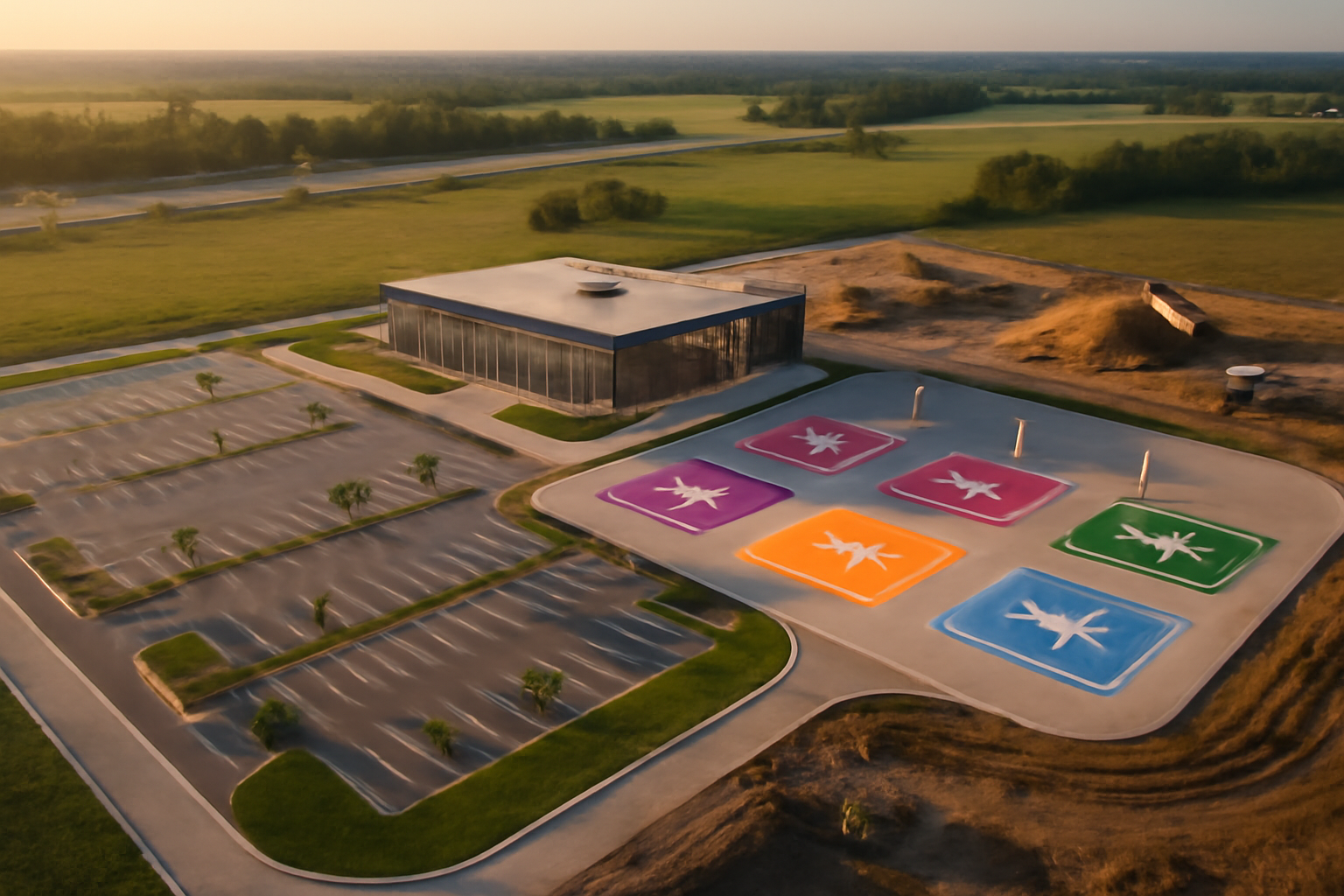
Greenfield sites represent undeveloped land where vertiport operators can construct facilities from the ground up without the constraints of existing infrastructure or urban zoning challenges. This approach offers unprecedented flexibility in designing efficient, safe, and scalable eVTOL operations centers. Unlike urban rooftop vertiports or modified conventional airports, greenfield vertiports can be engineered with purpose-built layouts that prioritize aircraft handling, passenger flow, and energy management.
The strategic placement of greenfield vertiports near metropolitan areas—but outside congested urban cores—creates optimal conditions for point-to-point air mobility networks. These facilities can be positioned to serve commuter corridors, airport shuttle routes, and inter-city connections that form the backbone of commercial eVTOL business models. Developers have the freedom to implement cutting-edge safety systems, advanced air traffic management protocols, and comprehensive ground infrastructure without navigating decades of legacy constraints.
By establishing vertiports on greenfield sites, operators can create controlled, dedicated airspace corridors that minimize conflicts with traditional aviation and reduce noise exposure for residential areas. This strategic siting approach is increasingly viewed as essential for gaining public acceptance and regulatory approval for widespread eVTOL deployment.
Infrastructure and Design Advantages
Greenfield vertiports enable operators to implement purpose-designed layouts that accommodate high-frequency aircraft movements, efficient passenger processing, and rapid turnaround times between flights. These facilities can integrate advanced charging infrastructure, vehicle maintenance bays, and weather monitoring systems as core components rather than afterthoughts. The ability to design infrastructure from scratch allows operators to optimize every element for eVTOL operations, from taxiway configurations to charging pad arrangements.
Energy infrastructure represents a critical advantage of greenfield development. Purpose-built vertiports can be equipped with dedicated power distribution systems, on-site battery storage, renewable energy integration, and advanced grid management capabilities. This eliminates the bottleneck of retrofitting power systems in congested urban areas and enables operators to scale charging capacity according to operational growth. Some greenfield vertiports are being designed with integrated solar installations and energy management systems that reduce operational costs and environmental impact.
Environmental considerations also favor greenfield development when sites are selected thoughtfully. Rather than densifying urban airspace or disrupting existing communities, greenfield vertiports can be positioned to minimize noise exposure and environmental disruption. These facilities can incorporate noise abatement features, wildlife protection measures, and landscaping that integrates the infrastructure into the surrounding environment while maintaining operational efficiency.
Regulatory and Operational Benefits
Regulators view greenfield vertiports as opportunities to establish comprehensive operating standards before congestion and ad-hoc solutions emerge. These purpose-built facilities allow aviation authorities to work with operators from the design phase, integrating safety systems, traffic management protocols, and emergency procedures into the infrastructure itself. This proactive regulatory approach accelerates certification and reduces the bureaucratic obstacles that typically slow innovative transportation solutions.
Operational standardization across greenfield vertiports creates efficiencies that benefit multiple eVTOL operators. When facilities share common design principles, pilots require less retraining when transitioning between locations, maintenance teams can deploy standardized procedures, and passengers experience consistent interfaces across different vertiport networks. This standardization also simplifies air traffic management and reduces the complexity of integrating multiple private operators into a cohesive network.
Insurance and liability frameworks benefit from the controlled environment that greenfield vertiports provide. Dedicated facilities with professional management, comprehensive safety systems, and integrated emergency response capabilities present lower risk profiles than ad-hoc rooftop operations or modifications to conventional infrastructure. This risk reduction translates to more favorable insurance premiums and lower operational costs, making eVTOL services more economically viable.
Market and Connectivity Applications
Greenfield vertiports create economic opportunities for regions seeking to position themselves as hubs in the emerging air mobility economy. By developing dedicated infrastructure now, communities can attract eVTOL operators, generate employment, and establish themselves as innovation leaders. Strategic siting of greenfield vertiports near major employment centers, universities, and research facilities creates synergies that accelerate technology development and commercial deployment.
Point-to-point connectivity is enhanced when vertiports are positioned strategically on greenfield sites that optimize travel corridors. Rather than forcing eVTOL operations to follow conventional airport patterns, greenfield vertiports enable operators to design networks around actual passenger demand and travel patterns. This flexibility allows eVTOL services to address specific commuter routes, business district connections, and regional airport access in ways that maximize operational efficiency and passenger utility.
Inter-city connectivity particularly benefits from greenfield vertiport networks positioned between metropolitan areas. These facilities serve as interchange hubs where passengers transition between ground transportation and air mobility services. When designed from the beginning with this role in mind, greenfield vertiports can integrate seamlessly with transit systems, provide adequate parking and transfer facilities, and establish themselves as critical nodes in regional transportation networks.
Future-Proofing Air Mobility Infrastructure
Building vertiports on greenfield sites today creates flexibility for technological evolution and operational scaling tomorrow. As eVTOL aircraft mature, charging technology advances, and operational procedures evolve, purpose-built infrastructure can be upgraded and adapted more easily than retrofitted facilities. Greenfield vertiports designed with modularity and scalability in mind can accommodate larger aircraft, faster charge rates, and higher traffic volumes as the market matures.
Cybersecurity and operational technology integration benefit from ground-up infrastructure design. Greenfield vertiports can implement modern digital systems, cybersecurity protocols, and smart infrastructure management from inception, avoiding the legacy technology debt that complicates retrofitted facilities. This enables sophisticated air traffic management, real-time operational optimization, and advanced passenger services that leverage the full potential of connected, digital vertiport ecosystems.
Environmental monitoring and sustainability goals are more easily achieved when vertiports are purpose-designed with these objectives integrated from the planning phase. Greenfield sites enable operators to implement comprehensive environmental management systems, water conservation measures, wildlife protection protocols, and carbon-neutral operational frameworks that align with climate commitments and community expectations.
Key Takeaways from Greenfield Vertiport Development
- Greenfield vertiports eliminate infrastructure constraints, enabling purpose-built facilities optimized for high-frequency eVTOL operations with integrated charging, maintenance, and air traffic management systems.
- Strategic placement of greenfield sites outside congested urban areas balances operational efficiency with regulatory approval and public acceptance, while creating dedicated airspace corridors for safe commercial deployment.
- Greenfield development accelerates standardization across networks, simplifies regulatory certification, and reduces operational costs through unified design principles and integrated renewable energy systems.
Greenfield vertiports represent more than just construction projects—they symbolize the infrastructure revolution required to transform personal air mobility from concept to mainstream reality. By developing purpose-built facilities optimized for eVTOL operations, strategically positioned to serve real transportation demand, and designed with future scalability in mind, the aviation industry is creating the foundation for sustainable, efficient air mobility networks. As more greenfield vertiport projects advance toward completion, they will demonstrate the technical and operational feasibility of commercial eVTOL services while establishing the standardized infrastructure platforms that multimodal transportation networks require. The decisions made today in planning and designing these facilities will shape the trajectory of urban air mobility for decades to come.