HIGHLIGHTS
- Skyfly secures $10M to accelerate Axe eVTOL certification and move toward commercial launch, signaling investor confidence in accessible personal air mobility.
- The Axe prioritizes practical design and consumer accessibility over extreme performance, targeting mainstream buyers and professional operators rather than luxury-only markets.
- Regulatory pathways are solidifying globally, enabling companies like Skyfly with credible certification plans to attract strategic capital and move closer to real commercialization within 24-36 months.
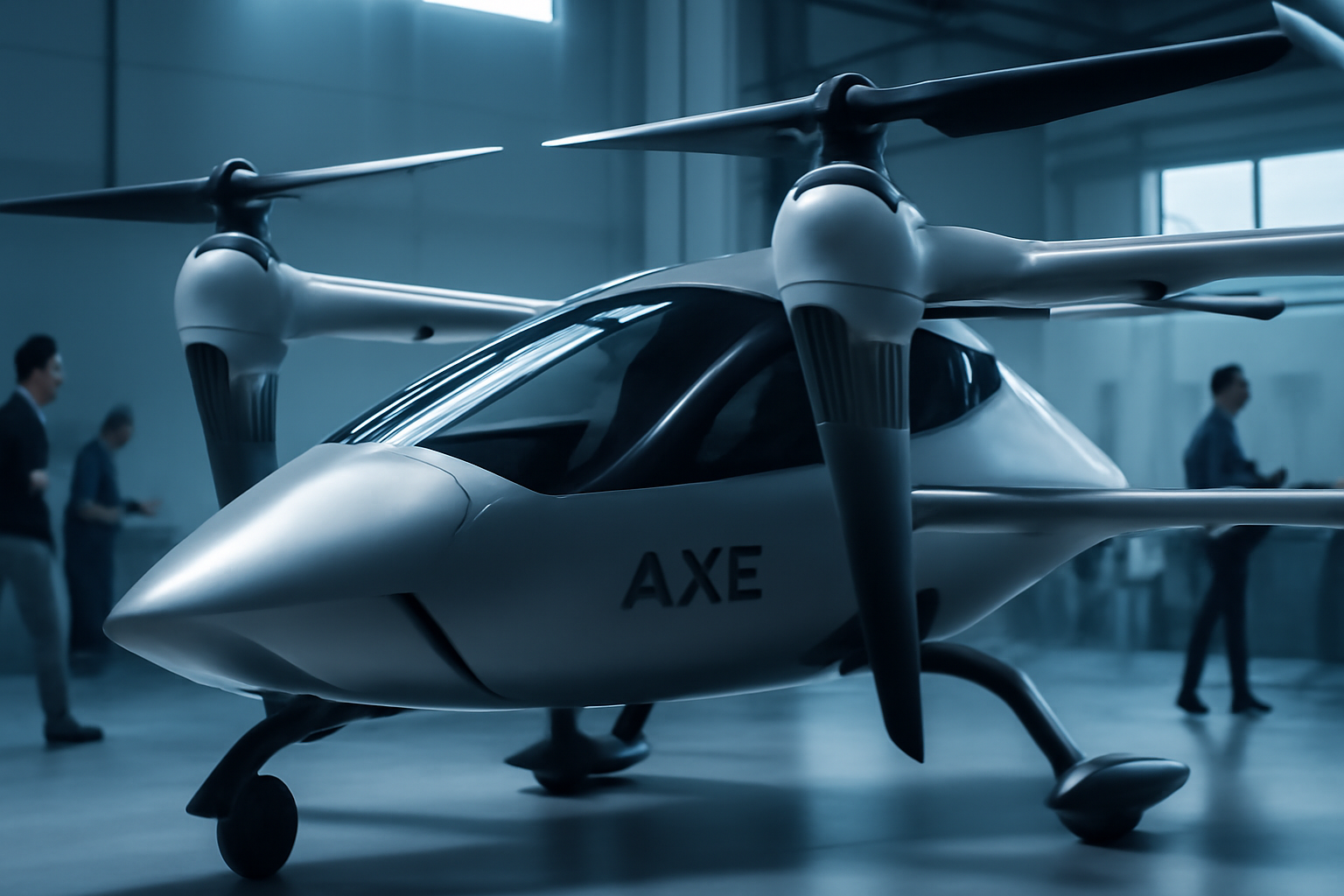
Skyfly has just announced a significant $10 million funding round, positioning itself as a serious contender in the rapidly expanding personal air mobility market. The investment marks a crucial milestone for the company’s flagship product, the Axe eVTOL, which promises to democratize urban air transportation and bring personal electric vertical takeoff and landing aircraft within reach of everyday consumers.
Skyfly’s Vision for Accessible Air Mobility
The founding vision behind Skyfly centers on a straightforward yet ambitious goal: make personal eVTOL ownership accessible and affordable for mainstream consumers. Rather than positioning their aircraft as luxury goods for the ultra-wealthy, Skyfly has engineered the Axe to deliver practical performance at a competitive price point. This approach directly challenges the established narrative that personal air mobility must remain an exclusive, high-cost endeavor.
The Axe represents years of engineering refinement, blending innovative design with proven eVTOL technology to create an aircraft that balances performance, safety, and operability. The company’s focus on user-centric design means that even pilots without extensive aviation backgrounds can realistically operate these vehicles. This democratization philosophy extends throughout Skyfly’s entire product ecosystem and business model.
With this new $10 million capital injection, Skyfly has the resources to accelerate development timelines, expand its team, and push toward regulatory certification milestones. The funding validates investor confidence in both the Axe’s technical viability and the market demand for consumer-grade personal air mobility solutions.
The Axe: Engineering Personal Air Mobility
The Axe eVTOL stands out in a crowded field of advanced aircraft concepts by prioritizing practical functionality and manufacturability. Unlike some competitors focused on pushing technological boundaries, Skyfly has taken a pragmatic approach: deliver a vehicle that works reliably, serves real transportation needs, and can be built at scale without astronomical price tags.
Key specifications and design features reflect this practical philosophy. The aircraft integrates electric propulsion systems designed for efficiency and range, enabling meaningful point-to-point transportation rather than brief joy rides. The Axe’s configuration prioritizes stability and intuitive controls, reducing the training requirements for new pilots and making routine operations straightforward even in challenging conditions.
Safety engineering sits at the core of the Axe’s design architecture. The aircraft incorporates redundant systems across critical functions, failsafe battery management, and automated emergency protocols. These features aren’t afterthoughts but fundamental design considerations that appeal to both regulatory authorities and cautious consumers evaluating whether to adopt personal air mobility.
Funding Dynamics in the Personal Air Mobility Sector
Skyfly’s $10 million raise occurs within a broader context of intensifying venture capital interest in eVTOL and personal air mobility technologies. The investment landscape for these companies has shifted dramatically over the past two years, with early-stage funding becoming more selective while strategic investors increasingly focus on companies demonstrating realistic paths to certification and commercialization.
This particular funding round signals investor confidence that Skyfly has moved beyond the prototype phase into serious development and certification preparation. The capital will likely fund multiple work streams: continued engineering refinement, regulatory compliance documentation, manufacturing process development, and market preparation activities.
The $10 million figure, while substantial, reflects the evolving maturity of the sector. Early-stage eVTOL companies once pursued mega-rounds of $50+ million; increasingly, well-executed companies raise more modest but meaningful amounts matched to specific development milestones. This shift suggests a maturing market where capital deploys more deliberately against measurable technical and regulatory progress.
Regulatory Pathways and Certification Timeline
As Skyfly accelerates the Axe toward commercialization, the company must navigate complex regulatory frameworks established by aviation authorities worldwide. In the United States, the Federal Aviation Administration (FAA) has been developing special airworthiness certificates for eVTOL aircraft, creating a defined pathway for emerging vehicle types. Similar regulatory frameworks are developing in Europe, Asia, and other markets where Skyfly intends to operate.
Obtaining certification represents both a technical and administrative challenge. Skyfly must demonstrate that the Axe meets or exceeds safety standards established for manned aircraft while accounting for novel design features and operational profiles. The company must also document manufacturing processes, pilot training curricula, and operational procedures that regulators will scrutinize before approving commercial deployment.
The funding announcement likely signals that Skyfly has achieved sufficient technical maturity to pursue formal certification conversations with the FAA and corresponding international authorities. With $10 million dedicated to these efforts, the company can support parallel workstreams: continuing engineering validation while simultaneously building the certification documentation package that regulatory bodies require.
Market Dynamics and Consumer Demand
Personal air mobility exists at the intersection of several major transportation and technology trends: urban congestion, electrification momentum, automation advancement, and consumer appetite for innovative mobility solutions. Skyfly positions the Axe to capture emerging demand across multiple use cases: individual commuting, point-to-point business travel, recreational aviation, and emergency response applications.
The addressable market for personal eVTOL aircraft remains somewhat speculative, but analysts project significant growth potential once regulatory frameworks solidify and production scales. Early adopters will likely include affluent professionals valuing time savings, technology enthusiasts seeking cutting-edge transportation, and perhaps emergency services and remote access operators needing reliable vertical mobility.
Skyfly’s decision to target the “accessible” market segment rather than pure luxury positioning creates interesting competitive dynamics. The company faces competition from established aerospace firms, ambitious startups, and international players all vying for market share in emerging personal air mobility categories. The $10 million funding enables Skyfly to move faster than some competitors and build brand recognition among potential customers.
Key Takeaways: Skyfly’s Path Forward
- Skyfly’s $10 million funding round accelerates the Axe eVTOL toward regulatory certification and commercial deployment, demonstrating investor confidence in the company’s technical approach and market opportunity.
- The Axe prioritizes practical, accessible personal air mobility rather than extreme performance, positioning the aircraft to appeal to mainstream consumers and professional operators across multiple use cases.
- With regulatory frameworks gradually solidifying globally, companies like Skyfly that demonstrate credible certification pathways are attracting strategic capital and moving closer to meaningful commercialization timelines.
Skyfly’s $10 million funding announcement represents a significant milestone for personal air mobility commercialization. The capital injection enables the company to accelerate engineering, pursue regulatory certification, and prepare manufacturing operations for the Axe eVTOL. As regulatory frameworks continue maturing and technical demonstrations accumulate, companies like Skyfly that combine practical design philosophy with serious capital backing may successfully bring personal air mobility from promise to reality. The coming months will reveal whether the Axe’s accessible positioning and technical approach can deliver on the vision of personalized urban air transportation.