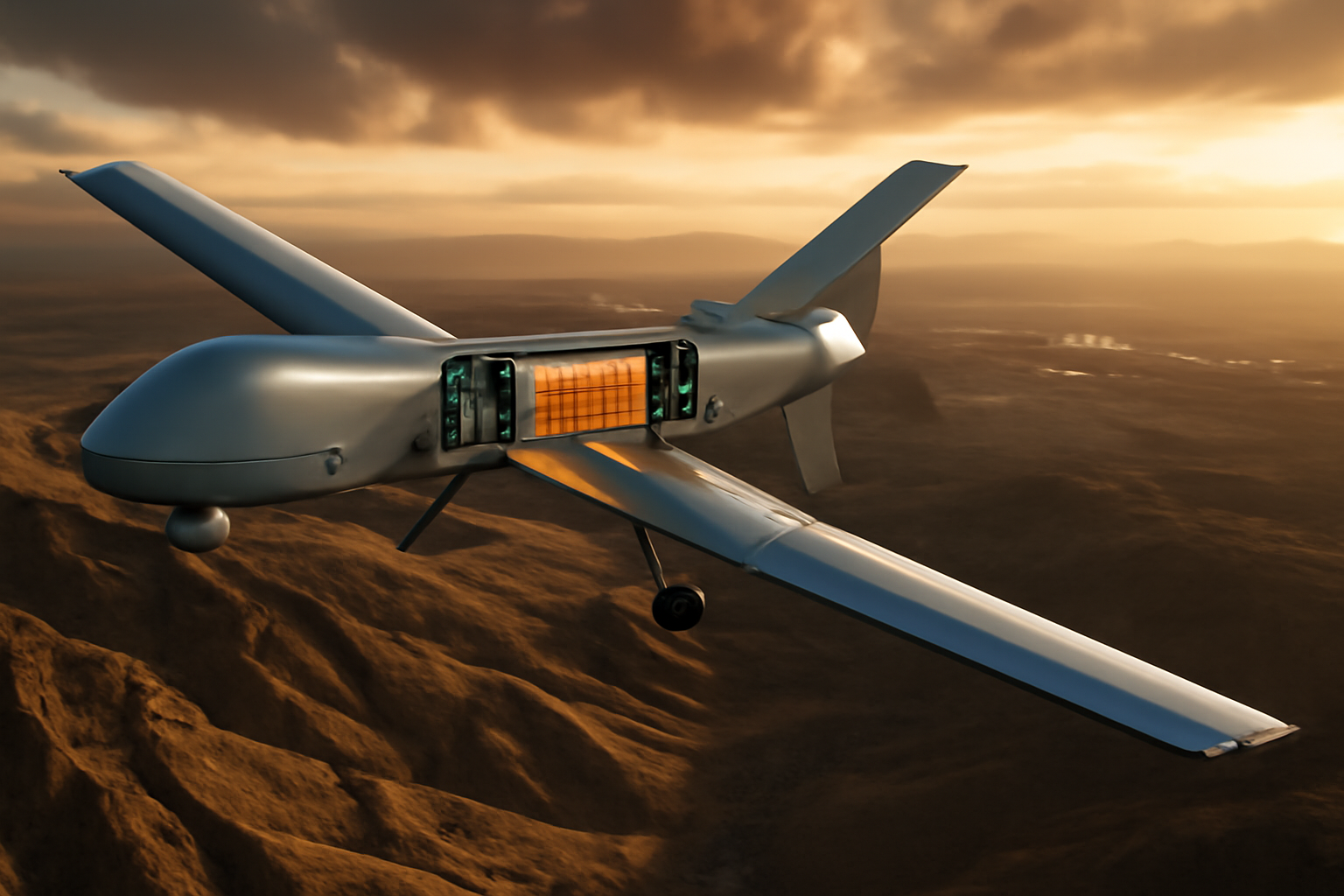
HIGHLIGHTS
- Drones have officially become the largest driver of battery demand in the global defense industry, according to Benchmark Source’s 2026 analysis.
- Military-grade battery requirements are creating premium-priced market segments, accelerating innovation in advanced chemistries and ruggedized pack designs.
- Defense-driven battery demand may constrain commercial EV supply chains short-term, but military innovation ultimately accelerates technological advancement across all air mobility sectors.
The defense industry is undergoing a profound transformation, with drones now emerging as the largest driver of battery demand. According to recent analysis from Benchmark Source, this 2026 trend reflects a fundamental shift in military procurement priorities and technology investment strategies across global defense sectors. The growing reliance on unmanned systems has created unprecedented demand for high-performance battery technologies, reshaping the entire EV and energy storage supply chain.
The Rise of Drones in Military Operations
Unmanned aerial systems have revolutionized modern warfare and defense operations over the past two decades. From reconnaissance missions to autonomous delivery systems, drones have proven their value across countless military applications worldwide. This expanded operational scope has driven governments and defense contractors to invest heavily in drone capabilities, creating a cascading effect on supporting technologies and infrastructure.
Military drone programs now span multiple branches of service, with each requiring increasingly sophisticated and capable systems. The U.S. Department of Defense, NATO allies, and other nations have committed billions to drone procurement and development. This investment momentum shows no signs of slowing, with strategic planners viewing unmanned systems as essential components of 21st-century defense architectures.
The diversification of drone applications—from tactical operations to long-endurance surveillance platforms—has created specialized requirements for power systems. Unlike commercial drones, military-grade unmanned systems demand batteries that can withstand extreme conditions, deliver reliable performance over extended missions, and integrate seamlessly with sophisticated onboard systems.
Battery Technology as the New Bottleneck
Energy storage has become the critical constraint limiting drone performance and operational effectiveness. Military planners recognize that battery capabilities directly impact mission duration, payload capacity, operational range, and overall system reliability. As drone designs become more ambitious, engineers consistently identify power systems as the limiting factor in achieving desired performance parameters.
Defense contractors are responding by prioritizing battery innovation across multiple chemistries and form factors. Lithium-ion technologies currently dominate military drone applications, but researchers are exploring solid-state batteries, advanced lithium-polymer formulations, and next-generation energy storage solutions. The competitive pressure to develop superior battery systems has accelerated research and development timelines across the industry.
This battery-centric focus has created significant market opportunities for specialized energy storage suppliers. Companies specializing in high-performance, ruggedized battery systems have experienced explosive growth in defense sector contracts. The surge in demand has tightened supply chains and elevated battery procurement costs, making energy storage one of the highest-value components in modern military drone systems.
Defense Budget Implications and Market Growth
The shift toward drone-driven battery demand reflects broader defense spending patterns and geopolitical dynamics. Military budgets worldwide have increased in recent years, with significant portions allocated to unmanned systems modernization and acquisition. Benchmark Source data indicates this trend will continue accelerating through the remainder of the 2020s, with battery demand scaling accordingly.
Defense procurement offices now prioritize battery specifications alongside traditional airframe and sensor requirements. This elevated focus has created distinct market segments for military-grade energy storage solutions. Suppliers capable of meeting rigorous defense standards, achieving security certifications, and delivering quantities at scale have gained substantial competitive advantages.
The financial implications extend beyond drone manufacturers to the entire battery supply chain. Mining operations, material refinement facilities, cell manufacturing plants, and pack assembly operations all benefit from surging defense sector demand. This vertical integration of demand has created economically significant opportunities across multiple tiers of the supply chain.
Implications for the Broader EV and Air Mobility Sectors
The defense industry’s outsized battery demand carries important implications for the broader electric vehicle and personal air mobility markets. As military procurement consumes increasing quantities of advanced battery cells and packs, competition for limited manufacturing capacity intensifies. This dynamic has the potential to drive battery prices up and constrain supply for commercial electric vehicle applications.
However, defense-driven battery innovation also benefits civilian markets. Technologies developed and refined for military applications often transition to commercial sectors once they mature and achieve cost reductions through economies of scale. Advanced thermal management, durability enhancements, and safety improvements pioneered for military drones frequently appear in commercial electric aircraft and EV products.
The surge in defense battery demand may accelerate global manufacturing capacity expansion. Battery factories currently under construction or planned may prioritize defense sector orders, but increased production capacity ultimately serves all market segments. This symbiotic relationship between military and commercial markets suggests that defense-driven growth could actually support faster scaling of civilian air mobility and EV adoption.
Key Takeaways from Defense Battery Demand Surge
- Drones have become the largest driver of battery demand within the global defense industry, reflecting military prioritization of unmanned systems and autonomous operations.
- Military-grade battery requirements are creating specialized market segments with premium pricing, driving innovation in advanced chemistries and ruggedized pack designs.
- Defense sector battery demand may constrain commercial EV supply chains in the near term, but defense-driven innovation ultimately accelerates technological advancement across all mobility sectors.
The emergence of drones as the primary battery demand driver in defense represents a watershed moment for the energy storage industry. Military procurement strategies are reshaping global battery markets, creating opportunities and challenges for suppliers across the ecosystem. As defense budgets continue funding drone modernization and expansion, the battery industry will experience sustained pressure to innovate, scale production, and meet increasingly demanding performance specifications. This trend underscores the critical importance of energy storage technology to future military capabilities while simultaneously highlighting the substantial commercial opportunities embedded within the defense sector’s transformation.