HIGHLIGHTS
- Governor DeSantis officially launches commercial flying car operations in Florida, marking the state’s entry into mainstream personal air mobility and positioning it as a global eVTOL pioneer.
- Strategic vertiport infrastructure and comprehensive FAA-coordinated regulatory frameworks enable safe eVTOL integration with existing air traffic systems across major urban corridors.
- Zero-emission operations deliver environmental benefits while creating significant job growth opportunities in manufacturing, maintenance, pilot training, and vertiport operations sectors.
Governor Ron DeSantis has officially unveiled Florida’s entry into the personal air mobility era, marking a transformative moment for transportation innovation in the state. This historic announcement signals not only a regulatory green light for electric vertical takeoff and landing (eVTOL) aircraft but also positions Florida as a pioneer in integrating flying cars into everyday transportation infrastructure. The initiative represents a culmination of years of planning, technological development, and regulatory groundwork that now allows residents and visitors to experience air mobility at unprecedented scale.
Florida’s Vision for Urban Air Mobility
Governor DeSantis’s unveiling of the flying car initiative demonstrates Florida’s commitment to positioning itself as a global leader in advanced transportation technologies. The state has recognized that personal air mobility represents the future of congestion relief and environmental sustainability, particularly in densely populated regions like Miami, Fort Lauderdale, and Orlando. By embracing eVTOL aircraft, Florida is actively shaping how millions of residents will commute and travel over the next decade.
The strategic importance of Florida’s decision extends beyond mere novelty. The state’s geography—with its flat terrain, numerous landing zones, and growing population—makes it an ideal proving ground for air mobility networks. Urban air mobility corridors connecting major business centers, airports, and residential hubs are being established to create a seamless transportation ecosystem that reduces ground congestion and travel times significantly.
This visionary approach aligns with Florida’s broader economic strategy to attract tech talent, innovation hubs, and forward-thinking businesses. By hosting operational flying car services, the state is creating an attractive environment for startups, established manufacturers, and investors interested in the eVTOL sector. The announcement underscores Florida’s determination to lead the transportation revolution rather than follow it.
Regulatory Framework and Infrastructure Development
The unveiling of flying cars in Florida was made possible through extensive collaboration between state regulators, the Federal Aviation Administration (FAA), and private sector partners. A comprehensive regulatory framework has been established to ensure safety, airspace management, and integration with existing air traffic control systems. This foundational work demonstrates that eVTOL operations can coexist safely with traditional aviation while providing new mobility options.
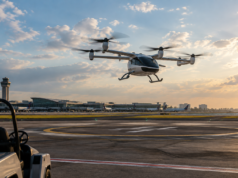
Infrastructure investments have been substantial, with designated vertiport locations being developed across key urban corridors. These facilities are specifically designed to accommodate electric aircraft operations, featuring charging stations, maintenance bays, and passenger terminals. The placement of these vertiports has been strategically planned to maximize accessibility while minimizing noise and safety impacts on surrounding communities.
Florida’s infrastructure development also includes updating communication systems and airspace management protocols to handle the increased traffic volume from eVTOL operations. These technological enhancements ensure that flying cars can operate efficiently while maintaining the highest safety standards. The investment in infrastructure demonstrates a long-term commitment to sustainable urban air mobility rather than a temporary experiment.
Environmental and Economic Impact
The introduction of electric flying cars to Florida’s transportation network carries significant environmental benefits. Unlike traditional helicopters or combustion-engine aircraft, eVTOL vehicles produce zero direct emissions and operate with substantially reduced noise levels. This makes them suitable for urban environments and aligns with Florida’s environmental goals, particularly in addressing air quality concerns in major metropolitan areas.
Economic projections suggest that the personal air mobility sector could generate substantial job growth across multiple industries. Manufacturing, maintenance, pilot training, vertiport operations, and software development all represent employment opportunities that will expand as the flying car market matures. Early adoption in Florida positions the state to capture a significant share of the emerging eVTOL ecosystem economy.
Tourism represents another economic advantage, with flying car experiences and air mobility services attracting visitors and generating new revenue streams for the state. The novelty and convenience of eVTOL transportation could become a signature Florida experience, similar to how other states have leveraged unique transportation innovations to boost tourism and economic development.
Consumer Experience and Market Growth
For Florida residents and travelers, the arrival of flying cars promises to transform commuting and transportation choices. Journey times between major cities could be reduced from hours to minutes, eliminating time spent in traffic congestion. This accessibility opens new possibilities for how people organize their daily lives, work schedules, and travel patterns.
Initial operations are expected to serve premium passenger segments, with ticket pricing reflecting the newness and limited capacity of the service. However, as the market expands, production increases, and operational efficiency improves, pricing is anticipated to decrease, making air mobility accessible to broader demographics over time. This trajectory mirrors the historical development of commercial aviation and other transportation innovations.
The consumer experience has been carefully designed to be intuitive and seamless, with booking platforms, app integration, and customer service standards comparable to modern ride-sharing services. Passengers can expect comfortable, climate-controlled cabins with advanced safety features and professional piloting, whether flights are autonomous or piloted by trained operators.
Challenges and Future Developments
Despite the optimistic launch, significant challenges remain to be addressed. Scaling operations, managing airspace complexity in increasingly crowded skies, and maintaining consistent safety records will be critical to sustained growth. Weather integration and adverse condition protocols must be refined as operational experience accumulates.
Public acceptance represents another important consideration, with noise concerns, safety perceptions, and equitable access to services requiring ongoing attention. Community engagement efforts and transparent communication about operations will be essential for building public trust and support for expanded air mobility networks.
Future developments likely include autonomous flight capabilities, expansion to additional vehicle types and sizes, and integration with ground transportation systems to create comprehensive multimodal networks. Innovation in battery technology and aircraft efficiency will continue to drive improvements in range, passenger capacity, and operational cost efficiency.
Key Takeaways
- Florida has officially launched commercial flying car operations under Governor DeSantis’s initiative, positioning the state as a pioneer in personal air mobility infrastructure and operations.
- A comprehensive regulatory framework and dedicated vertiport infrastructure have been developed to ensure safe eVTOL integration with existing air traffic systems and urban environments.
- The initiative promises environmental benefits through zero-emission operations, significant job creation, and new economic opportunities while reducing ground transportation congestion.
Florida’s flying car initiative represents a transformative moment for personal air mobility and urban transportation. As the state executes its vision for an integrated air mobility ecosystem, the outcome will likely influence adoption strategies and regulatory approaches across the United States and globally. The success of this endeavor could accelerate the timeline for mainstream eVTOL adoption while establishing Florida as the epicenter of the air mobility revolution. For HoverNews and the broader aerospace community, Florida’s bold move demonstrates that the future of transportation is no longer theoretical—it is operational, evolving, and reshaping how millions of people will move through their world.