HIGHLIGHTS
- Archer Aviation’s high-profile partnerships and pilot programs overshadow minimal operational revenue and ongoing cash burn, creating a significant gap between commercialization momentum and financial performance.
- FAA certification and regulatory pathways remain critical but unpredictable, with commercial operations potentially years away despite the company’s aggressive media and partnership announcements.
- Capital runway and cash burn rate are key investor metrics that must be independently evaluated from Archer’s compelling commercialization narrative to assess true execution capability.
Archer Aviation has emerged as one of the most visible players in the electric vertical takeoff and landing (eVTOL) market, capturing headlines with bold commercialization announcements, strategic partnerships, and pilot program launches. However, a closer examination of the company’s financial statements reveals a significant disconnect: the narrative of imminent commercial success is running substantially ahead of actual revenue generation and profitability metrics. For investors and industry observers, understanding this gap is crucial to evaluating whether Archer can bridge the chasm between operational milestones and financial reality.
The Commercialization Narrative Takes Flight
Archer Aviation has positioned itself aggressively in the race to establish urban air mobility corridors, particularly targeting routes connecting major metropolitan areas to regional airports. The company’s media presence has been bolstered by high-profile partnerships with ride-sharing platforms, tourism operators, and logistics companies interested in testing eVTOL services. These announcements generate investor enthusiasm and attract media coverage, positioning Archer as a leader in the emerging personal air mobility sector.
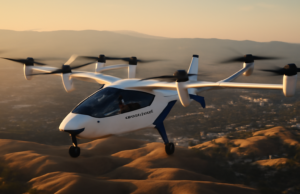
The company’s Midnight aircraft—a four-passenger, electrically-powered vertical takeoff and landing vehicle—has become the centerpiece of these commercialization efforts. With design certifications progressing and manufacturing partnerships established, Archer continues to advance toward its goal of deploying operational fleets within specific geographic markets. Pilot programs in major cities have demonstrated public interest and regulatory feasibility, creating a sense of momentum that resonates with both investors and media observers.
Strategic partnerships with established infrastructure and transportation companies have further legitimized Archer’s commercialization roadmap. By aligning with companies that have existing customer bases, regulatory relationships, and operational expertise, Archer has reduced perceived execution risk. These partnerships serve as both technical validations and market validators, suggesting that traditional transportation stakeholders believe in the viability of the eVTOL market that Archer is trying to create.
Financial Reality Tells a Different Story
While commercialization announcements capture attention, Archer’s financial statements paint a picture of a company still in deep development mode. Revenue generation remains minimal compared to the scale of capital expenditure required to bring aircraft to market and establish operational networks. The company continues to burn significant cash reserves as it invests in manufacturing facilities, regulatory compliance, and fleet development—all prerequisites for commercial operations that may still be years away.
The disconnect between commercialization progress and financial performance is not uncommon in emerging aerospace and mobility sectors. Companies like SpaceX, Joby Aviation, and other aerospace innovators have historically required substantial capital over extended development periods before achieving meaningful commercial revenue. However, publicly-traded companies face unique pressure from shareholders to demonstrate a clear path to profitability, creating tension between long-term development timelines and short-term financial expectations.
Archer’s operational costs, including salaries for engineers, certifications, regulatory compliance, and facility overhead, continue to accumulate while the revenue pipeline remains speculative. The company’s burn rate—the speed at which it consumes cash reserves—remains a critical metric that investors monitor closely. Without additional capital raises or significant acceleration in revenue realization, this trajectory raises legitimate questions about runway and long-term financial viability.
The Certification and Regulatory Path Forward
Obtaining aircraft certification from the Federal Aviation Administration (FAA) and equivalent regulatory bodies worldwide represents a critical milestone that Archer must achieve before commercial operations can commence. The certification process is rigorous, time-consuming, and expensive—often extending over multiple years and requiring millions of dollars in testing, documentation, and compliance verification. Archer’s progress through this certification pipeline is generally viewed as solid, but the timeline remains subject to regulatory review and potential delays.
Beyond certification, Archer must demonstrate that operational networks can be established profitably. This requires securing landing rights at airports, developing ground infrastructure, training pilots and maintenance personnel, and establishing pricing models that customers will accept while generating margins sufficient to sustain operations. Each of these elements introduces complexity and potential delays that could extend the timeline to meaningful commercial revenue.
Regulatory uncertainty in different geographic markets also presents risk. While Archer is primarily targeting the U.S. market initially, expansion internationally will require navigating different regulatory frameworks, safety standards, and environmental requirements. Each new market may introduce delays and additional costs that weren’t initially anticipated, further widening the gap between commercialization announcements and actual revenue generation.
Investor Expectations vs. Execution Reality
The eVTOL sector has benefited from significant investor enthusiasm, fueled by the transformative potential of urban air mobility and the successful trajectory of other mobility innovations. This enthusiasm has attracted capital and attention to companies like Archer, but it has also created expectations that may be difficult to meet within traditional investment timelines. Public market investors typically expect either rapid growth, clear paths to profitability, or both—conditions that emerging aerospace companies inherently struggle to satisfy.
Archer must balance the need to demonstrate progress toward commercialization with the financial discipline required to extend its capital runway. This often means making difficult trade-offs between investing aggressively in fleet development and manufacturing capacity versus preserving cash. The company’s capital allocation decisions in coming quarters will likely determine whether it can sustain momentum toward commercial operations or faces pressure to restructure or seek additional financing.
Market sentiment toward Archer, like much of the eVTOL sector, remains volatile. Positive announcements regarding partnerships, certifications, or pilot programs can drive share price appreciation, while concerns about cash burn, timelines, or competitive dynamics can trigger sell-offs. This volatility reflects the fundamental uncertainty around the company’s ability to bridge the gap between today’s commercialization narrative and tomorrow’s financial reality.
Market Competition and Technological Differentiation
Archer faces increasing competition from other well-funded eVTOL developers, including Joby Aviation, Lilium, Beta Technologies, and others. Each competitor is pursuing similar commercialization timelines and operating under similar regulatory constraints. Archer’s competitive advantage must come from superior aircraft design, operational efficiency, strategic partnerships, or market timing—advantages that remain uncertain and contested within the industry.
The technology landscape is also evolving rapidly. Battery density improvements, motor efficiency gains, and materials innovations could accelerate timelines for competitors or create unexpected technical challenges. Archer’s aircraft design must remain competitive as the technological frontier advances, requiring continued investment in research, development, and manufacturing capabilities. This dynamic competitive environment underscores why simply announcing partnerships and pilot programs is insufficient to guarantee commercial success.
Supply chain challenges, particularly for battery cells and specialized components, could also impact Archer’s ability to scale manufacturing. The company’s financial capacity to secure supply contracts, manage inventory, and absorb cost increases will be critical to its ability to execute its commercialization roadmap. These operational realities are less visible in press releases and partnership announcements, but they are paramount to actual business success.
Key Takeaways on Archer’s Commercialization vs. Financial Reality
- Archer Aviation has generated significant media momentum through partnerships and pilot programs, but operational revenue remains minimal while cash burn continues at substantial rates.
- FAA certification and regulatory approval are advancing but timelines remain subject to regulatory review, with commercial operations likely still several years away despite commercialization announcements.
- Investors should view Archer’s financial metrics and capital runway as critical indicators of execution capability, independent of the company’s compelling commercialization narrative and strategic partnerships.
Archer Aviation’s story exemplifies the fundamental challenge facing the eVTOL industry: the gap between the compelling narrative of transformative mobility innovation and the financial and operational reality of bringing such innovation to market. The company’s commercialization progress is real and noteworthy, but it must be evaluated alongside realistic assessments of financial performance, capital requirements, regulatory timelines, and competitive pressures. For investors, this means moving beyond headlines and pilot programs to scrutinize whether Archer can sustain its development trajectory and ultimately achieve profitable commercial operations at scale. The answer to that question will determine whether Archer’s commercialization story becomes a financial success or remains an ambitious narrative that failed to materialize.